










































































































































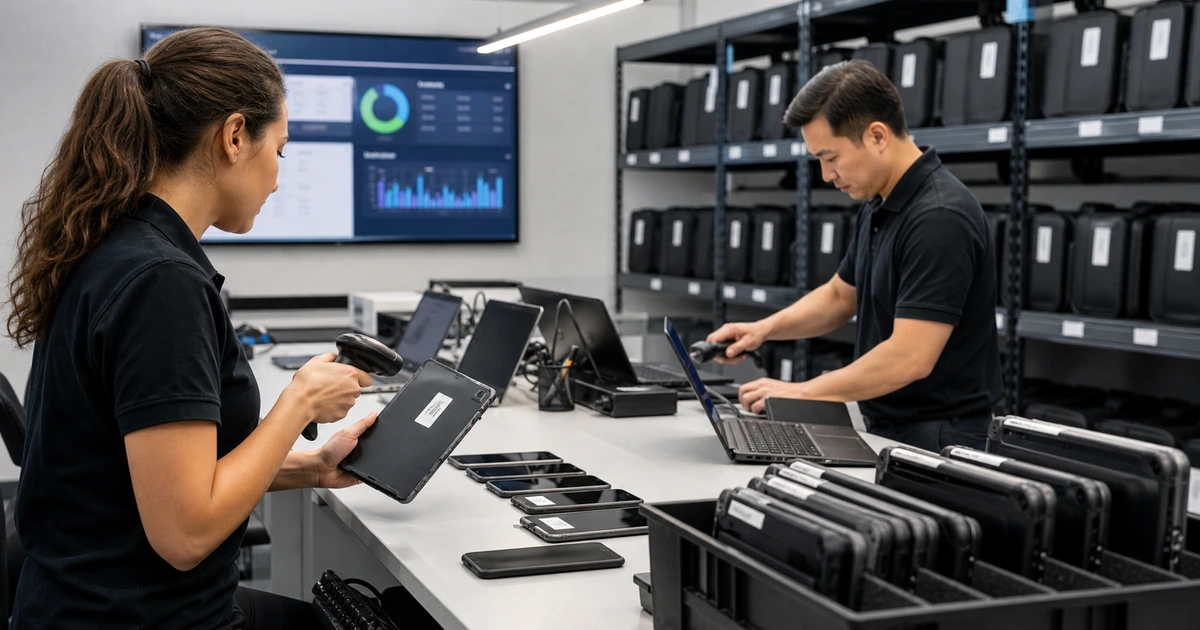
Device management begins before a laptop, phone, or tablet reaches an employee. Purchasing choices affect enrollment, firmware, warranties, repair, application compatibility, accessories, support, and retirement. A lifecycle design connects those decisions with identity, configuration, security, updates, data access, help desk, loss response, and recovery so each endpoint arrives ready for real work.
Avoid treating every device and user the same. An executive laptop, shared front-desk workstation, field tablet, kiosk, classroom Chromebook, personally owned phone, and engineering system can require different ownership, enrollment, application, access, privacy, support, and replacement paths. Define a small secure baseline, then add role-specific settings only where the business case and test evidence support them.
ALLMSP plans and operates managed device lifecycles for businesses in Lawrenceville, Suwanee, Gwinnett County, Metro Atlanta, and throughout Georgia. Our in-house team can procure, stage, enroll, configure, secure, deploy, train, support, repair, replace, recover, and retire supported endpoints.
Design one accountable lifecycle for every supported endpoint
- Standardize purchasing: Select supported hardware, operating systems, warranty, enrollment registration, accessories, delivery, and replacement expectations.
- Prepare the tenant: Configure identity, licensing, roles, groups, ownership, enrollment limits, certificates, connectors, and emergency access.
- Build the baseline: Define configuration, compliance, encryption, endpoint security, updates, applications, data, and support requirements.
- Pilot deployment: Test representative users, devices, networks, applications, peripherals, accessibility, and failure conditions.
- Support operation: Monitor inventory, health, check-in, security, update, warranty, incidents, repairs, exceptions, and user outcomes.
- Close the lifecycle: Control return, reassignment, replacement, wipe, data retention, proof of sanitization, disposal, and financial records.
Plan purchasing, identity, enrollment, and user readiness together
Define supported models and minimum specifications by business role, not preference alone. Consider processor, memory, storage, graphics, ports, wireless, camera, accessibility, ruggedness, battery, dock, displays, printer and industry peripherals, operating-system support, firmware, repairability, warranty, regional service, expected life, and replacement stock. Record whether devices should be registered by the supplier for automated provisioning and how serials, purchase orders, asset tags, owners, locations, cost centers, and warranties enter the inventory.
Prepare directory groups, licenses, administrative roles, enrollment restrictions, ownership rules, device naming, platform limits, certificates, connectors, and emergency access. Define organization-owned, personal, shared, kiosk, and contractor scenarios separately. Write user communications for delivery, sign-in, multifactor authentication, privacy, setup time, data migration, acceptable use, support, restart, updates, loss, travel, return, and personal-device boundaries. Plan an assisted route for users who cannot complete self-service steps.
- Role standard: Match hardware, platform, applications, peripherals, security, warranty, lifecycle, and support to real work.
- Supply-chain record: Capture supplier, purchase, serial, registration, shipment, recipient, warranty, return, and exception evidence.
- Tenant readiness: Validate identity, licensing, roles, groups, restrictions, ownership, certificates, connectors, and emergency access.
- Scenario design: Separate corporate, personal, contractor, shared, kiosk, field, laboratory, and high-privilege endpoints.
- User preparation: Set expectations for setup, privacy, authentication, migration, updates, support, loss, travel, and return.
Deployment starts cleanly when the correct device, tenant identity, enrollment path, and user expectations meet before first sign-in.
Create a tested baseline for configuration, applications, and access
Build a minimum baseline by platform. Include passcode, encryption, screen lock, firewall, endpoint protection, update policy, supported version, browser, certificates, wireless, VPN, data storage, local privilege, recovery, remote support, logging, and compliance checks. Keep configuration separate from compliance reporting and from identity-based access enforcement. Document which policy provides each outcome, its assignment, exception process, expected device evidence, and business owner.
Package required applications with owners, licenses, install and detection logic, dependencies, configuration, data locations, update method, support, and uninstall behavior. Test line-of-business software, browser extensions, printing, scanners, point-of-sale, design or engineering tools, accessibility, and industry devices. Use deployment groups or rings so the team can observe representative devices before broad release. Protect emergency and enrollment paths from policies that could lock administrators out before the fleet is ready.
- Security baseline: Define encryption, endpoint protection, firewall, updates, authentication, privilege, data, logging, and recovery.
- Policy ownership: Record outcome, setting source, assignment, exclusion, platform, evidence, approver, and exception review.
- Application package: Document owner, license, source, dependencies, install, detection, configuration, update, support, and removal.
- Access control: Pilot compliance signals and identity policies in report or observation modes before enforcement where available.
- Deployment ring: Progress from IT and representative pilot users to broader groups with acceptance and stop criteria.
The baseline is production-ready when required work succeeds and each security or access outcome can be traced to tested policy evidence.
Operate support, exceptions, repair, loss, and retirement as one process
Monitor active inventory, ownership, check-in, configuration, compliance, endpoint risk, encryption, operating-system support, application deployment, update results, storage, battery or hardware signals, warranty, and recurring tickets. Route noncompliance by cause and consequence. Give users a clear remediation path and help-desk context. Time-bound exceptions with business and security approval, compensating controls, owner, expiration, and review. Do not permanently weaken the baseline because one device needs a temporary workaround.
Plan repair and replacement around business continuity and data protection. Maintain loaners or rapid procurement where downtime matters. Verify backup or synchronization before authorized reset. For loss or theft, confirm report intake, identity containment, remote action, customer communication, legal or insurance escalation, and evidence. Reassignment and retirement should remove user data and access, update directories and management systems, preserve required records, verify sanitization, handle lease or resale, and close financial inventory.
- Health operations: Review check-in, policy, compliance, risk, encryption, updates, applications, storage, warranty, and ticket trends.
- Exception control: Require reason, scope, risk, compensating measure, approver, owner, expiry, and verification.
- Repair continuity: Protect data, provide an alternate device, preserve identity, document repair, and validate return to service.
- Loss response: Coordinate report, containment, remote action, access review, notification, replacement, and incident evidence.
- Secure retirement: Remove access, preserve required data, sanitize, update records, document custody, and complete disposition.
A mature device program protects the entire endpoint lifecycle, including the moments when normal ownership and operation change.
End-to-end device lifecycle management from ALLMSP
ALLMSP can select and procure business hardware, prepare identity and management platforms, build configuration and security baselines, package applications, automate supported deployment, and coordinate user setup. We test business software, peripherals, access, and support before broad rollout.
The same in-house team can monitor health, manage exceptions, troubleshoot employees, coordinate warranty repair, provide replacements, respond to loss, migrate data, and retire devices securely. This keeps technical policy connected to the employee’s real work from purchase through disposition.
- Prepare: Standardize hardware, registration, tenant settings, identity, enrollment, ownership, and user communication.
- Deploy: Pilot configuration, security, applications, access, peripherals, migration, and support.
- Operate: Maintain health, exceptions, repair, replacement, loss response, reassignment, and retirement.
Official guidance for managed device deployment
Use the documentation for each platform and enrollment method, then validate policies against representative devices and the organization’s business, privacy, support, and recovery needs.
- Microsoft Intune deployment overview. Organizes setup, applications, compliance, access, configuration, enrollment, and next steps for an Intune rollout.
- Microsoft Windows management deployment guide. Covers prerequisites, planning, compliance, enrollment, configuration, applications, updates, and role-based administration.
- Windows Autopilot scenarios. Describes user-driven, self-deploying, pre-provisioning, replacement, reset, and other supported deployment scenarios.
- NIST mobile device security guide. Provides security recommendations across organization-owned and personally owned device deployment, use, and disposal.
Managed device lifecycle FAQs
When should device management planning begin?
Begin before purchasing so hardware support, automated registration, operating systems, warranties, applications, accessories, and lifecycle needs can be aligned.
Can new laptops be configured before employees receive them?
Yes. Supported automated and pre-provisioning methods can register and prepare devices, but the exact approach depends on platform, licensing, ownership, and use case.
Should every employee receive the same device policy?
Use a common minimum baseline, then create tested role or scenario differences for legitimate business, platform, privacy, and security needs.
What is the difference between configuration and compliance?
Configuration applies or controls settings. Compliance evaluates defined conditions. Identity access can then use compliance as one input when designed correctly.
How should business applications be deployed?
Package each application with ownership, licensing, dependencies, install, detection, configuration, updates, support, removal, and representative testing.
What happens when a device is noncompliant?
Investigate the reason, user and business effect, timing, platform status, and access dependency, then provide remediation or a controlled temporary exception.
How are lost devices handled?
Use a defined report, identity containment, permitted remote action, access review, notification, replacement, insurance or legal escalation, and documented closure.
What should happen before a device is retired?
Preserve required data, remove access and management relationships, sanitize storage, update inventory, document custody, and complete approved disposition.
Can ALLMSP procure and manage the full endpoint lifecycle?
Yes. ALLMSP can handle selection, purchasing, deployment, security, applications, support, repair, replacement, data migration, and retirement in house.
Where does ALLMSP offer managed device deployment?
ALLMSP serves businesses in Lawrenceville, Suwanee, Gwinnett County, Metro Atlanta, and throughout Georgia.