


















































































































































Huntress Support
Huntress software support for Metro Atlanta businesses
Huntress can support identity, endpoint protection, email security, access control, threat detection, vulnerability reduction, monitoring, and response. ALLMSP helps Atlanta and Gwinnett businesses evaluate, configure, document, train, troubleshoot, and improve Huntress Endpoint Protection, Huntress Managed Detection, Huntress Threat Response, and Huntress Risk Review, with every stage handled in house.
Huntress cybersecurity consulting, deployment, monitoring, and response support for Atlanta and Gwinnett businesses
ALLMSP provides Huntress cybersecurity consulting, deployment, monitoring, and response support for organizations in Lawrenceville, Suwanee, Gwinnett County, Metro Atlanta, and nearby Georgia communities. Our work covers Huntress Endpoint Protection, Huntress Managed Detection, Huntress Threat Response, and Huntress Risk Review with planning tied to the way employees, locations, and business systems actually operate.
For Huntress, discovery begins with users, devices, identities, email, cloud applications, data, compliance, integrations, alert coverage, response, and reporting. The Huntress plan defines implementation, support, security, training, documentation, and the next review for the actual environment.
Plan and Subscribe
Compare Huntress Endpoint Protection, Huntress Managed Detection, Huntress Threat Response, and Huntress Risk Review using users, devices, identities, email, cloud applications, data, compliance, integrations, alert coverage, response, and reporting. Huntress subscriptions and administrative ownership are aligned with the people and workflows that actually need them.
Configure and Train
Huntress implementation work can configure policies and roles, deploy agents or connectors, protect administrators, test alerts, document response, train users, and verify coverage. The Huntress rollout includes practical training and clear administrative documentation.
Support and Optimize
Huntress optimization reviews detections, false positives, coverage gaps, policy drift, vulnerabilities, access, reporting, incidents, and product changes. Huntress improvements are prioritized by business value, risk, employee impact, and the effort required to deliver them.
Huntress Endpoint Protection
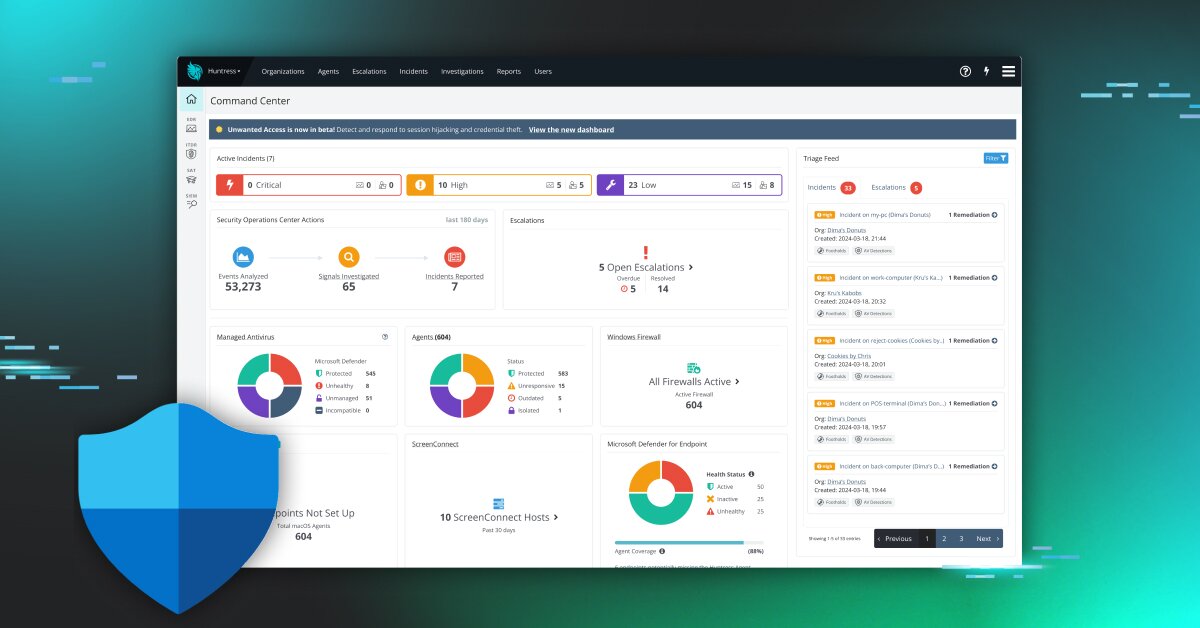
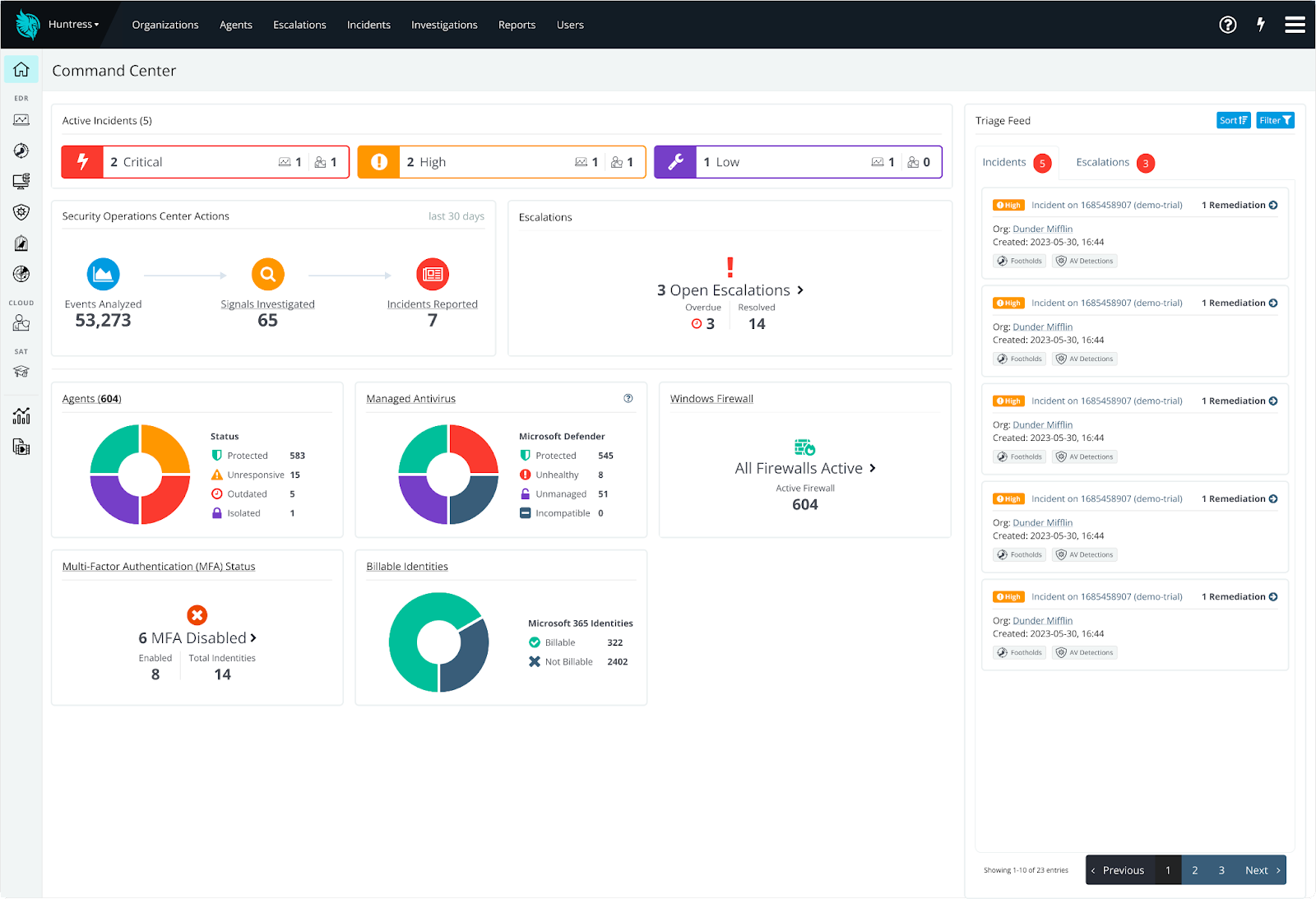
With Huntress Endpoint Protection, the Huntress service plan focuses on the practical work needed to protect business endpoints with monitored prevention, detection, isolation, and clear response ownership.
- Review supported operating systems, device count, current antivirus, exclusions, remote users, performance needs, policies, and alert routing before approving the Huntress Endpoint Protection scope.
- Huntress Endpoint Protection implementation work will deploy agents, confirm policy assignment, test protection status, document exclusions, establish escalation contacts, and verify intended device coverage.
- Huntress Endpoint Protection optimization tracks agent health, detections, false positives, quarantines, stale devices, policy drift, unresolved incidents, and software versions.
Huntress Managed Detection
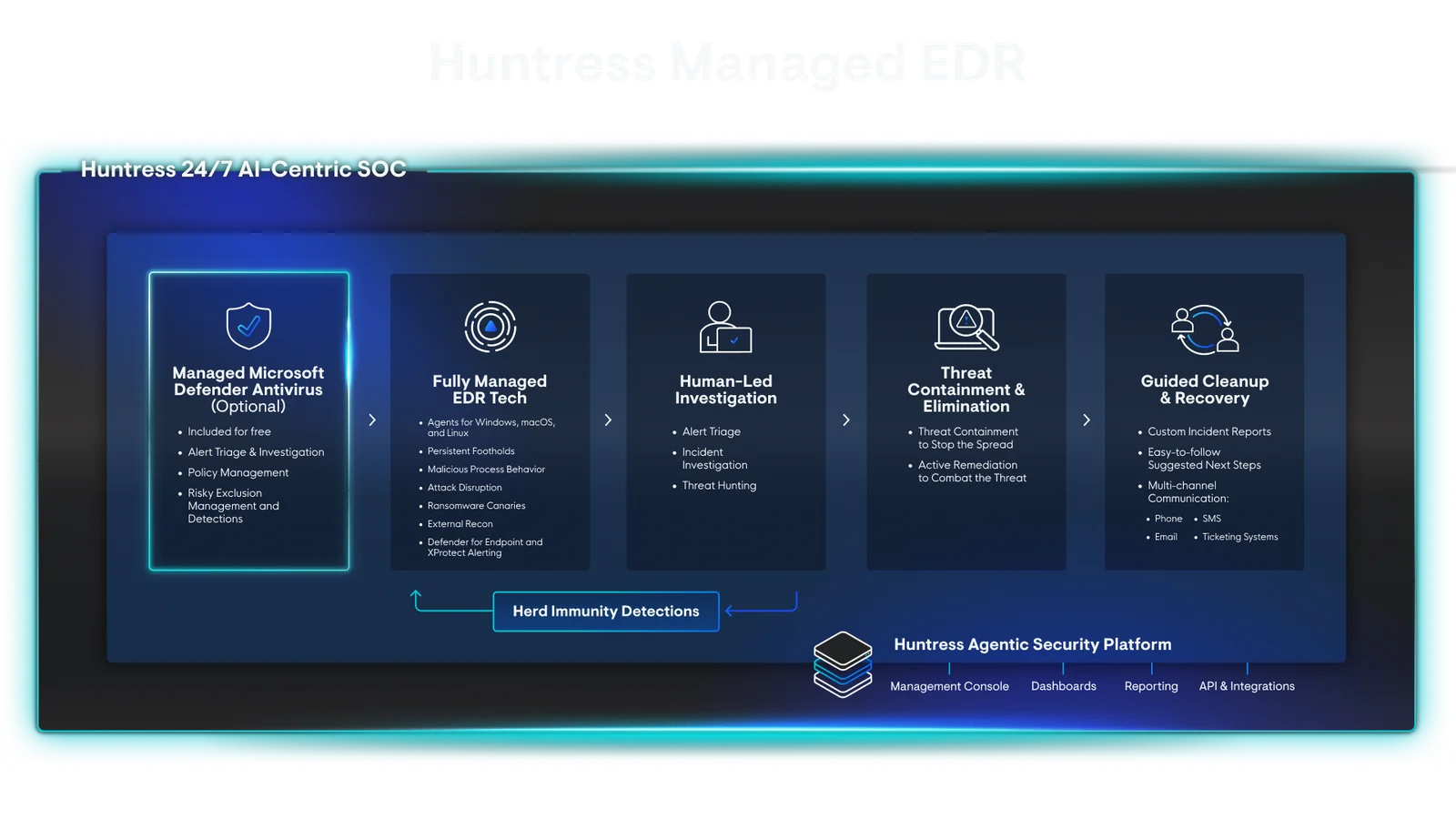
ALLMSP plans and supports Huntress Managed Detection within the Huntress environment to turn endpoint and identity telemetry into reviewed alerts, documented escalation, and timely containment decisions.
- Plan Huntress Managed Detection around covered users and devices, data sources, existing controls, alert routing, severity rules, service hours, escalation contacts, and response authority.
- The Huntress Managed Detection rollout includes work to deploy or connect sensors, verify coverage, tune alert routing, test escalation, document response authority, and establish evidence handling.
- After the Huntress Managed Detection launch, ALLMSP reviews sensor health, alert fidelity, investigation status, false positives, uncovered assets, response time, and recurring attack patterns.
Huntress Threat Response
Huntress Threat Response support from ALLMSP helps Huntress customers give the business a defined path from confirmed threat to containment, remediation, recovery, and executive communication.
- Assess decision authority, isolation methods, affected systems, evidence needs, communication contacts, recovery dependencies, and regulatory obligations before Huntress Threat Response is selected or changed.
- For Huntress Threat Response, ALLMSP will document response playbooks, test escalation, confirm containment options, protect evidence, assign recovery tasks, and prepare stakeholder updates.
- Huntress Threat Response support uses open incidents, completed containment, root causes, recovery evidence, control gaps, lessons learned, and unfinished remediation to prioritize the next actions.
Huntress Risk Review
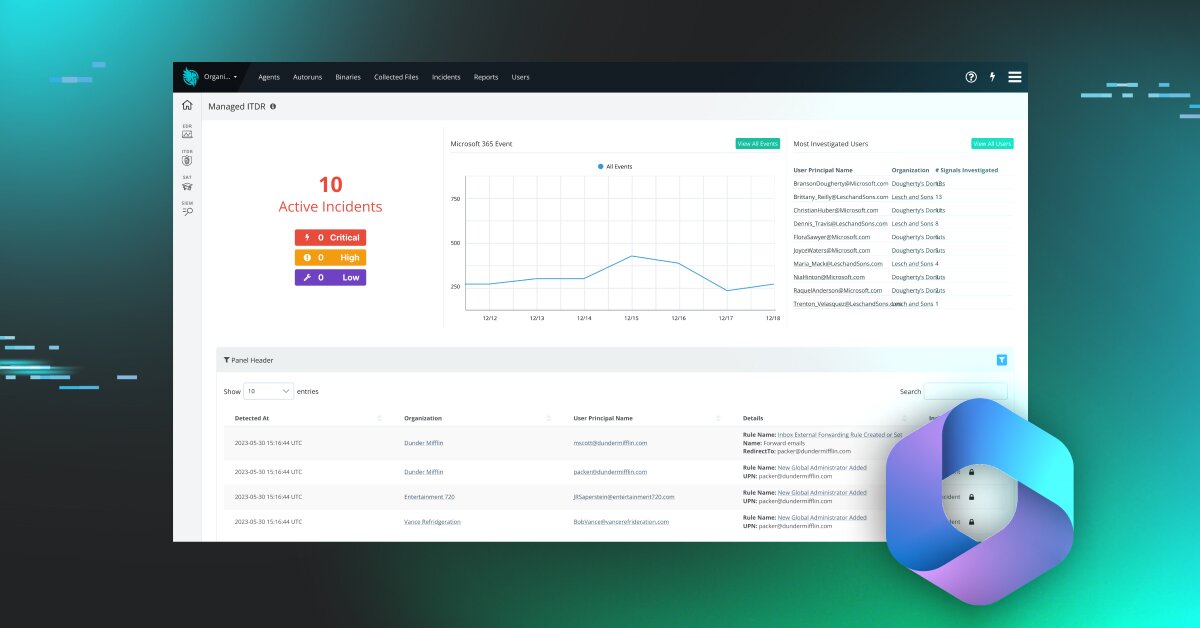
ALLMSP designs Huntress Risk Review services to find security exposure that routine alert handling can miss and convert it into an accountable remediation plan.
- Define Huntress Risk Review requirements using asset coverage, identity posture, vulnerable software, policy exceptions, risky behavior, external exposure, compliance needs, and business impact.
- Deployment work for Huntress Risk Review will collect evidence, validate findings, rank exposure, assign owners, document exceptions, set target dates, and verify completed corrections.
- Ongoing Huntress Risk Review reviews examine new findings, overdue actions, repeated exceptions, unsupported assets, identity risk, policy drift, and changes in business exposure.
Huntress Reporting and Admin
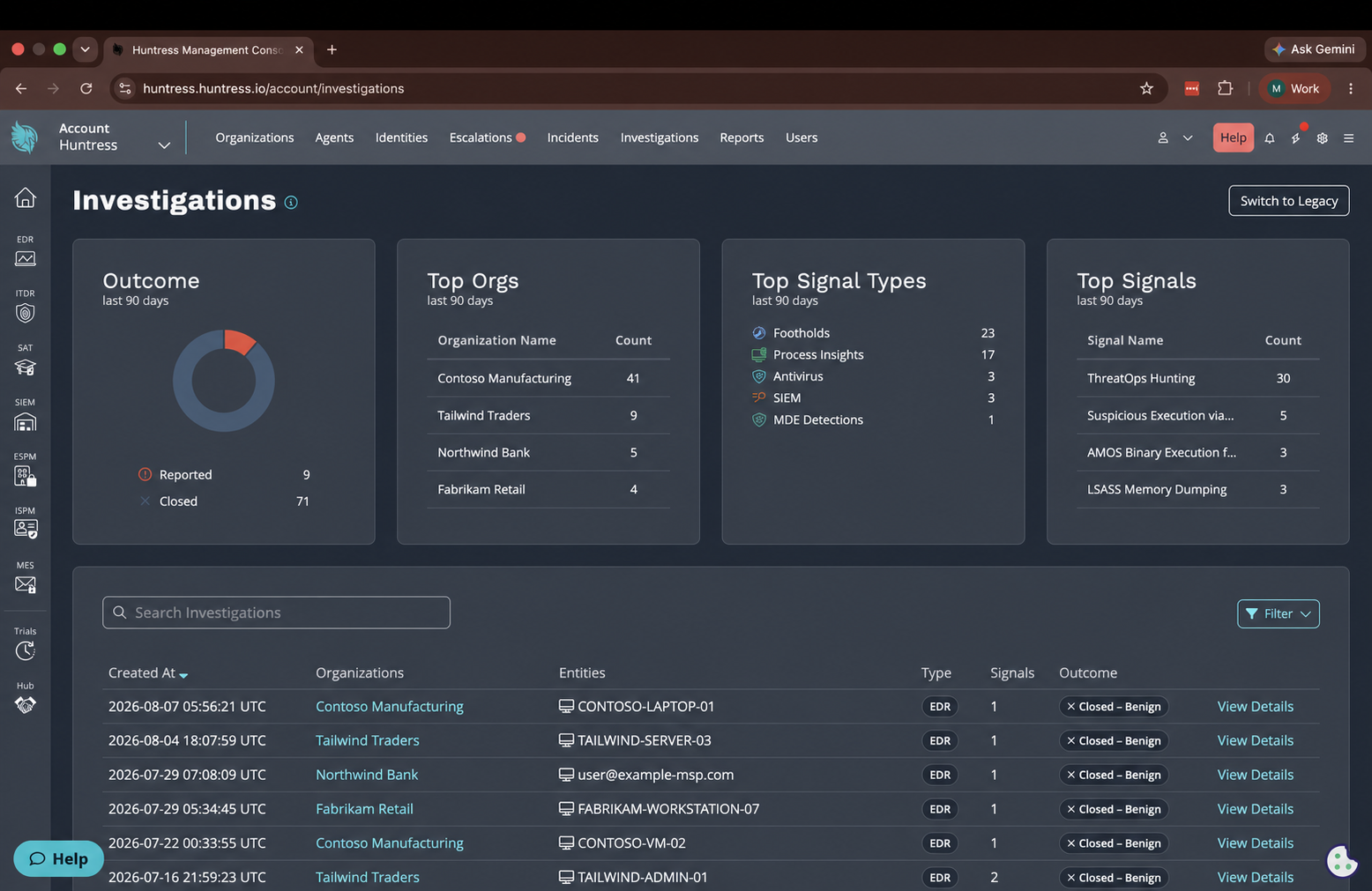
With Huntress Reporting and Admin, the Huntress service plan focuses on the practical work needed to make security coverage, incidents, investigations, administrator activity, and unresolved risk visible to the right stakeholders.
- Review report audiences, required evidence, service metrics, covered assets, incident history, administrator roles, review cadence, and retention needs before approving the Huntress Reporting and Admin scope.
- Huntress Reporting and Admin implementation work will configure roles and dashboards, organize reports, validate data sources, document owners, schedule reviews, and protect administrative access.
- Huntress Reporting and Admin optimization tracks coverage gaps, stale administrators, unresolved incidents, recurring findings, report accuracy, service trends, and management actions.
Related services for Huntress
Huntress often connects Huntress Endpoint Protection, Huntress Managed Detection, Huntress Threat Response, and Huntress Risk Review with the wider needs around identity, endpoint protection, email security, access control, threat detection, vulnerability reduction, monitoring, and response. These related services keep Huntress, its users, security controls, and supporting systems working as one managed business environment.
Cybersecurity
Cybersecurity protects Huntress Endpoint Protection, Huntress Managed Detection, and Huntress Threat Response through identity, MFA, least privilege, device coverage, policy, logging, evidence, alert handling, response ownership, and recovery, with controls documented for the actual Huntress environment.
Identity and Access
Identity and Access protects Huntress Endpoint Protection, Huntress Managed Detection, and Huntress Threat Response through identity, MFA, least privilege, device coverage, policy, logging, evidence, alert handling, response ownership, and recovery, with controls documented for the actual Huntress environment.
Endpoint Support
Endpoint Support supports Huntress Endpoint Protection, Huntress Managed Detection, and Huntress Threat Response with compatibility checks, staged deployment, diagnostics, warranty records, inventory, repairs, and lifecycle planning.
Industry Specific Solutions for IT Consulting, Marketing, HR, Cybersecurity & Cloud
Related Articles
Huntress consulting and support FAQ
Q. What Huntress products and services does ALLMSP support?
A. ALLMSP supports business use of Huntress Endpoint Protection, Huntress Managed Detection, Huntress Threat Response, Huntress Risk Review, and Huntress Reporting and Admin. A Huntress engagement can cover evaluation and account ownership, subscription or licensing review, configuration, migration, testing, documentation, training, and ongoing administration. For Huntress, ALLMSP also provides troubleshooting, optimization, and a documented support plan for the selected platform.
Q. Do you provide Huntress services and support in Atlanta?
A. Yes. ALLMSP provides Huntress planning, implementation, and support for Atlanta and Metro Atlanta businesses. Scope is based on the organization's users, locations, current environment, risk, schedule, and the business result expected from Huntress.
Q. Can ALLMSP help us choose the right Huntress product?
A. Yes. We compare Huntress Endpoint Protection, Huntress Managed Detection, Huntress Threat Response, Huntress Risk Review, and Huntress Reporting and Admin using supported operating systems, device count, current antivirus, exclusions, remote users, performance needs, policies, and alert routing. The Huntress recommendation documents fit, tradeoffs, implementation work, warranty or subscription impact as applicable, and ongoing support before a purchase or commitment is made.
Q. Can ALLMSP handle a Huntress project from planning through support?
A. Yes. ALLMSP handles the Huntress engagement in house from discovery and planning through account ownership, subscription or licensing review, configuration, migration, testing, documentation, training, and ongoing administration. The ALLMSP team documents Huntress ownership, resolves launch issues, and continues improving the environment after handoff.
Q. Can you improve an existing Huntress environment?
A. Yes. We assess the current use of Huntress Endpoint Protection, Huntress Managed Detection, Huntress Threat Response, Huntress Risk Review, and Huntress Reporting and Admin, preserve what is working, and identify changes that remove risk or recurring friction. The Huntress improvement plan is prioritized using agent health, detections, false positives, quarantines, stale devices, policy drift, unresolved incidents, and software versions.
Q. Can ALLMSP review Huntress accounts, plans, and access?
A. Yes. ALLMSP reviews Huntress account ownership, subscription or licensing needs, administrators, user access, integrations, billing access where applicable, and unused assignments. The result is a cleaner Huntress administration model with documented owners and recovery contacts.
Q. How does ALLMSP secure a Huntress environment?
A. The Huntress security review considers supported operating systems, device count, current antivirus, exclusions, remote users, performance needs, policies, and alert routing. ALLMSP then documents Huntress administrator protection, least privilege, alert or logging needs, recovery access, test results, and the person responsible for each critical control.
Q. Will Huntress work with our current technology?
A. Before Huntress deployment, ALLMSP checks supported operating systems, device count, current antivirus, exclusions, remote users, performance needs, policies, and alert routing. We test Huntress Endpoint Protection and Huntress Managed Detection against real devices, data, applications, integrations, and employee workflows so compatibility means more than a successful sign-in or basic connection.
Q. Does ALLMSP provide Huntress training?
A. Yes. Huntress training is based on the work employees and administrators actually perform with Huntress Endpoint Protection, Huntress Managed Detection, Huntress Threat Response, Huntress Risk Review, and Huntress Reporting and Admin. Huntress sessions include safe daily use, common errors, ownership, documentation, and the support path for questions that appear after launch.
Q. Can ALLMSP troubleshoot Huntress Endpoint Protection?
A. Yes. ALLMSP troubleshoots Huntress Endpoint Protection using the product configuration, connected systems, recent changes, logs or device evidence, and the affected business workflow. Findings and completed corrections are documented so recurring Huntress problems can be fixed at their source.
Q. How do you optimize Huntress after implementation?
A. After Huntress implementation, ALLMSP reviews agent health, detections, false positives, quarantines, stale devices, policy drift, unresolved incidents, and software versions. The Huntress backlog separates urgent corrections from improvements in reliability, security, usability, cost, adoption, and lifecycle or subscription management.
Q. Can Huntress be standardized across multiple offices?
A. Yes. ALLMSP can establish repeatable Huntress models or settings, naming, access, integrations, testing, documentation, spare or licensing standards, and support procedures. Legitimate Huntress differences between locations and teams are recorded instead of being forced into one unsuitable configuration.
Q. What documentation is included with Huntress support?
A. Documentation for Huntress can cover ownership, platform or subscription details, administrators, configuration, integrations, locations, test results, support contacts, recovery notes, warranty or renewal dates, and operating procedures for Huntress Endpoint Protection, Huntress Managed Detection, Huntress Threat Response, Huntress Risk Review, and Huntress Reporting and Admin.
Q. Do you support Huntress in Lawrenceville, Suwanee, and Gwinnett County?
A. Yes. ALLMSP supports Huntress for organizations in Lawrenceville, Suwanee, Gwinnett County, Metro Atlanta, and nearby Georgia communities. Remote Huntress support can also serve a local business with traveling staff or locations outside Georgia.
Q. What determines the cost of Huntress consulting and support?
A. Huntress cost depends on the selected platform, user or device count, locations, current condition, migration or installation work, integrations, security requirements, training, project timing, and ongoing support. ALLMSP defines assumptions and acceptance criteria before major Huntress work begins.