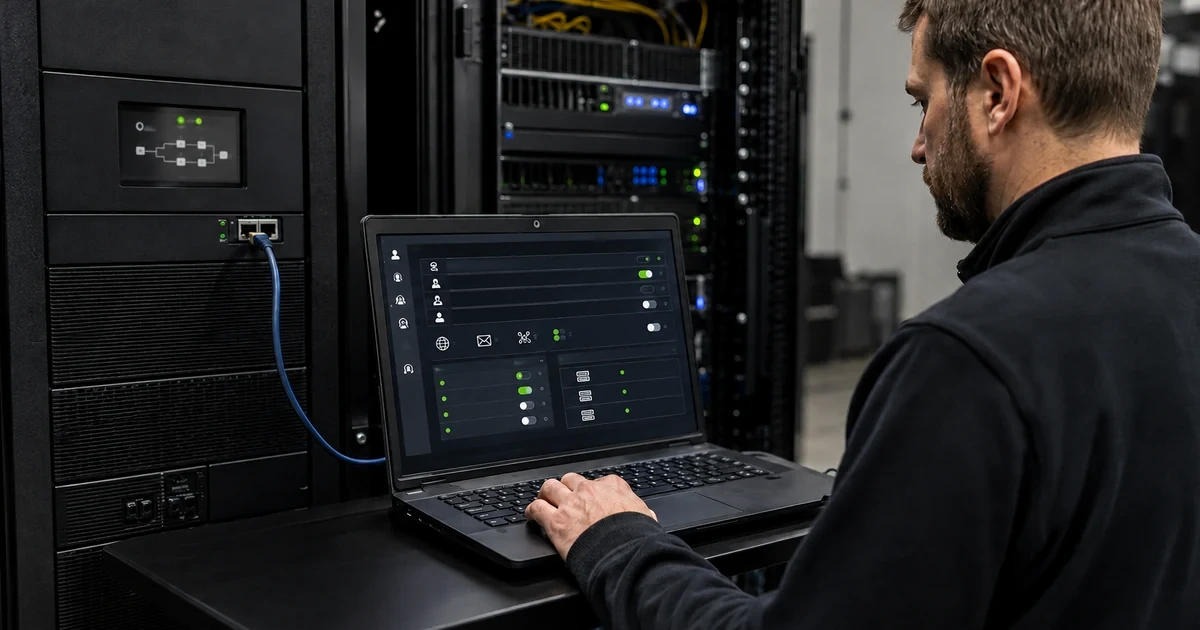





























































































































































An APC rack PDU is often the last managed component before power enters a server, switch, storage controller, or firewall. That position makes its inventory and control data operationally significant. A wrong outlet map can power-cycle the wrong device, a threshold based on nameplate rather than measured load can hide diminishing headroom, and two redundant supplies can still fail together when both cords land on one branch.
Schneider Electric’s NetShelter switched and metered-by-outlet materials distinguish features by product family: aggregate current, phase or bank measurements, per-outlet metering, individual outlet control, configurable delays, environmental sensor ports, locking receptacles, alarm thresholds, network management, and firmware. The current AP89 switched-rack-PDU guide and Advanced Rack PDU guide provide model-bound setup and operation details. Teams should therefore record exact capabilities instead of calling every vertical strip a switched PDU.
This procedure coordinates data-center operations, facilities, electrical contractors, network engineering, security, and application owners. It does not permit unqualified work on energized panels, plugs, branch circuits, internal PDU components, or exposed conductors. Electrical limits, mounting, cord retention, derating, phase rules, and service work come from the exact product, local code, site design, and qualified personnel. The operational layer begins only after those conditions are established.
When an organization in Lawrenceville, Suwanee, Gwinnett County, Metro Atlanta, or elsewhere in Georgia needs to operate APC NetShelter rack PDUs with capacity and outlet control, ALLMSP handles the work in house from initial review through validation and ongoing support.
Key decisions at a glance
- Record the exact APC NetShelter PDU model, firmware, input voltage and current, plug, phase, cord, breaker, receptacles, metering level, switching capability, sensor support, rack, source panel, and every outlet-to-device relationship.
- Preserve genuine A/B independence from upstream source and branch through PDU and equipment power supply, alternating labels or two colored cords do not create redundancy when both paths share a failure domain.
- Use aggregate, phase, bank, and outlet metering available on the exact model to establish warning and critical thresholds, balance load, preserve headroom, detect drift, and investigate changes before overload.
- Treat remote outlet control as a privileged production change with device identity, dependency review, authorization, sequencing, stop conditions, observation, and recovery rather than a convenient reboot button.
- Govern PDU security, firmware, environmental sensors, alarms, event logs, configuration backups, spare capacity, maintenance, and retirement together so electrical and management states remain reconciled.
Map APC PDU Models, Branches, Phases, Outlets, and A/B Paths
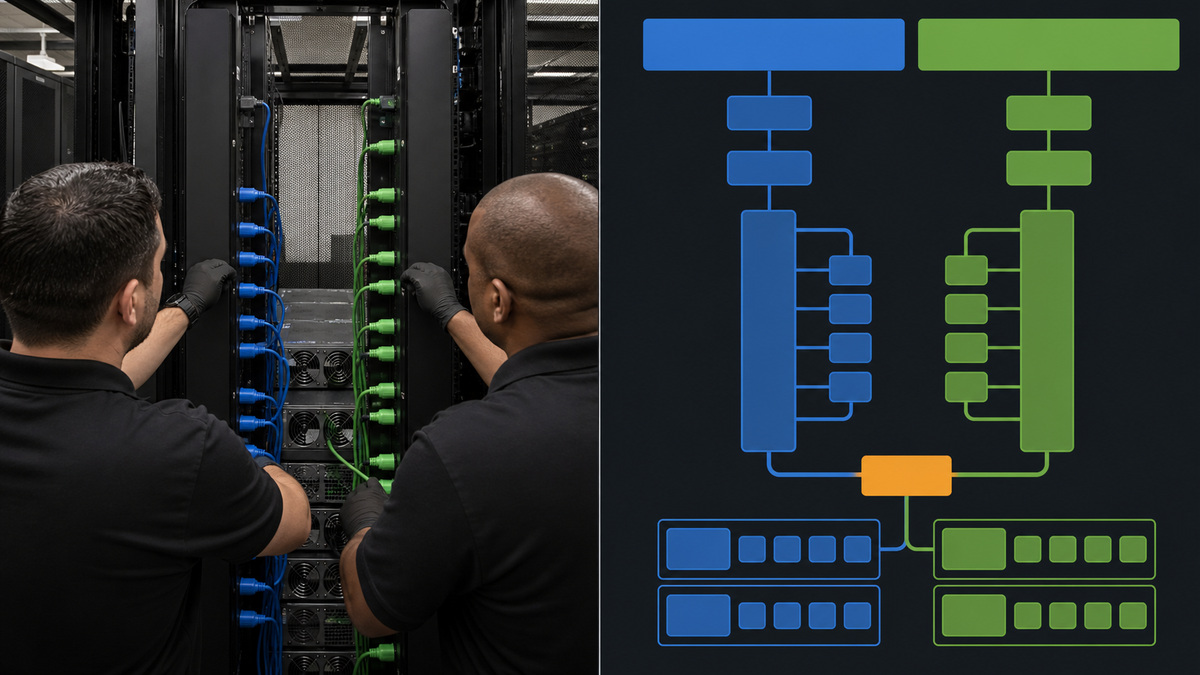
Create one protected rack-power record for every APC NetShelter PDU. Capture full SKU and serial, product family, hardware and management firmware, input voltage, rated current, phase configuration, input plug, cord length, upstream receptacle, panel and breaker, source or UPS, rack and mounting side, receptacle types and count, bank or phase layout, aggregate and outlet metering capability, switching capability, locking features, sensor ports, Network Port Sharing relationships, management address, certificate, warranty, support, and install date. Label physical A and B paths consistently, but keep detailed panel, rack, network, and serial information restricted. Build an outlet map from PDU to connected device and power-supply inlet. Record outlet number, phase or bank, device asset, power-supply designation, cord type, cord retention, normal watts or amps, observed peak, startup behavior, criticality, redundancy partner, owner, remote-switch permission, startup dependency, and decommission date. Verify the map physically with a second person, do not trust a stale spreadsheet or infer cords from left and right rack placement. Trace independent power paths upstream. For a dual-corded server intended to survive one power-source failure, supply A and B should remain independent through PDU, branch, upstream UPS or source, breaker, and maintenance domain. If both rack PDUs connect to the same single UPS or panel, document that shared risk rather than presenting it as full redundancy. Compare the PDU rating, branch protection, local-code continuous-load rules, phase and bank limits, receptacle ratings, cord ratings, and equipment demand. Use qualified electrical staff for the design and any rewiring. Preserve spare outlets and current headroom intentionally, an empty receptacle is not available capacity if its phase or bank is near its limit. Include environmental sensors only where the exact model supports them and record their location, calibration or validation method, thresholds, and alert owners. Acceptance produces a rack elevation, one-line source map, outlet register, A/B exception list, management baseline, and capacity snapshot that agree with the physical rack.
- Record exact APC SKU, serial, family, firmware, voltage, current, phase, plug, cord, breaker, upstream source, rack, receptacles, banks, meters, switching, sensors, management, warranty, and support.
- Map each outlet to device, power supply, phase or bank, cord, measured demand, peak, criticality, redundancy peer, switching permission, dependency, and owner.
- Trace A/B independence through PDU, branch, breaker, UPS or source, and maintenance domain.
- Apply exact product ratings and electrical-code requirements with qualified personnel, never treat empty outlets as proof of current headroom.
- Reconcile physical labels, rack elevation, one-line diagram, outlet register, exceptions, and management configuration at acceptance.
Set Capacity Thresholds, Balance Load, and Detect Electrical Drift

Baseline the measurements the exact APC PDU exposes: aggregate current, phase current, bank current, real power, energy, power factor, or per-outlet values. Do not fabricate unavailable precision or compare unlike models as though their telemetry were identical. Capture values during normal business activity, backup windows, patching, startup, failover, and known peak periods. Correlate PDU data with the upstream branch, UPS, server management, and application workload so a change can be attributed rather than guessed. Establish warning and critical thresholds below the applicable electrical and operational limits. Account for branch protection, continuous-load requirements, phase or bank constraints, redundant-path failover, startup surge, growth, measurement accuracy, and the possibility that all surviving load transfers to one side after a failure. Schneider Electric describes user-defined thresholds as a way to warn before overload, the actual setpoints must come from the site design, exact PDU, and qualified electrical review. Test local display, web, SNMP, central monitoring, email or event destinations, and ticket routing without creating a real overload. Balance three-phase or banked units using measured demand and product guidance, not outlet count. Moving a low-power network appliance does not offset a high-density compute node merely because each occupies one receptacle. Preserve A/B symmetry where the redundancy model needs it, and analyze the surviving side at failover load. Trend changes by maintenance ticket, device install, firmware update, workload, and time. Alert on rapid current increase, sustained approach to threshold, phase imbalance, bank limit, lost metering, sensor excursion, repeated outlet cycling, communication loss, configuration change, and unexpected zero load on a critical outlet. Investigate a new baseline instead of permanently raising the threshold. Use a controlled capacity request for every rack addition: target outlets, both power paths, expected normal and peak demand, inrush, heat, network and storage dependencies, shutdown priority, and removal of displaced equipment. After installation, measure the real result and update headroom. A useful capacity report shows current and peak by source, PDU, phase or bank, failover scenario, reserved headroom, top growth drivers, unmetered uncertainty, and owner without exposing detailed rack identities publicly.
- Use only aggregate, phase, bank, outlet, power, energy, and environmental measurements the exact APC model actually provides.
- Baseline normal, backup, startup, failover, and peak periods and correlate PDU readings with UPS, branch, device, workload, and approved changes.
- Set warning and critical thresholds from electrical limits, continuous load, phase or bank constraints, failover load, inrush, growth, and measurement accuracy.
- Balance measured demand rather than outlet count and verify the surviving A or B path can carry the intended failure scenario.
- Route and test alerts, investigate drift, and require measured before-and-after capacity for every rack addition or removal.
Control APC Switched Outlets, Delays, Reboots, and Maintenance

Remote outlet control needs the same rigor as a physical power change. Mark every outlet as non-switched, monitor-only, operator-controlled, automation-controlled, or prohibited from remote action according to the exact PDU capability and business ownership. Identify single-corded devices, shared chassis, storage, network dependencies, clustered systems, and equipment whose local power button, redundant supplies, or application state changes the outcome. Restrict switching roles separately from read-only monitoring and log every action. For a planned power cycle, require target asset and outlet confirmation by two independent records, current and peer power state, application approval, maintenance ticket, impact window, backup or recovery status, console access, stop conditions, observer, and startup validation. Use the APC interface to verify outlet name, measured load where available, command, delay, and resulting state, never act from a screenshot or rack label alone. A zero reading may mean the device is off, the meter is unavailable, or the map is wrong. Configure power-on, power-off, and reboot delays from dependencies. Network, storage, and management services may need to start before compute, clustered nodes may require spacing, high-inrush equipment should not energize simultaneously. Schneider Electric identifies configurable sequencing as a control for startup inrush and dependency order. Test the sequence with application owners and measure actual boot readiness rather than considering an outlet energized to be a successful recovery. Automation needs stronger controls: approved source, authenticated API or SNMP action, narrow device scope, rate limit, maintenance suppression, state verification, idempotence, alerting, human override, and rollback. Do not let monitoring software automatically cycle an outlet on a single missed ping. For PDU or rack maintenance, preserve A/B capacity and verify the surviving path before moving any cord or de-energizing a source. Move one power supply at a time under the written plan, watch device and PDU telemetry, maintain cord retention, and update the map immediately. Stop for unexpected load transfer, alarm, heat, smell, discoloration, damaged receptacle, loose plug, arcing, unstable device, wrong outlet, or lost redundancy. Close the change only after outlet states, device health, application checks, alerts, capacity, cord routing, physical labels, and records all agree.
- Classify each outlet’s monitoring and switching rights, identify single-cord and shared dependencies, separate read-only from control roles, and retain an action log.
- Confirm target through physical map and management state, obtain application approval, verify peer power, maintain console and recovery access, and name stop authority before cycling.
- Set delays from startup dependency and inrush, then validate service readiness rather than outlet-on state alone.
- Constrain automation by authenticated source, scope, rate, state confirmation, maintenance rules, alerting, human override, and rollback.
- During A/B maintenance, prove surviving capacity, move one supply at a time, observe telemetry, stop on anomalies, and reconcile every record.
Harden, Patch, Inspect, and Retire APC Rack PDUs
Apply the same restricted management baseline used for other infrastructure controllers. Segment networked APC PDUs, use named roles and vaulted break glass, trusted HTTPS certificates, SSH and SNMPv3 where supported, authoritative time, central logs, source restrictions, and disabled legacy or unused services after dependency testing. Protect configuration exports and Network Port Sharing relationships because one upstream address can represent several attached units. Alert on account, protocol, certificate, firmware, threshold, outlet, communication, sensor, and configuration events as well as electrical alarms. Use the user guide and release source for the exact PDU hardware and application. A management-interface update remains a production change even when its design is intended to preserve outlet state, because a wrong package, active fault, unsupported topology, or lost configuration can still impair monitoring and control. Verify no active alarm, correct model and package, current and target versions, compatible application, configuration backup, local access, change window, monitoring, and recovery. Current NMC3 rack-PDU firmware can follow a different Secure NMC System lifecycle from older NMC2 or 2.5-era methods. Pilot each hardware family and Network Port Sharing topology. After update, confirm outlets retained state, load telemetry is credible, thresholds and delays persist, sensors report, roles and protocols match baseline, certificates validate, logs and traps arrive, time is correct, and central tools rediscover the unit. Perform quarterly physical inspection with qualified boundaries: mounting, enclosure, cord strain and retention, plugs, receptacles, temperature, discoloration, odor, dust, moisture, labels, sensors, network cable, display, alarms, breaker or bank status visible to the operator, and unauthorized adapters. Never open the PDU or manipulate energized components outside the product and electrical safety procedure. Reconcile measured capacity, outlet map, A/B exceptions, certificates, accounts, firmware, alerts, configuration, and spares. For retirement, migrate one connected supply at a time while preserving redundancy, remove switching automation and monitoring, revoke credentials and certificates, delete DNS and firewall objects, detach Network Port Sharing safely, archive required event and capacity history, clear configuration through the supported method, update rack and electrical diagrams, and route electronics through qualified disposition. Do not declare the PDU retired while an outlet map, automation rule, trusted certificate, or upstream branch record still treats it as active.
- Segment management, use unique roles, trusted certificates, secure protocols, time, logs, source controls, protected backups, and tested break glass.
- Match firmware and method to exact PDU hardware, application, NMC generation, alarms, Network Port Sharing topology, entitlement, pilot, and recovery.
- Verify outlet state, metering, thresholds, delays, sensors, identity, security, logs, time, and central monitoring after every change.
- Inspect mounting, cords, plugs, receptacles, heat, damage, moisture, labels, sensors, network, display, alarms, and unauthorized adapters without crossing qualified electrical boundaries.
- Retire by controlled load migration plus removal of automation, monitoring, credentials, certificates, network objects, configuration, diagrams, assets, and electronics together.
Official product documentation and ALLMSP resources
- Schneider Electric: NetShelter AP89 switched rack PDU user guide
- Schneider Electric: NetShelter Rack PDU Advanced user guide
- Schneider Electric: NetShelter switched metered outlet PDU features
- Schneider Electric: Rack PDU safety information
- Schneider Electric: NMC3 rack PDU firmware
- ALLMSP APC Hardware Support
- ALLMSP Hardware Support
- ALLMSP IT Consulting
- ALLMSP Managed IT Services
- ALLMSP Cybersecurity Services
- Contact ALLMSP
Frequently Asked Questions
Are all APC NetShelter rack PDUs switched and metered by outlet?
No. Capabilities vary by exact family and SKU. Record whether the unit provides aggregate, phase, bank, or outlet metering, individual switching, sensors, locking receptacles, and Network Port Sharing.
Does an empty APC PDU outlet prove capacity is available?
No. Capacity depends on the upstream branch, PDU rating, phase or bank, current load, continuous-load rules, failover demand, inrush, and reserved headroom. Use measured and engineered limits.
How should dual power supplies connect to two rack PDUs?
Trace each path through separate PDU, branch, breaker, UPS or source, and maintenance domain where true A/B resilience is required. Different cord colors on one shared source do not provide independent power.
Should rack PDU loads be balanced by outlet count?
No. Balance by measured current or power and the exact phase or bank constraints. One dense server can draw more than several network appliances combined.
Who should be allowed to switch an APC outlet remotely?
Only authorized roles with a verified outlet map, device identity, application approval, dependency review, maintenance record, observation, stop authority, recovery access, and logged action.
Can monitoring automatically reboot an outlet after a failed ping?
That is risky without corroboration. Require narrow scope, multiple health signals, maintenance suppression, state confirmation, rate limits, alerting, human override, and rollback before any power automation.
Why are outlet power-on delays important?
Sequencing reduces simultaneous inrush and respects dependencies such as network and storage before compute. Test actual service readiness, because power at the receptacle does not mean an application is healthy.
Will an APC rack PDU firmware update turn off its outlets?
Do not assume either outcome from another model. Verify the exact APC guide, hardware, application, package, alarms, topology, configuration backup, update method, pilot result, outlet-state behavior, and recovery plan before change.
What should quarterly APC PDU inspection include?
Review mounting, cords, retention, plugs, receptacles, heat, odor, discoloration, moisture, dust, labels, sensors, display, alarms, capacity, outlet map, A/B exceptions, accounts, certificates, firmware, logs, and automation.
How can ALLMSP operate APC rack-PDU fleets?
ALLMSP can build outlet and source maps, validate A/B paths, set measured thresholds, govern switching, secure management, stage firmware, monitor capacity and environment, audit drift, and coordinate safe retirement.