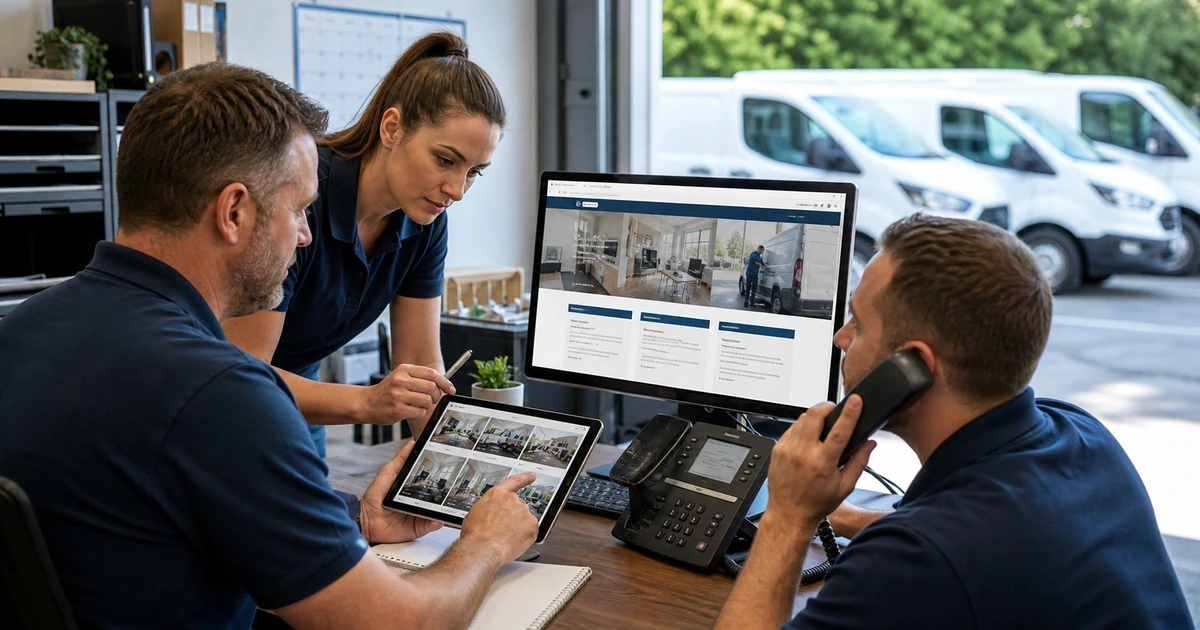
Local SEO helps nearby customers understand what a business offers, where it operates, and why its website deserves a visit. It is not a matter of repeating city names across every paragraph. A strong launch aligns real business information, useful service content, Google Business Profile, trusted listings, website structure, technical accessibility, reputation, and a working path from search to contact.
Start with the services and locations the company can genuinely support. A useful page answers customer questions about scope, process, fit, pricing factors, timing, risks, proof, and the next step. A location page should contain real local relevance and delivery details rather than swapping one city name into duplicated text. Accurate ownership and consistent public facts help search systems and customers connect those pages to the business.
ALLMSP plans and implements local SEO in house for Lawrenceville, Suwanee, Gwinnett County, Metro Atlanta, and businesses throughout Georgia. Our marketing and technical teams can handle content, Business Profile, listings, website changes, analytics, call and form routing, reporting, and ongoing optimization.
Build local visibility from accurate business facts and helpful customer content
- Define demand: Map real services, customer questions, terminology, locations, eligibility, business value, and conversion paths.
- Control identity: Secure the domain, website, Google Business Profile, Analytics, Search Console, listings, phone, and recovery accounts.
- Create useful pages: Publish distinct service and location content with clear scope, expertise, proof, internal links, and next actions.
- Align local data: Keep name, address or service area, phone, hours, categories, services, and website information accurate.
- Prepare discovery: Verify crawlability, canonical URLs, sitemap, structured data, mobile usability, speed, security, and index status.
- Measure outcomes: Track Search, Maps, calls, forms, bookings, qualified leads, response, and completed business with stated limits.
Map customer needs to real services, locations, and conversion paths
Interview sales, service, support, and customers to learn the terms people use before contacting the business. Separate informational questions from urgent service, comparison, product, repair, consultation, and location needs. Record the service delivered, qualifying conditions, geography, customer type, business value, owner, evidence of expertise, common objections, and desired action. Review existing Search Console queries, Business Profile searches, calls, forms, CRM records, and site search where available without assuming volume estimates guarantee demand.
Create a page map that gives each important intent one best destination. A broad service page can explain the complete offering and link to useful subservices. A location page should describe actual service delivery, travel or onsite availability, local customer concerns, response expectations, and relevant proof. Avoid creating a page for every slight keyword variation or duplicating the same copy across nearby cities. Define the phone, form, booking, download, or visit action and who will respond.
- Service intent: Identify the customer problem, solution, scope, exclusions, process, timing, cost factors, proof, and next action.
- Local intent: Use real location coverage, onsite details, response expectations, landmarks or markets, and local evidence where relevant.
- Page ownership: Assign a subject owner, editor, technical owner, conversion owner, update trigger, and review date.
- Content distinction: Give each URL a unique purpose and consolidate pages that would answer the same customer need.
- Conversion route: Choose the appropriate call, form, booking, directions, consultation, or service request and test its response.
The content plan is ready when each page serves a distinct customer decision and the business can fulfill the promise it makes.
Align Business Profile, listings, website content, and search foundations
Place Google Business Profile ownership with the company, confirm eligibility, and publish the real-world name, location or service area, phone, hours, website, primary category, additional categories, services, and authentic photos. Audit important industry and local listings for duplicate or conflicting identity information. Correct the original source where possible and document access. Consistency means facts agree because operations are accurate, not because every description is copied word for word.
On the website, use descriptive titles, one clear main heading, readable sections, useful links, accurate image alternatives, and unique meta descriptions. Make important pages reachable through navigation and contextual internal links. Confirm HTTPS, responsive behavior, crawlable links, canonical URLs, index directives, status codes, sitemap inclusion, and relevant structured data that matches visible content. Measure Core Web Vitals and real user experience, but address intrusive layouts, broken forms, readability, and contact friction alongside technical scores.
- Business facts: Maintain a controlled source for legal and public name, address, service area, phone, hours, website, and locations.
- Profile and listings: Secure ownership, remove stale access, correct duplicates, and align categories and services with reality.
- Page signals: Use descriptive title, heading, copy, media, internal links, contact data, and metadata for the page’s purpose.
- Technical access: Check crawl, render, status, index rules, canonical, sitemap, mobile layout, HTTPS, performance, and structured data.
- User experience: Test navigation, readability, calls, forms, booking, consent, keyboard access, errors, and confirmation on real devices.
Local search foundations are sound when customers and search systems can reach the same accurate, useful, and technically accessible information.
Launch measurement, review quality, and a practical improvement cadence
Configure Search Console, Analytics, Business Profile performance, call evidence, forms, bookings, and CRM or service records as appropriate. Define conversions around completed actions rather than button clicks alone. Test every event, notification, destination, and ownership route. Record privacy, consent, cross-device, offline, repeat-customer, spam, and attribution limitations. Establish baseline impressions, queries, pages, local interactions, qualified leads, response time, and outcomes before judging later change.
Create a compliant review process that invites genuine customer feedback without incentives tied to positive sentiment. Respond professionally and protect private details. Review search visibility, index coverage, page experience, profile accuracy, listing changes, reviews, conversion paths, and lead quality on a schedule. Prioritize issues by customer and business effect. Make one well-defined improvement, document the date and intended outcome, wait for enough evidence, and compare useful results rather than chasing daily rank fluctuations.
- Search evidence: Review queries, impressions, clicks, pages, devices, locations, indexing, enhancements, and material changes.
- Local actions: Track applicable profile views, calls, website clicks, directions, bookings, and searches over comparable periods.
- Lead quality: Record service fit, geography, response, qualification, opportunity, completed work, and reasons for loss.
- Reputation: Use fair review requests, timely responses, privacy protection, escalation, and recurring service themes.
- Optimization: State the problem, evidence, change, owner, date, expected result, observation period, and next decision.
The launch becomes an operating program when visibility, customer actions, and business outcomes drive measured follow-up.
Local SEO strategy and implementation from ALLMSP
ALLMSP can research customer intent, plan site structure, write and improve service and location pages, configure Google Business Profile, correct listings, implement technical SEO, connect structured data, and validate responsive customer pathways. We keep public claims tied to services the business actually provides.
Our in-house team can also manage Analytics, Search Console, call and form measurement, reporting, reviews, website performance, and ongoing optimization. Local businesses around Lawrenceville, Suwanee, Gwinnett County, Metro Atlanta, and Georgia receive marketing and technical work from one accountable team.
- Plan: Map demand, pages, local coverage, business evidence, conversions, ownership, and measurement.
- Implement: Create useful content, align local data, correct technical access, and test the customer journey.
- Improve: Review search and lead evidence, address the largest bottleneck, and verify results over time.
Official guidance for a local SEO implementation
Use Google’s current search and Business Profile guidance as a baseline, then build unique customer-focused pages and measurements around the business’s real services and geography.
- Google SEO Starter Guide. Explains crawlability, site organization, descriptive search appearance, links, images, and helpful content for users and search engines.
- Google local ranking guidance. Describes complete business information and the roles of relevance, distance, and prominence in local results.
- Google people-first content guidance. Provides quality and expertise questions for creating substantial, reliable content for an intended audience.
- Google LocalBusiness structured data. Documents supported local business markup and the requirement that structured information match the page.
Local SEO implementation FAQs
What should a local SEO project begin with?
Begin with real services, eligible locations or service areas, customer questions, existing evidence, page purposes, conversion paths, and business ownership.
Should every nearby city have its own page?
Only create a location page when it can provide genuinely distinct and useful information. Avoid near-duplicate pages that merely exchange city names.
How important is Google Business Profile?
It is a major source of Search and Maps business information. Keep ownership, eligibility, categories, hours, services, photos, website, and contact data accurate.
Do all business listings need identical descriptions?
No. Core identity facts should agree, while descriptions can fit the platform as long as they remain accurate and useful.
What belongs on a local service page?
Explain the problem, service, scope, process, fit, timing, cost factors, risks, proof, local delivery, FAQs, related resources, and next action.
Does structured data guarantee a special search result?
No. Valid markup helps describe applicable content but does not guarantee display or ranking. It must match visible and truthful page information.
Are Core Web Vitals the only technical SEO priority?
No. Crawlability, indexing, canonical URLs, status codes, mobile usability, HTTPS, content access, navigation, forms, and overall experience also matter.
How long does local SEO take?
Discovery and corrections can begin quickly, while search systems may take weeks or months to reflect changes. Competition, history, service, geography, and content affect timing.
Can ALLMSP implement both marketing and technical changes?
Yes. ALLMSP can handle profile, listings, content, web development, SEO, analytics, calls, forms, security, hosting, and ongoing work in house.
Which areas does ALLMSP serve for local SEO?
ALLMSP provides local SEO services around Lawrenceville, Suwanee, Gwinnett County, Metro Atlanta, and throughout Georgia.