






































































































































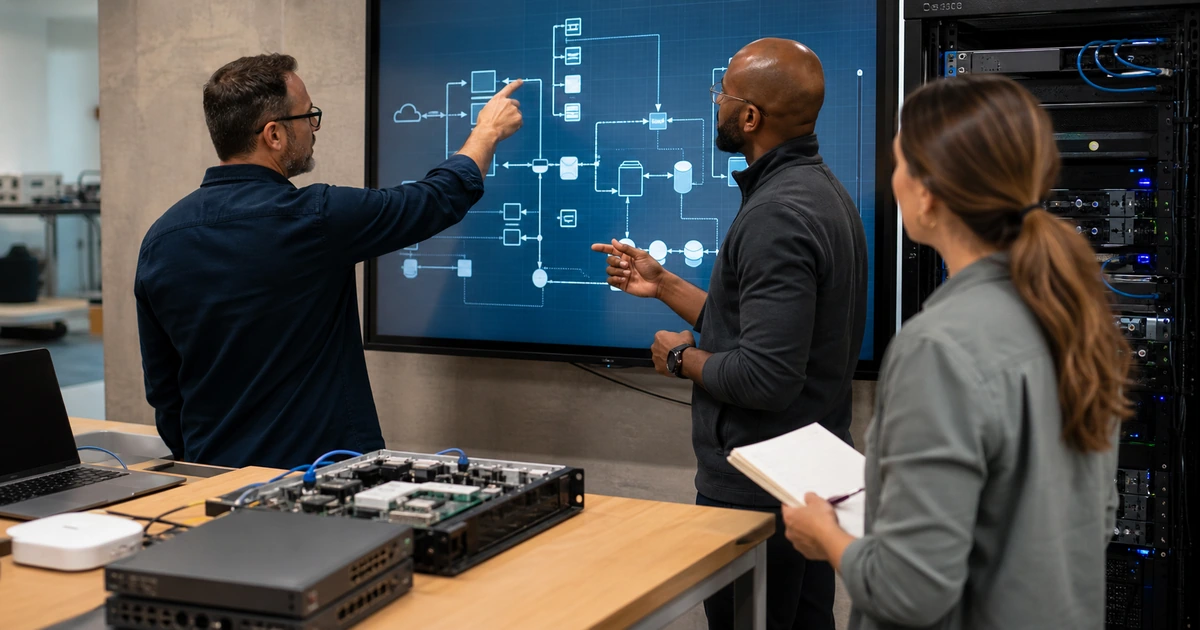
Technical debt is the accumulated cost and risk created when technology no longer fits the work it supports. It can appear as an unsupported server, fragile custom code, duplicate applications, a manual export between systems, an integration that nobody owns, a cloud service with uncontrolled cost, or a recovery process that has never been tested. Treating every old component as equally urgent produces an expensive wish list instead of a modernization plan.
A useful roadmap connects each weakness to a business effect. It shows which conditions slow employees, create customer errors, block reporting, increase security exposure, prevent growth, or consume support time. It also identifies the dependencies that determine sequence. Replacing a finance platform before cleaning master data or changing identity after migrating applications can create more risk than the original debt.
ALLMSP helps organizations in Lawrenceville, Suwanee, Gwinnett County, Metro Atlanta, and across Georgia turn technical debt into controlled modernization. Our Virtual CTO and delivery teams handle discovery, architecture, budgeting, procurement, migration, integration, security, testing, training, documentation, support, and post-launch optimization in house.
The decisions a modernization roadmap must support
- What is actually failing: Separate unsupported technology, structural design limits, poor configuration, missing ownership, weak process, and avoidable duplication.
- Why it matters: Connect each condition to customer service, employee effort, revenue, cost, security, compliance, continuity, reporting, or growth.
- What can wait: Use consequence, likelihood, support horizon, dependency, capacity, and workaround quality to distinguish urgent debt from tolerable debt.
- Which path is best: Compare retain, repair, reconfigure, rehost, refactor, replace, consolidate, rebuild, and retire options using total operating effect.
- What must happen first: Sequence identity, data, network, integration, security, contract, training, testing, and support prerequisites before migration dates.
- How completion is proven: Define workload, user, data, security, recovery, performance, cost, and support acceptance before approving the work.
Create a technical debt register tied to business consequence
Inventory applications, infrastructure, cloud services, databases, integrations, devices, operating systems, network components, identity providers, development tools, contracts, and manual workarounds. For each item, record owner, purpose, users, data, dependencies, support status, lifecycle, incidents, change history, cost, administrative control, backup, recovery, and replacement constraints. Interview the people who perform the work because a service can appear healthy while employees spend hours correcting its output.
Describe the debt as a specific condition rather than a vague age label. Examples include an operating system no longer receiving security updates, an integration that drops failed records without alerting, a database approaching capacity, a business application dependent on one employee, or overlapping tools that produce conflicting customer data. Quantify the current effect and the credible future consequence. Add confidence and evidence so leaders can distinguish measured facts from assumptions.
- Lifecycle debt: End of support, unavailable parts, expired warranty, unsupported dependency, vendor roadmap, required upgrade path, and decision deadline.
- Architecture debt: Tight coupling, single points of failure, manual synchronization, poor scalability, weak separation, undocumented interfaces, and irreversible dependencies.
- Operational debt: Missing monitoring, unclear support, fragile deployment, undocumented recovery, recurring tickets, manual administration, and inconsistent configuration.
- Security debt: Unmanaged identity, excessive privilege, weak authentication, unsupported software, exposed data, incomplete logs, and untested containment.
- Business debt: Slow customer response, repeated entry, reporting delay, quality problems, limited product flexibility, acquisition friction, and expensive employee workarounds.
The register becomes credible when each item has an observable condition, a business consequence, a responsible owner, and evidence that another person can review.
Compare modernization options and design the dependency sequence
Do not assume replacement is always the right answer. A service may be stabilized with supported versions, better monitoring, stronger access, corrected configuration, or a redesigned integration. Another workload may require consolidation because several platforms perform the same job. A custom application might be retained while its database, deployment process, and authentication are modernized. Evaluate each option against functional requirements and quality attributes such as reliability, security, performance, maintainability, cost, and recoverability.
Map prerequisites before setting launch dates. Data ownership and cleanup may precede a CRM change. Identity consolidation may need to occur before several application migrations. Network capacity and device readiness may determine whether a cloud desktop rollout is practical. Contract notice dates can change the financial order. Build a release sequence that limits simultaneous business change and preserves rollback. Include pilot groups with real edge cases rather than only friendly test users.
- Retain and control: Keep the service when it meets requirements, then correct ownership, access, monitoring, documentation, recovery, and cost management.
- Repair or reconfigure: Address a bounded weakness when the platform remains supportable and the corrected state can be tested without structural redesign.
- Rehost or replatform: Change the operating foundation while controlling compatibility, performance, security, data movement, licensing, and ongoing administration.
- Refactor or rebuild: Change application structure only when the business value justifies engineering cost, testing depth, operational maturity, and transition risk.
- Replace, consolidate, or retire: Remove unnecessary capability, select a supported system, migrate authoritative data, preserve records, redirect integrations, and close contracts.
- Dependency plan: Sequence data, identity, network, security, integration, contract, procurement, pilot, training, support, cutover, and decommission work.
A modernization option is useful only when leaders understand what it improves, what it costs to operate afterward, and which dependencies could invalidate the schedule.
Deliver modernization in controlled releases with measurable acceptance
Break the roadmap into releases that produce a useful operating result. Each release needs an accountable business owner, technical owner, scope boundary, budget, change plan, test plan, rollback or recovery path, support readiness, and acceptance decision. Run representative user journeys through the new state. Reconcile data totals and exceptions, test integrations in both directions, validate security and administrative recovery, measure performance under expected load, and confirm that monitoring detects meaningful failures.
Track benefits after launch instead of declaring success at cutover. Compare support demand, cycle time, error rate, availability, deployment speed, security findings, recovery results, user adoption, and total cost with the baseline. Retire old services only after retention, legal, customer, recovery, and audit obligations are satisfied. Record lessons and update the remaining roadmap when estimates, vendor behavior, business priorities, or technical assumptions change.
- Release charter: Business outcome, users, scope, exclusions, owners, dependencies, budget, dates, risk, communication, training, and acceptance authority.
- Technical validation: Function, integration, data, identity, security, performance, monitoring, backup, restore, failover, rollback, and administrative recovery.
- Operational readiness: Support ownership, runbooks, alerts, vendor escalation, maintenance, patching, capacity, documentation, and service reporting.
- Business acceptance: Representative users complete real journeys, exceptions are controlled, required records remain available, and the process owner approves the result.
- Legacy closure: Archive required information, remove access, disable integrations, end billing, recover assets, revoke credentials, and update inventories.
- Benefits review: Measure the promised outcome at thirty, sixty, and ninety days and correct adoption, quality, cost, or support gaps that remain.
Modernization is complete when the new operating result is proven, the old risk is retired, and the organization can support the change without depending on project memory.
Modernization planning and delivery from one ALLMSP team
ALLMSP can build the technical debt register, assess business impact, analyze lifecycle and contracts, model modernization options, document architecture decisions, estimate total cost, sequence dependencies, and create a funded roadmap. Our in-house specialists can implement the selected cloud, application, infrastructure, network, identity, cybersecurity, data, automation, AI, device, and support work.
Organizations in Lawrenceville, Suwanee, Gwinnett County, Atlanta, and throughout Georgia receive one accountable path from assessment through migration and managed operations. That continuity keeps recommendations grounded in support reality and gives leadership clear evidence for approving each release.
- Debt assessment: Inventory, ownership, support status, incidents, cost, business impact, security, recovery, dependencies, contracts, and decision deadlines.
- Roadmap design: Options, tradeoffs, target architecture, prerequisites, sequence, budget, release scope, migration controls, acceptance, and legacy retirement.
- Controlled execution: Procurement, configuration, integration, migration, testing, training, communication, cutover, monitoring, support, and benefits review.
Primary resources for modernization planning
Use vendor-neutral business requirements together with official architecture frameworks when comparing and sequencing modernization choices.
- Azure Cloud Adoption Framework modernization guidance. Microsoft guidance for preparing, assessing, and modernizing workloads with governance and measurable outcomes.
- Google Cloud Architecture Framework. Recommendations for operational excellence, security, reliability, cost, performance, and sustainable workload design.
- AWS Migration Lens. Architecture questions and practices for migration across the Well-Architected pillars.
- ALLMSP Virtual CTO Services. Technical debt assessment, target architecture, modernization roadmaps, governance, and in-house execution.
Technology modernization roadmap FAQs
What is technical debt?
Technical debt is the added cost, risk, delay, or operating burden created when a technology condition no longer fits business requirements, support needs, security expectations, or quality standards.
Does old technology always need to be replaced?
No. Age alone does not determine priority. A supported, controlled service that meets requirements may remain, while a newer platform with unreliable data, excessive privilege, or poor recovery may require urgent work.
How should technical debt be prioritized?
Use business consequence, likelihood, support deadline, capacity, security, recovery, dependency, cost, workaround quality, implementation readiness, and the effort required to reduce the exposure.
Which modernization options should be compared?
Compare retaining with stronger controls, repairing, reconfiguring, rehosting, replatforming, refactoring, rebuilding, replacing, consolidating, and retiring the workload.
Why do modernization projects fail?
Common causes include weak data ownership, ignored dependencies, unrealistic schedules, missing acceptance criteria, insufficient user testing, uncontrolled scope, poor support readiness, and failure to retire the old system.
What should be tested before a migration goes live?
Test representative workflows, integrations, data reconciliation, identity, permissions, security, performance, monitoring, backup, restore, rollback, administrative recovery, support, and user understanding.
How should a modernization roadmap handle contracts?
Record renewal, notice, commitment, cancellation, data return, support, price change, licensing, and transition terms so contract timing becomes part of the sequence and budget.
How is modernization value measured?
Compare cycle time, errors, reliability, support demand, security findings, recovery, deployment speed, capacity, adoption, customer effect, operating cost, and retirement of the original risk.
Can ALLMSP perform the modernization work it recommends?
Yes. ALLMSP manages architecture, cloud, infrastructure, networks, security, applications, data, integrations, automation, AI, migration, training, documentation, support, and optimization in house.
Where does ALLMSP provide technology modernization services?
ALLMSP serves Lawrenceville, Suwanee, Gwinnett County, Metro Atlanta, and organizations throughout Georgia with local Virtual CTO leadership and technical delivery.