
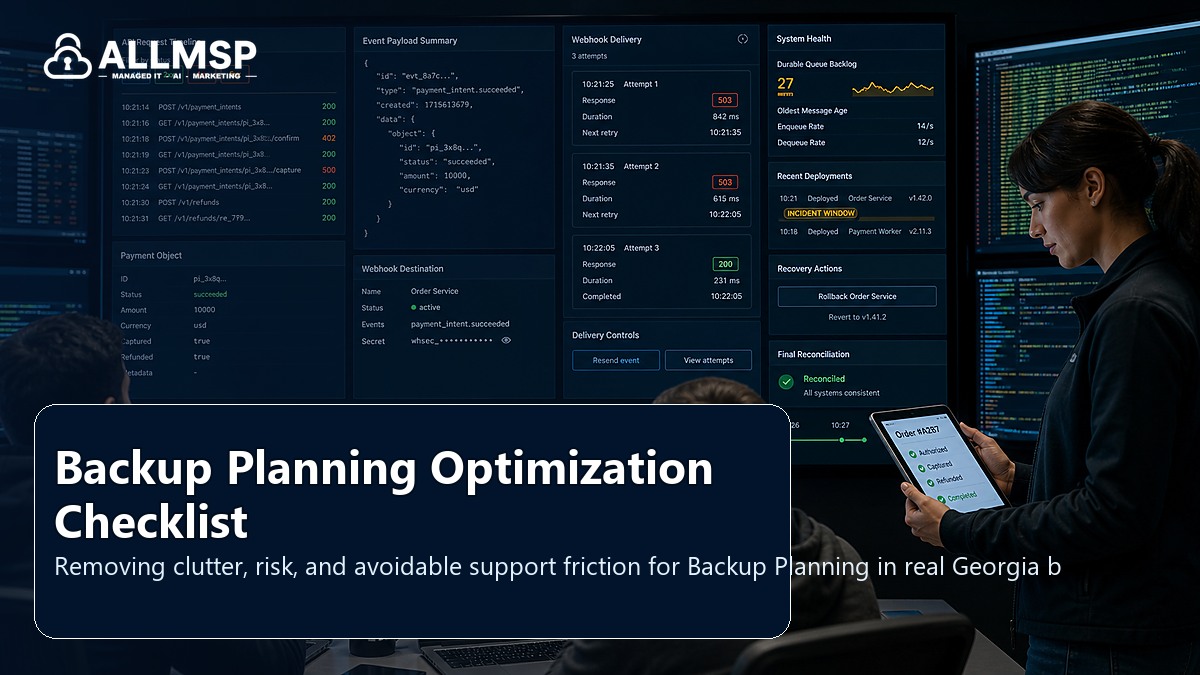
A Backup Planning cleanup checklist affects everyday work long before it feels like a formal technology project. In a growing Georgia business, a Backup Planning cleanup checklist touches backup jobs, cloud data, servers, and endpoints and the way employees get help when the process does not work as expected.
This cleanup checklist focuses on removing clutter, risk, and avoidable support friction for Backup Planning. The goal of a Backup Planning cleanup checklist is to help owners see what should be checked, which decisions matter, and where support should be documented so the same issue does not keep returning.
ALLMSP looks at a Backup Planning cleanup checklist through the business outcome first, then the technical settings. For a Backup Planning cleanup checklist, that order matters because the best configuration is the one people can actually use, support, and improve.
What You Should Be Able To Do After Reading This
- Backup Planning cleanup checklist decisions should be tied to backup jobs, cloud data, and servers, not handled as isolated technical tasks.
- The most urgent Backup Planning cleanup checklist warning sign is when reports look green until a restore fails, a SaaS account is out of scope, or nobody knows the approved recovery target.
- A useful first move for a Backup Planning cleanup checklist is to test one file restore, one mailbox or cloud restore, and one business-critical workflow before buying anything new.
- For a Backup Planning cleanup checklist, leadership should watch restore success rate, RPO, RTO, failed jobs resolved, and systems covered instead of relying on vague confidence that the setup is fine.
- ALLMSP can turn a Backup Planning cleanup checklist into a recovery runbook with test evidence and business owner signoff and keep it useful after the first project is complete.
Start With Where The Current Setup Usually Drifts
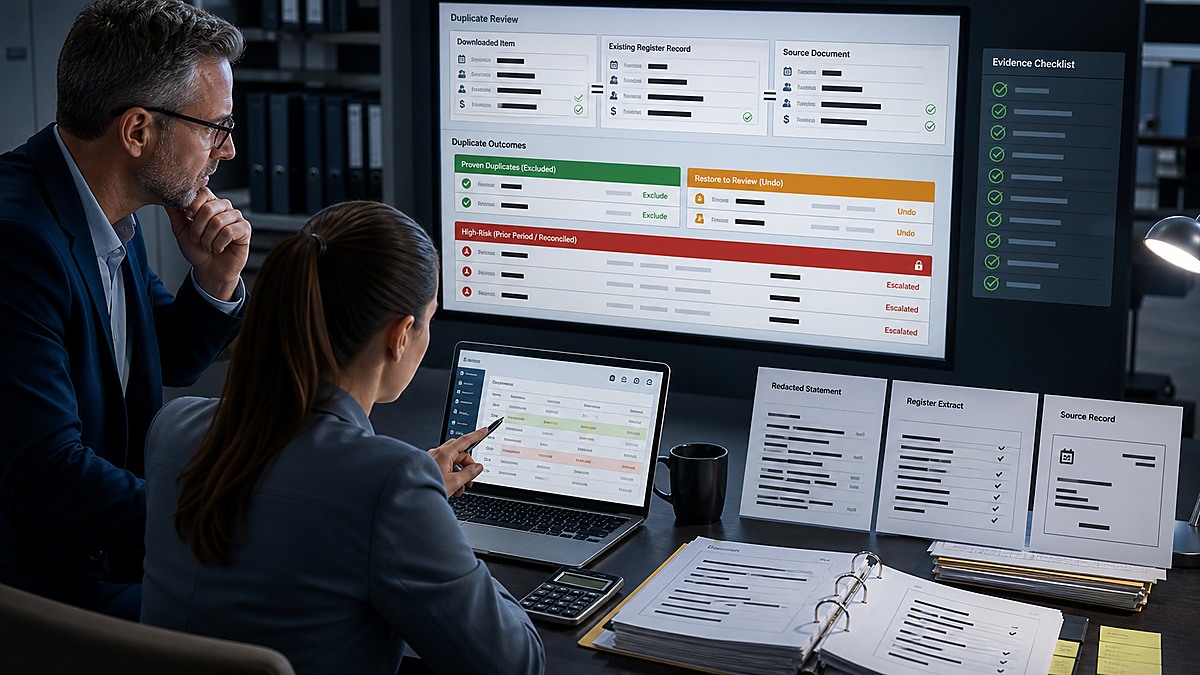
For a Backup Planning cleanup checklist, the first question is not which product button to click. A Backup Planning cleanup checklist is about what outcome the business needs from retention policies, who owns that outcome, and what would happen if the process failed during a busy week.
The Backup Planning cleanup checklist review should include the people who use Backup Planning, the systems connected to it, and the support history that shows where friction already exists. With a Backup Planning cleanup checklist, the fastest clue is often a pattern of repeated tickets, workarounds, or manager approvals that happen outside the documented process.
ALLMSP uses the Backup Planning cleanup checklist discovery step to separate real requirements from inherited habits. For a Backup Planning cleanup checklist, that usually means writing down the current owner, the critical systems, the known exceptions, and the first support path before changing settings.
- Name the business owner and technical owner for this Backup Planning cleanup checklist.
- List where this Backup Planning cleanup checklist touches retention policies, retention policies, and restore runbooks.
- Capture the last few support issues that involved this Backup Planning cleanup checklist.
- Decide what employees should do when this Backup Planning cleanup checklist does not behave as expected.
Look For The Backup Planning Problems That Create Daily Friction

The expensive problems around a Backup Planning cleanup checklist are rarely dramatic at first. Backup Planning cleanup checklist gaps usually show up as delays, duplicate work, unclear ownership, missed follow-up, or small security exceptions that nobody reviews.
One specific Backup Planning cleanup checklist concern is this: reports look green until a restore fails, a SaaS account is out of scope, or nobody knows the approved recovery target. When that Backup Planning cleanup checklist pattern appears, the fix is usually a mix of documentation, configuration, training, and a support rhythm rather than a single setting.
A practical Backup Planning cleanup checklist should turn the mess into a short decision list. For a Backup Planning cleanup checklist, the business needs to know what is urgent, what can wait, who approves exceptions, and how support will know the work is actually finished.
Turn Backup Planning Improvements Into A Repeatable Operating Habit

The best Backup Planning cleanup checklist improvement is the one the team can keep using after the project closes. For a Backup Planning cleanup checklist, the final handoff should include screenshots, owner names, support categories, vendor notes, and review dates that are easy to find.
For a Backup Planning cleanup checklist, the high-value deliverable is a recovery runbook with test evidence and business owner signoff. It gives managers a practical Backup Planning cleanup checklist reference and gives support a clear path when questions come back weeks later.
Use the first Backup Planning cleanup checklist follow-up to test whether the change actually helped. If restore success rate, RPO, RTO, failed jobs resolved, and systems covered does not move in the right direction, the Backup Planning cleanup checklist plan needs another adjustment instead of another vague reminder.
- Create a short Backup Planning cleanup checklist decision log with dates and owners.
- Document the exact support category and escalation path for this Backup Planning cleanup checklist.
- Review Backup Planning cleanup checklist signals such as restore success rate, RPO, RTO, failed jobs resolved, and systems covered after the first real usage cycle.
- Keep unresolved Backup Planning cleanup checklist exceptions visible until someone owns the next action.
How ALLMSP Helps With Backup Planning
ALLMSP can review the current Backup Planning cleanup checklist, identify gaps, coordinate changes, document the result, and support users after the first round of fixes. The Backup Planning cleanup checklist work is practical: make the system easier to use, safer to manage, and clearer for the people responsible for it.
For Georgia businesses, that means a Backup Planning cleanup checklist is not treated as a one-time technical chore. A Backup Planning cleanup checklist becomes part of the operating rhythm, with owners, metrics, and support notes that can survive staff changes and vendor handoffs.
- Backup Planning cleanup checklist assessment and priority list
- Configuration, migration, cleanup, or rollout support for backup jobs, cloud data, and servers
- Employee communication and support documentation for this Backup Planning cleanup checklist
- Follow-up review using restore success rate, RPO, RTO, failed jobs resolved, and systems covered
Useful Reference Points For Backup Planning
These references help ground the Backup Planning recommendations in vendor, security, search, or business-operations guidance while keeping the advice specific to ALLMSP clients.
Frequently Asked Questions
What should a Backup Planning cleanup checklist include for a small business?
A practical Backup Planning cleanup checklist should include owners, backup jobs, cloud data, and servers, support steps, known exceptions, and a review schedule.
How do I know if a Backup Planning cleanup checklist needs attention?
A Backup Planning cleanup checklist needs attention when reports look green until a restore fails, a SaaS account is out of scope, or nobody knows the approved recovery target. Repeated Backup Planning cleanup checklist tickets and unclear ownership are usually enough reason to review it.
What is the first thing to check in a Backup Planning cleanup checklist?
The first check for a Backup Planning cleanup checklist is whether the business owner, technical owner, and support path are documented before settings or vendors are changed.
How can a Backup Planning cleanup checklist improve day-to-day work?
A Backup Planning cleanup checklist improves daily work when employees know where to go, managers can approve exceptions quickly, and support can repeat the fix without guessing.
What metric should leadership watch for a Backup Planning cleanup checklist?
For a Backup Planning cleanup checklist, leadership should watch restore success rate, RPO, RTO, failed jobs resolved, and systems covered and compare those numbers with employee feedback and support ticket patterns.
How often should Backup Planning be reviewed?
Most businesses should review Backup Planning quarterly, with faster follow-up after migrations, vendor changes, security incidents, or repeated support issues tied to the cleanup checklist.
What should be documented for a Backup Planning cleanup checklist?
Document the Backup Planning owner, connected systems, support category, vendor contacts, approval rules, review dates, and any known exceptions for this cleanup checklist.
Can ALLMSP help clean up an existing Backup Planning environment?
Yes. ALLMSP can review an existing Backup Planning cleanup checklist, rank the gaps, handle the technical cleanup, and leave behind support notes the team can reuse.
How do we avoid disrupting employees during a Backup Planning cleanup checklist change?
For a Backup Planning cleanup checklist, start with a small test group, communicate the reason for the change, keep support visible, and update instructions based on real questions.
Why does Backup Planning matter for Data Backup & Recovery?
Backup Planning matters for Data Backup & Recovery because this cleanup checklist connects technology decisions to business outcomes like fewer delays, clearer handoffs, lower risk, and better visibility.