


















































































































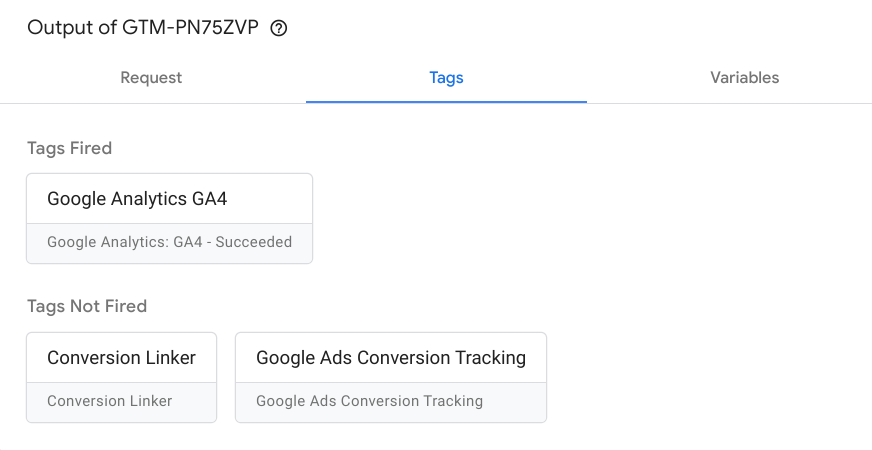
Google’s server-side preview example shows GA4 under Tags Fired while the Ads conversion tags are under Tags Not Fired. For the selected test event, compare each destination with its expected trigger; “not fired” is not automatically an error. One succeeded tag does not establish a completed inquiry or correct Ads tracking.[5]
A marketing systems review should show whether public information is accurate, company accounts are controlled, inquiries are secure, events fire correctly, intake status is consistent, and reports reach a suitable engagement. Search visibility alone does not prove that the system helps the firm or prospective clients.
Preserve account ownership, analytics history, call and form evidence, approved public versions, and intake records before changing tags, URLs, phone numbers, profiles, or access. Keep client identities and financial details out of advertising exports. Route questionable professional claims to the responsible firm reviewer.
Evidence to collect before changing CPA and financial firm marketing
The review leaves a dated map of public assets, owners, claims, lead paths, tracking, privacy boundaries, intake outcomes, reporting gaps, and corrective priorities. Every finding names the affected prospect journey and the evidence required to close it.
- Website and content inventory, services, locations, biographies, credentials, claims, approvals, privacy language, forms, and internal links.
- Ownership and access exports for domain, site, Business Profile, Search Console, GA4, Tag Manager, Ads, calls, forms, CRM, directories, and billing.
- Search Console queries, local profile data, campaign search terms, landing pages, event diagnostics, calls, forms, and source reconciliation.
- Intake response, service fit, location, consultation, proposal, engagement, decline reason, spam, duplicate, and existing-client outcomes.
- Review calendars, change history, provider contracts, account recovery tests, unresolved suspensions, rejected edits, broken links, and recurring support issues.
Review public accuracy, claims, ownership, and local presence
Service, credential, and claim accuracy
What to check: Sample material statements and capture current support, responsible reviewer, approval date, disclosure, consistency, and pages that repeat an outdated claim.
What to do next: Correct or remove unsupported language, obtain accountable review, update linked assets, record approval, and schedule rechecks after service, credential, rule, or personnel changes.
Account ownership and privileged access
What to check: Export owners, administrators, users, service accounts, recovery methods, payment profiles, last activity, change history, and provider access. Test backup ownership.
What to do next: Add company owners and recovery, separate administration, reduce roles, remove former users and unknown providers, rotate exposed credentials, and document billing and transfer procedures.
Website usefulness and search intent
What to check: Compare queries with the answer, service fit, location truth, readability, duplication, unsupported promises, next step, qualified inquiries, and accepted outcomes.
Search Console measures search visibility and clicks; it does not establish consultation or engagement outcomes. [1]
What to do next: Improve or consolidate pages around a real user task, add accurate process and decision information, correct titles and links, remove forced keyword repetition, and route to the appropriate service and secure contact path.
Test pages, campaigns, calls, forms, analytics, and privacy
Business Profile and directory consistency
What to check: Compare public details with the website and intake, inspect duplicates and practitioner listings, test calls and links, and capture ownership, rejected edits, suspension warnings, and response history.
What to do next: Correct inaccurate information through supported processes, close improper duplicates, assign monitored phone and review response, document edits, and keep backup company ownership.
Apply Google’s actual business and practitioner eligibility rules and represent the real operation accurately. [2]
Paid search quality and claims
What to check: Sample spend by service and location and label irrelevant research, jobs, unsupported work, existing clients, out-of-area demand, bad claims, missed calls, suitable inquiries, consultations, and engagements.
What to do next: Tighten approved service themes and geography, add precise negatives, align pages and claims, run during supported intake coverage, correct conversion goals, and optimize toward suitable outcomes.
Call, form, and privacy path
What to check: Test mobile and desktop contact, missed and after-hours paths, spam controls, success messages, notifications, field values, data destinations, and what third parties receive.
What to do next: Repair routing, keep numbers under firm control, minimize fields, remove sensitive data from tracking, direct documents to secure intake, restrict access, and document retention and recording decisions.
GA4, Tag Manager, and conversion integrity
What to check: Submit representative consultation and document-intake journeys, then identify duplicate, missing, premature, misleading, or sensitive financial-services events. Reconcile browser tests, GA4 DebugView, Ads status, and intake records.
Google’s ordinary Analytics collection must exclude personally identifiable information; inspect actual URLs and event data. [3]
What to do next: Document an event plan, fire on confirmed success, remove sensitive parameters, deduplicate, correct domains and referrals, restrict publishing, test changes, and annotate material updates.
Reconcile intake, engagement outcomes, reporting, and support
Intake response and status consistency
What to check: Sample leads by source and time and record first useful response, owner, status, notes, duplicate handling, existing-client routing, secure follow-up, and final outcome.
What to do next: Define statuses, service-level expectations, backup coverage, escalation, secure follow-up, and manager review. Correct failed notifications and train users who classify the same result differently.
Source-to-engagement reconciliation
What to check: Match non-sensitive records from source through outcome and quantify unknown source, duplicate conversion, unqualified lead, missing status, and platform totals that cannot be explained.
What to do next: Standardize approved identifiers and outcomes, repair event and status gaps, reconcile on a schedule, and report suitable engagements and cost alongside lead counts.
Google distinguishes initial inquiries from qualified and converted lead stages. Any advertising upload requires a separate approved data/consent and implementation decision. [4]
Content and account maintenance
What to check: Identify stale facts, orphaned pages, missing reviewers, overdue updates, broken journeys, former-user access, undocumented changes, recurring failures, and assets that no longer support a business goal.
What to do next: Assign owners and review frequency, update useful material, consolidate overlap carefully, repair links, archive prior versions, remove stale access, and verify search and user effects after each change.
Prioritize trust, control, lead quality, and data integrity
Report findings by public impact, affected service and location, ownership, privacy, inquiry loss, data reliability, evidence, immediate correction, long-term owner, due date, and retest. Separate a traffic problem from a page problem, intake problem, tracking problem, and service-fit problem.
Priority 1: Trust, ownership, or privacy failure
Act immediately on false or unsupported material claims, lost account ownership, profile suspension risk, exposed prospect information, compromised forms or tags, hijacked phone routes, or unauthorized publishing and billing access.
Priority 2: Broken inquiry or measurement path
Urgently repair missed calls, failed forms, unsafe intake, duplicate conversions, missing source continuity, weak status discipline, or campaigns spending against irrelevant and unsupported demand.
Priority 3: Visibility and usability weakness
Improve thin or duplicate pages, inconsistent local information, slow mobile experience, unclear services, stale content, poor internal links, and weak reporting after trust and data integrity are controlled.
Priority 4: Growth experiment
Test new campaigns, content formats, locations, automation, and channels only with approved services, clear capacity, protected data, measurable outcomes, and a documented stop rule.
A small marketing-audit sample that exposes real handoff failures
Illustrative tests use dummy prospect information. Keep detailed client and financial data inside approved systems.
On a narrow screen, scroll horizontally to read every table column.
| Test | Expected evidence | Failure worth fixing |
|---|---|---|
| Complete the consultation form once, then attempt a rejected submission | One accepted intake record and one defined success event; no success for the rejected attempt. | Duplicate or premature conversions make lead quality impossible to interpret. |
| Ask the backup owner to administer the tag container | Approved access and an understood publishing/recovery procedure. | Only the former agency can change or recover the container. |
| Reconcile one accepted engagement to an inquiry source | A restricted, non-sensitive join with a documented attribution limitation. | The report declares a retained client using only a browser event. |
Frequently Asked Questions
Which CPA and financial firm marketing claims should be reviewed regularly?
Review statements that can influence a prospect’s decision: services, credentials, registration, experience, fees, specialties, locations, testimonials and outcomes. For a sample claim, find current support and the approving professional, then compare every page or ad that repeats it. A claim without adequate support should be corrected or paused while the responsible reviewer resolves it.
How should a firm audit ownership of its marketing accounts?
Prove that a current firm owner can sign in, recover access, view billing and administer the important platforms without relying on the departing provider. Check domain/DNS, hosting, Business Profile, Search Console, Analytics, Tag Manager, Ads, calls, forms and intake separately. Record roles and dependencies before removing access. A password list alone does not establish ownership or a usable recovery route.
How can a CPA firm tell whether an SEO page is genuinely useful?
Give a reviewer a real target query and ask whether the page resolves the user’s service decision. It should explain scope, suitability, practical preparation and the next step accurately, with the relevant internal path. Compare that result with Search Console and suitable inquiries. Repeating keywords or changing cities does not demonstrate usefulness, and rankings alone do not prove qualified demand.
Supporting sources: [1]
What should CPA firms check in Google Business Profile?
Verify the profile against the firm’s actual operations and Google’s eligibility rules. Check ownership, name, category, address or service area, practitioner arrangement, hours, telephone and linked contact path. Test the phone number and review any duplicates or rejected edits. Do not treat an address used for mail or a service-city landing page as proof of an eligible customer-facing office.
Supporting sources: [2]
How should a CPA firm review Google Ads lead quality?
Take a sample of paid inquiries back to their search terms, locations, landing pages and intake outcomes. Distinguish wrong service, spam, existing clients, suitable consultations and accepted engagements. Check that the conversion selected for bidding represents the intended stage. A campaign can report more conversions while delivering less suitable work if the tracked event is too early or fires twice.
Supporting sources: [4]
How can a financial firm review website forms and call tracking safely?
Use dummy contact information to walk through mobile/desktop forms and call routes. Inspect the destination record, permissions, confirmation message, notifications, analytics payload and after-hours behavior. Confirm that confidential documents go through secure intake and that ordinary Analytics does not receive PII. Recording, retention and consent controls need their own approved test; a working form is not sufficient.
Supporting sources: [3]
What should a CPA firm verify in GA4 and Tag Manager?
Submit one successful test inquiry and one failed or abandoned attempt. The defined success event should occur once only after real acceptance, and the failed attempt should not count as success. Compare browser diagnostics with GA4 and the intake record, allowing for processing and reporting differences. Inspect event names, parameters and URLs for sensitive values before publishing the change.
Supporting sources: [3]
How should accounting firms review marketing lead response?
Sample inquiries across sources and staffed/unattended times. Trace assignment, first useful response, secure follow-up and final status, and test what happens when the assigned person is absent. An automated acknowledgment is a separate event from useful human contact. Record unanswered or misrouted inquiries as failures and repeat the exact route after correcting ownership or notifications.
How can a CPA firm verify source-to-engagement attribution?
Reconcile a restricted sample using approved non-sensitive references rather than expecting aggregate dashboards to match automatically. Explain differences caused by duplicate events, source loss, attribution scope, reporting delay or intake classification. Keep unmatched records visible. Document any proposed offline Ads feedback separately; a reconciliation exercise does not authorize export of client or financial information.
How often should CPA and financial firms review marketing systems?
Use a regular operational review plus event-triggered checks after an agency departure, account change, new campaign, form/tag release, service change or broken journey. Review high-impact access and privacy findings first. The interval is a management decision, not a universal legal deadline. Preserve evidence and retest the affected journey after each material correction.
Choose the next step
- Improve CPA Search Visibility and Qualified Lead Follow-Up — Use verified evidence to improve the service pages and follow-up that need attention.
- Build Reliable Google Ads Lead and Revenue Tracking — Review the specific Google Ads conversion setup when the audit finds an incorrect or duplicate lead event.
Sources
- Search Console: Performance report overview and basic setup. Clicks/impressions/CTR/position with query/page/device/date filters describe search performance, not consultations or signed clients. ↩
- Google Business Profile: Guidelines for representing your business. Accurate real-world location/name/categories, office eligibility, practitioner specifics and business-controlled telephone; service-city pages do not create eligible offices. ↩
- Google Analytics: Best practices to avoid sending personally identifiable information. Avoid PII in ordinary Analytics collection including URLs, page titles and event data; redaction is not a replacement for preventing collection. ↩
- Google Ads: About qualified leads and converted leads. Qualified and converted lead milestones can represent defined later lead stages; privacy/consent/implementation eligibility must be checked separately before any upload. ↩
- Google Tag Manager: Preview and debug server containers ↩