


























































































































































Portable power banks often enter businesses as travel accessories and then escape normal asset control. They move between employees, conference rooms, loaner bags, vehicles, and storage drawers while their model labels wear down and purchase evidence disappears. That creates a safety and recall problem: Anker’s current recall process asks owners to identify exact models and, for affected families, verify serials or proof of purchase. An inventory entry that says only ‘black Anker battery’ cannot support that decision.
Recall scope can change, so an evergreen procedure should point to the live list rather than freeze a model list into a policy. Anker’s product-recall page currently links multiple power-bank actions, and its global recall instructions tell confirmed owners to stop use, preserve the unit until qualification, and follow special disposal guidance. The company’s power-bank safety guide adds operating and storage temperature guidance, ventilation, long-term charge recommendations, and periodic recharge expectations. These sources make inspection cadence, storage conditions, and custody operational requirements.
This article assigns work across IT, facilities, safety, procurement, finance, travel, and disposition providers. It does not replace emergency services, fire-code advice, transportation rules, hazardous-material requirements, or the vendor’s current recall instructions. When a unit is hot, smoking, swollen, damaged, wet, or otherwise unstable, people should withdraw, follow the organization’s emergency plan, and involve trained responders rather than handling it for documentation.
For organizations in Lawrenceville, Suwanee, Gwinnett County, Metro Atlanta, and across Georgia, ALLMSP can audit Anker power banks for safety, recalls, and retirement through one accountable in-house process for assessment, configuration, testing, and support.
Key decisions at a glance
- Maintain restricted records for exact Anker model, serial, purchase evidence, assigned custodian, battery condition, issue date, inspection history, storage location, travel status, recall result, claim, and disposition.
- Query Anker’s live product-recall page at intake, each scheduled audit, before reissue, and after any safety notice, model alone may not decide scope when the vendor also requires serial verification.
- Stop using and isolate any confirmed recalled, swollen, leaking, cracked, unusually hot, smoking, odorous, wet, punctured, or otherwise abnormal power bank without shipping or discarding it casually.
- Follow the exact Anker recall instructions and local authority or qualified facility guidance because recalled lithium batteries may be excluded from ordinary trash, curbside recycling, and common retail battery bins.
- Close the lifecycle only after physical quantity, protected identity, user assignment, claim result, replacement, custody, disposition evidence, management records, and financial records agree.
Create a Protected Unit Inventory and Screen the Live Anker Recall List

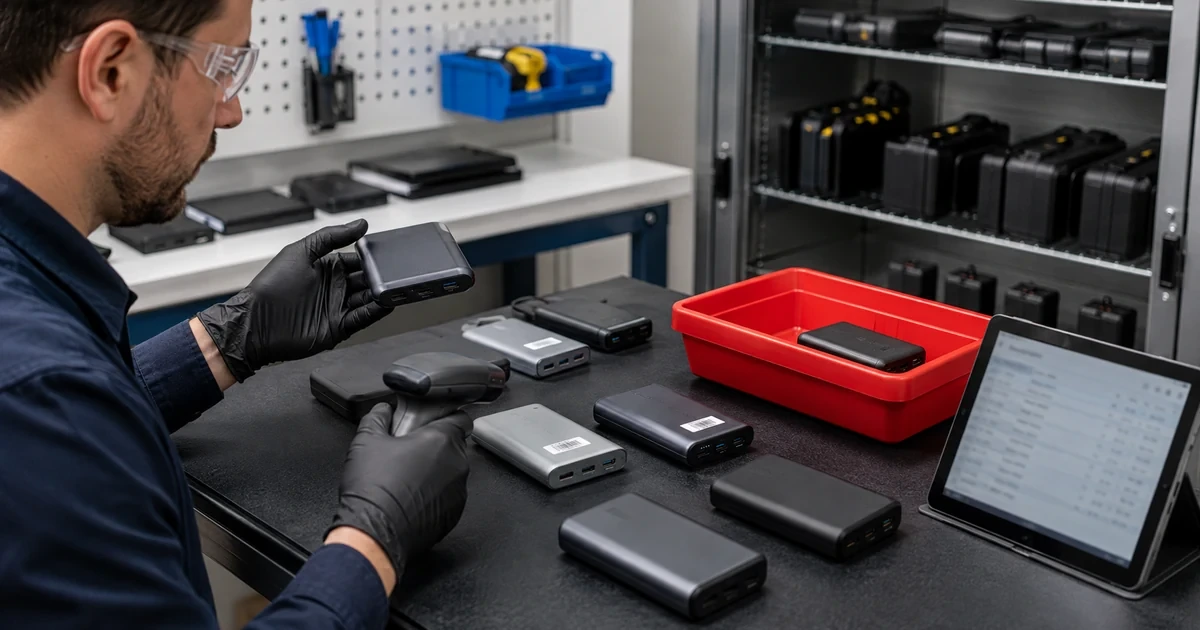
Collect every company-owned and company-reimbursed Anker power bank from users, travel kits, meeting rooms, loaner pools, vehicles, and storage. In a restricted system, record exact product name, model number, serial number, purchase channel, order or receipt, purchase date, color, capacity, connector configuration, built-in cable, assigned custodian, department, location, issue date, condition, inspection date, storage state, travel status, warranty basis, and expected retirement. Photograph the complete label for evidence, but never place that image in a public ticket, knowledge article, AI prompt, or shared chat. If the label is worn, do not guess from enclosure appearance, quarantine the unit and ask Anker support how to identify it. Check Anker’s live Product Recalls page at intake and during every audit. Follow the linked notice for the exact region. Some Anker notices begin with a model match and then require serial verification or proof of purchase, so record separately: model in scope, serial checked, result, date, source URL, reviewer, claim status, and next action. Do not mark every unit of a named family as confirmed recalled when the notice defines a narrower batch, and do not mark an unmatched unit safe forever. Recall lists and scope can expand. Recheck before reissue, resale, donation, travel, and disposition and after vendor, regulator, distributor, insurer, or procurement alerts. Reconcile the physical count to reimbursement records and purchasing systems, personally held corporate units and gifts used for work still need an ownership and safety decision. Publish a privacy-safe status dashboard by counts and state, not by employee or serial. Categories might include awaiting identity, screened clear on date, possible match, awaiting serial verification, confirmed recalled, safety quarantine, claim submitted, replacement received, and disposition verified.
- Find units in user kits, loaner pools, conference rooms, vehicles, drawers, field bags, travel stores, reimbursements, and purchasing records.
- Protect exact model, serial, purchase proof, custodian, location, condition, storage state, inspection, recall result, claim, and disposition.
- Query Anker’s live regional recall page and follow the linked notice, distinguish model-family scope from serial-confirmed eligibility.
- Recheck before issue, reissue, travel, resale, donation, and disposal and after any new safety alert or scope expansion.
- Quarantine unreadable, untraceable, counterfeit-looking, modified, damaged, or unverified units instead of inferring identity from color and shape.
Operate Safe Charging, Storage, Inspection, and Incident Escalation

Create an inspection that a trained support or safety worker can perform without opening the power bank. Confirm label and asset match, enclosure seams, swelling, cracks, dents, punctures, corrosion, liquid exposure, ports, built-in cables, connector fit, odor, contamination, indicator behavior, charging stability, unexpected drain, and abnormal temperature. Do not press on a swollen enclosure, probe a port, disassemble a sealed unit, or run a stress test on suspect hardware. Anker’s Power Bank Safety Guide recommends a cool, dry, ventilated charging environment, compatible power equipment, an operating and storage range of 0 to 35 degrees Celsius, approximately 60 percent charge for long-term storage, and recharge about every three months. Treat those values as vendor guidance and validate the exact product manual where it differs. Do not charge on beds, upholstered furniture, paper piles, direct sun, parked vehicles, or other heat-trapping surfaces. Keep charging away from exits, combustibles, unattended public areas, and sensitive equipment according to the organization’s fire and facilities plan. Use approved chargers and cables whose output matches the power bank. Observe a sample after issue and after long storage, a device that repeatedly resets, becomes excessively hot, or cannot hold a stable charge belongs in evaluation, not a travel bag. Define emergency states in advance. Smoke, hissing, rapid heating, swelling, leaking, fire, severe odor, or physical damage after impact or liquid exposure requires immediate withdrawal and the site emergency procedure. Do not ask an employee to carry the unit across an office, seal a hot battery in an ordinary container, ship it to support, photograph it at close range, or put it in a freezer. Evacuate or isolate the area as the plan directs and involve trained emergency, facilities, and hazardous-material personnel. After the scene is safe, preserve only the evidence authorized by safety leadership: asset identity, time, location, witnesses, charger and cable, surface, state of charge if known, photos from a safe distance, responder actions, and custody.
- Inspect identity, seams, swelling, cracks, impact, liquid exposure, ports, cables, connectors, odor, heat, charge stability, discharge behavior, contamination, and storage history without opening the unit.
- Use a cool, dry, ventilated area and compatible charging equipment, follow the exact model guide and Anker’s current long-term storage recommendations.
- Keep charging away from heat-trapping material, direct sun, parked vehicles, exits, combustibles, and unattended public areas under the site safety plan.
- Stop on smoke, hissing, rapid heat, swelling, leaking, puncture, severe odor, fire, water damage, or unstable behavior and follow emergency procedures.
- Do not transport, ship, disassemble, puncture, compress, freeze, casually box, or dispose of an abnormal lithium-ion unit to obtain evidence.
Control Recall Claims, Recalled-Battery Disposition, Replacement, and Retirement
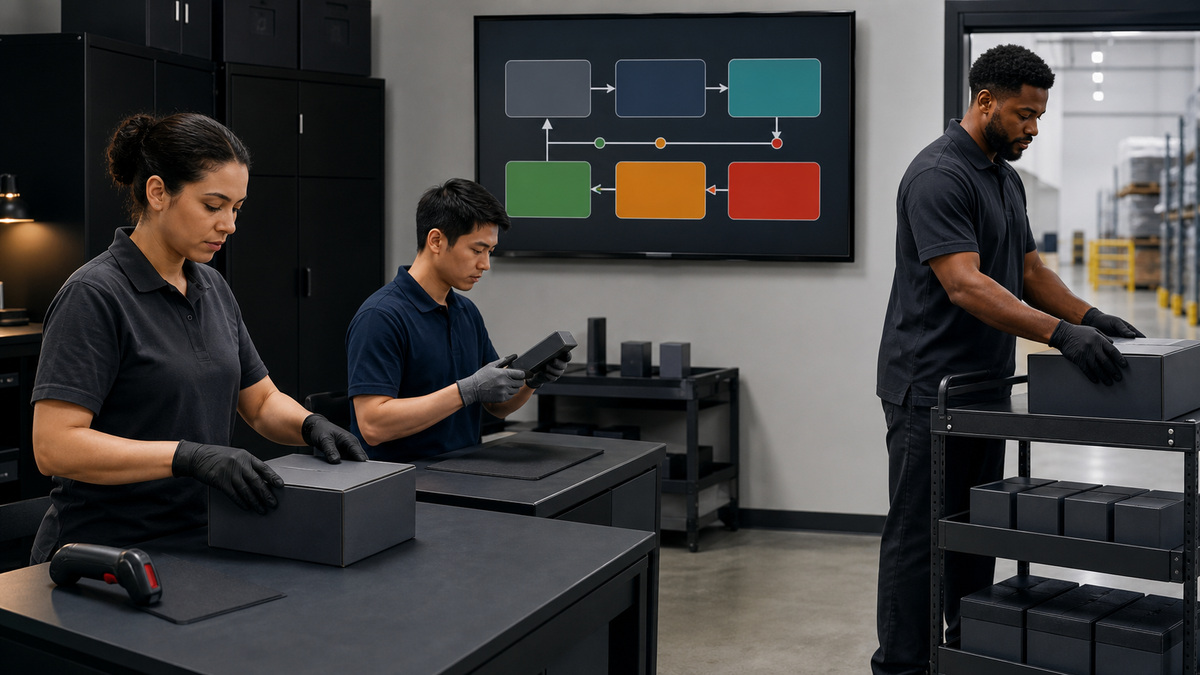
For a potential recall match, follow the current Anker regional notice exactly. Preserve the unit’s model, protected serial, proof of purchase, requested photographs, claim submission, confirmation, vendor response, replacement or credit choice, and disposal instruction. Avoid inventing a generic return shipment. Anker’s global notice says confirmed users should stop using affected devices and not discard them until qualification, its disposal section warns that recalled lithium-ion batteries do not belong in ordinary rubbish, general recycling, or typical retail battery drop boxes and directs owners to a certified or otherwise approved route. Other regional notices may arrange pickup or provide different steps. The live notice, regulator, carrier, local authority, and qualified facility determine the actual path. Maintain chain of custody from user surrender through final disposition. Record who took the device, its safe storage status, container approved by the safety lead, location, transfer date, receiving facility, transport or pickup evidence, serialized or batch receipt, final certificate where provided, and any mismatch. Do not store a confirmed recalled battery in the ordinary loaner cabinet while a claim waits. Do not ship it under a normal parcel label. Do not mark it destroyed merely because it left the office. On replacement, reconcile the vendor case, expected model, package condition, new protected identity, accessories, warranty or credit, asset ownership, charging test, safety inspection, user assignment, and return of any temporary equipment. A replacement is a new asset and must be screened against the current recall list before issue. For routine retirement, use condition, age, cycle behavior where available, supportability, port damage, capacity, policy, and business need, do not wait for swelling or failure. Remove the unit from travel and loaner inventories, recover associated cables, update reimbursement and finance records, and use a qualified lithium-battery disposition route. Review the fleet at least quarterly and whenever Anker, a regulator, insurer, carrier, or safety authority issues a notice. Completion requires every physical unit to be screened and assigned a state, every confirmed claim to reach an outcome, and every disposed unit to have evidence that matches the protected inventory.
- Follow the current regional Anker notice for identity, serial verification, proof, photographs, stop-use timing, claim, pickup, shipment, and disposal.
- Keep confirmed recalled units out of ordinary drawers, trash, curbside recycling, and typical retail battery bins unless the live instruction explicitly authorizes a route.
- Preserve authorized custody from surrender through qualified receipt or certificate and investigate count, serial, carrier, facility, claim, and replacement mismatches.
- Treat each replacement as a new screened asset with condition, identity, accessories, warranty, charging test, assignment, and temporary-equipment reconciliation.
- Retire aging or degraded units before a safety event and close asset, travel, loaner, procurement, finance, claim, and disposition records together.
Run Quarterly Reconciliation and Close Every Unresolved Battery State
A quarterly review should begin with the current Anker recall page and end with a reconciled physical population. Export privacy-safe counts from procurement, reimbursement, asset, loaner, travel, claim, safety, and disposition systems. Ask custodians to attest that assigned units are present and in normal condition, then physically sample by department, location, purchase batch, age, and use intensity. Investigate every unit whose identity cannot be read, whose custodian has left, whose location is unknown, whose inspection is overdue, or whose claim and physical state disagree. Do not close a recall campaign at the percentage of forms submitted. Measure units identified, serials screened, possible matches, confirmed units surrendered, claims acknowledged, replacements or credits received, recalled devices transferred through the approved path, receipts or certificates matched, and exceptions still open. Reconcile purchasing quantity to active, spare, lost, stolen, replaced, returned, and dispositioned states. Escalate unexplained shortages because a missing recalled battery remains a safety exposure. Review storage areas for ventilation, temperature, combustible material, charging practices, access control, signage, emergency routing, and long-idle recharge dates under the site plan. Train service-desk, facilities, travel, procurement, and managers to recognize abnormal conditions and route alerts without telling users to mail or discard a device. Preserve lessons from each incident or vendor notice: how fast the organization found units, which records were missing, whether remote staff responded, whether the facility accepted recalled batteries, and where custody failed. Update purchasing and issue controls accordingly. The audit is complete only when every known unit has a current identity, condition, recall decision, custodian or storage owner, and next action, and every retired or recalled unit has disposition evidence that matches the restricted record.
- Start each quarterly audit from the live Anker recall source and reconcile procurement, reimbursement, assets, loaners, travel kits, claims, incidents, replacements, and disposition.
- Sample physically and investigate unreadable identities, departed custodians, unknown locations, overdue inspections, open claims, and missing units.
- Track recall completion through confirmed surrender, vendor outcome, replacement or credit, approved transfer, and matched receipt rather than form submission alone.
- Inspect storage and charging areas for the site-approved temperature, ventilation, combustibles, access, emergency route, and long-idle maintenance.
- Close only when every unit has a current identity, condition, recall state, owner, next action, and,where applicable,verified final disposition.
Official product documentation and ALLMSP resources
- Anker: Product recalls
- Anker: Global voluntary recall instructions
- Anker: Power Bank Safety Guide
- Anker: Power safety resources
- Anker: Warranty and refund policy
- ALLMSP Anker Hardware Support
- ALLMSP Hardware Support
- ALLMSP IT Consulting
- ALLMSP Managed IT Services
- ALLMSP Cybersecurity Services
- Contact ALLMSP
Frequently Asked Questions
Why should a business inventory small Anker power banks?
Recall and safety decisions require exact identity, ownership, location, condition, and purchase evidence. A unit moving between travel bags and drawers cannot be screened, inspected, claimed, or dispositioned reliably.
Is an Anker model number enough to determine recall status?
Not always. Current notices can require a model match followed by serial verification or proof of purchase. Record model scope, serial result, date, source, reviewer, and next action separately.
How often should Anker power banks be checked for recalls?
Check at intake, during scheduled fleet audits, before issue or reissue, before travel or disposition, and after vendor, regulator, distributor, insurer, carrier, or procurement alerts. Scope can change.
What should happen when an Anker power bank is confirmed recalled?
Stop using it and follow the exact live regional notice. Preserve required evidence and custody, keep it out of ordinary circulation, and do not ship or discard it until the approved instructions are clear.
Can a recalled Anker power bank go in a retail battery recycling bin?
Anker’s global recall guidance warns that recalled lithium-ion devices require a different route from ordinary trash, general recycling, and typical retail battery bins. Use the current notice and approved local facility or pickup path.
What conditions require immediate safety escalation?
Smoke, hissing, rapid heating, swelling, leaking, puncture, severe odor, fire, liquid damage, or unstable behavior calls for the site emergency plan and trained responders, not routine help-desk handling.
How should Anker power banks be stored for long periods?
Anker’s current safety guide recommends a cool, dry, ventilated environment, about 60 percent charge, and periodic recharge around every three months. Confirm the exact product guide and local safety policy.
Should a hot or swollen power bank be photographed for a ticket?
Personal safety comes first. Do not approach, carry, squeeze, box, or manipulate an unstable device for evidence. Follow the emergency plan, record only what trained responders and safety leadership authorize.
What must be checked when Anker sends a replacement?
Reconcile the claim and expected model, inspect packaging and condition, create the new protected asset record, screen current recalls, test charging safely, assign accessories and user, and close temporary equipment and finance records.
How can ALLMSP help with an Anker power-bank audit?
ALLMSP can build the protected inventory, screen current recall sources, coordinate inspection and quarantine states, document claims and custody, reconcile replacements, and verify that qualified disposition matches asset records.