A continuity plan can become inaccurate while every document remains neatly approved. Employees change roles, phone numbers expire, cloud platforms replace servers, offices move, vendors merge, applications gain integrations, backup targets drift, and temporary procedures stop matching daily work. A review should test whether the plan reflects the current organization and whether people can actually use it under pressure.
The strongest review combines document analysis with interviews, system evidence, contact tests, walkthroughs, technical recovery tests, and exercises. It distinguishes a missing policy from a failed capability. It also separates a scenario limitation from a real operational gap and turns every material finding into owned corrective work with a retest.
ALLMSP reviews and exercises business continuity programs in house for Lawrenceville, Suwanee, Gwinnett County, Metro Atlanta, and organizations across Georgia. We can evaluate business procedures and the technology beneath them, then implement the network, cloud, backup, cybersecurity, device, communication, and documentation improvements the review identifies.
Verify that plans, people, systems, and suppliers match current operations
- Confirm scope: List legal entities, locations, services, departments, shifts, platforms, vendors, facilities, hazards, and changes the review must cover.
- Validate priorities: Revisit essential functions, impact over time, minimum operating states, recovery targets, data loss, and leadership approval.
- Test readiness: Check contacts, authority, alternate communications, remote work, facilities, technology, backups, records, suppliers, and procedures.
- Exercise decisions: Use a realistic scenario to test activation, facts, priorities, communications, workarounds, recovery, and return to service.
- Measure capability: Record notification reach, activation time, resource availability, recovery performance, business validation, and unresolved assumptions.
- Close findings: Assign risk, owner, deadline, evidence, plan update, training, implementation, retest, and residual-risk approval.
Review essential functions, ownership, contacts, changes, and continuity strategies
Compare the plan with current organization charts, staff directories, office and remote locations, critical services, customer commitments, applications, data flows, vendors, carriers, equipment, utilities, insurance, and incident history. Interview function owners and alternates about what actually happens during peak periods and recent disruptions. Look for one-person knowledge, authority that cannot be delegated, outdated priority lists, missing evening or weekend coverage, and procedures that assume unavailable systems.
Revisit impact and recovery targets. Confirm maximum interruption, acceptable degradation, minimum staffing, required data, locations, devices, communications, security controls, and temporary-work duration for each essential service. Compare business expectations with measured IT recovery, backup frequency, alternate connectivity, available equipment, facility access, and supplier commitments. Make disagreement visible. A department’s desired one-hour recovery does not become a capability because it appears in a plan.
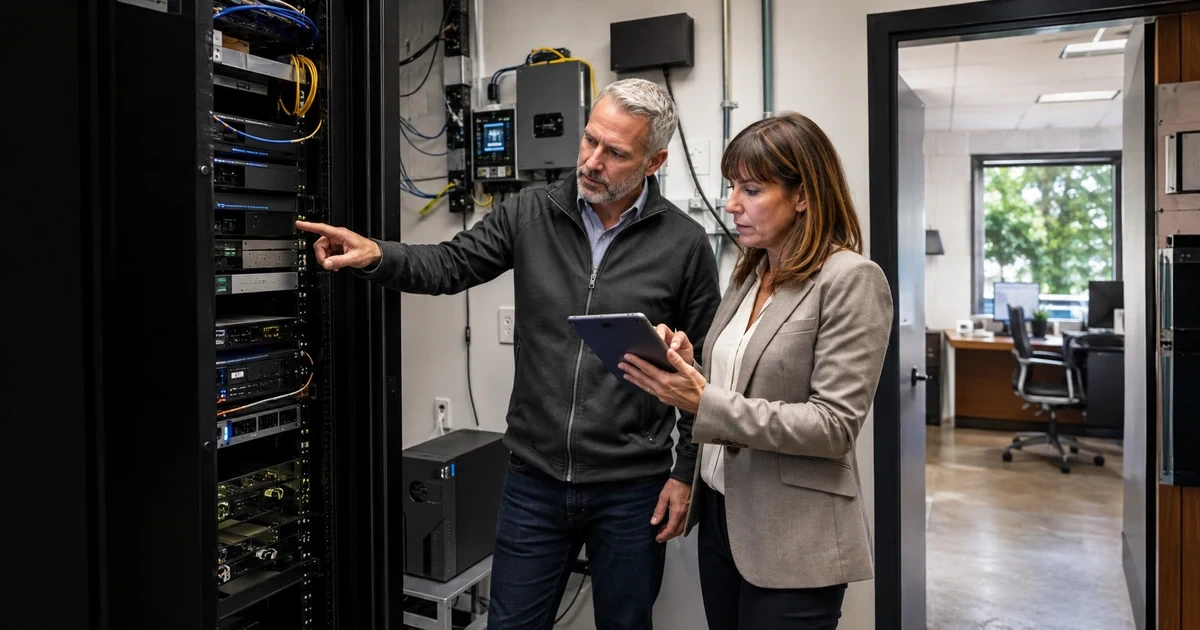
Walk through each strategy. Test employee and leadership contacts, alternate channels, emergency account access, remote connectivity, phone forwarding, critical records, spare devices, workspace, vendor escalation, and manual procedures. Confirm that credentials and documents remain accessible if the primary directory, email, password manager, internet provider, or office is unavailable. Review privacy, cybersecurity, financial controls, and physical safety for temporary operations. Note what is confirmed, observed, assumed, or unknown.
- Current organization: Verify leaders, alternates, specialists, shifts, locations, contacts, authority, and succession for continuity roles.
- Current operations: Compare services, volumes, deadlines, workflows, data, systems, suppliers, facilities, and customer commitments with the plan.
- Target reality: Reconcile business tolerances with backup, recovery, staffing, connectivity, equipment, space, and vendor capability.
- Strategy proof: Test alternate communications, remote work, records, emergency access, forwarding, spare resources, and provider escalation.
- Control review: Ensure temporary work maintains safety, privacy, security, financial, quality, and approval requirements.
The document review is credible when every major claim has a current owner and supporting evidence or is recorded as an unresolved continuity risk.
Use tabletop and functional exercises to test decisions and complete workflows
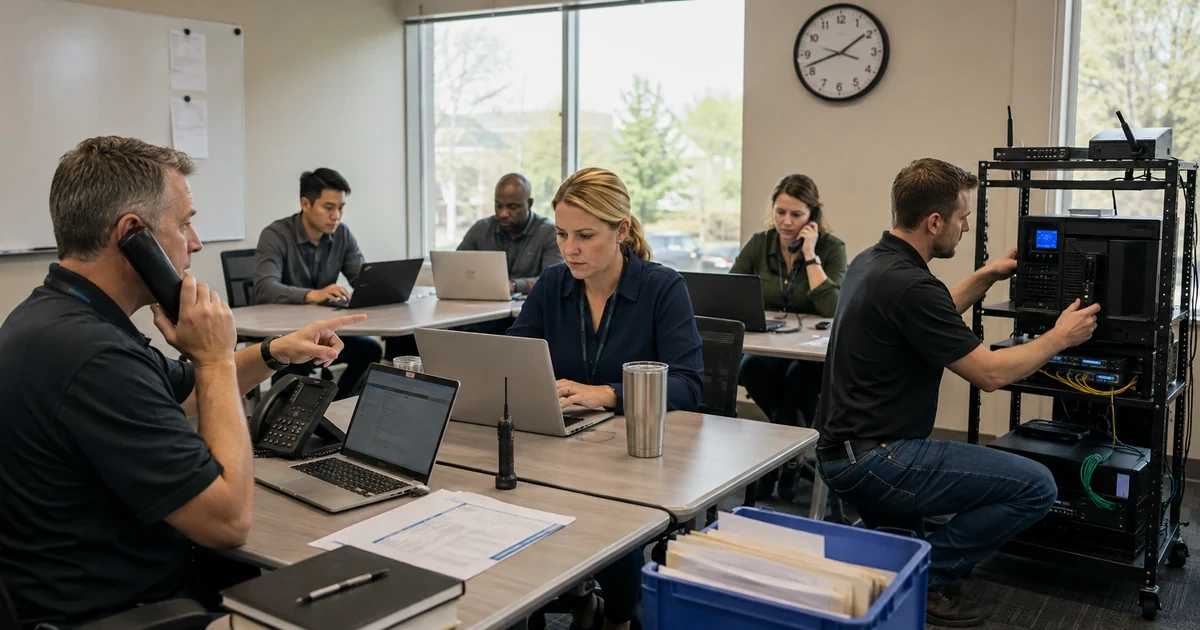
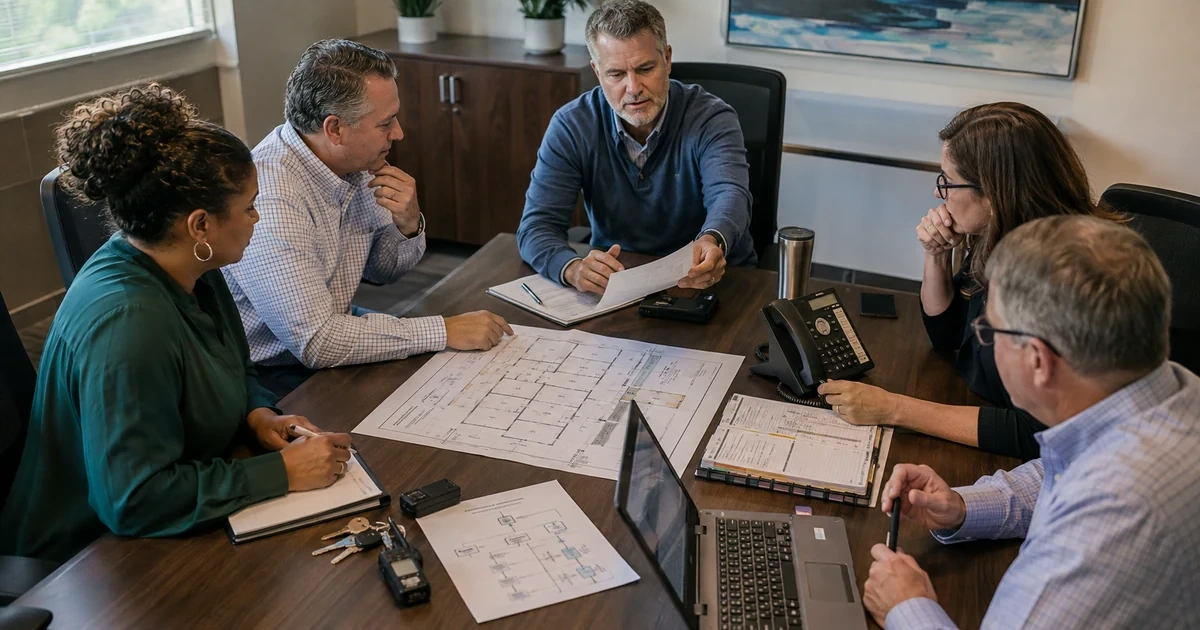
Choose an exercise based on the risks and unproven claims found during review. A tabletop can test leadership authority, incomplete facts, changing priorities, customer communications, supplier failure, office closure, cyber disruption, and return-to-service decisions. A functional exercise can add real notification, alternate communication, remote access, phone routing, device replacement, backup restoration, application validation, or temporary processing in a safe scope. Define objectives before writing the scenario.
Prepare an exercise charter with sponsor, facilitator, participants, observers, schedule, boundaries, production protections, data handling, live actions, simulated actions, success criteria, stop conditions, communications, and evaluation method. Introduce injects that challenge assumptions instead of guiding participants to the expected answer. Ask what is known, who has authority, which service comes first, what resource is unavailable, how controls remain effective, who must be informed, and what evidence permits the next decision.
Observe behavior and timing without turning the event into a quiz. Record notification reach, assembly, situational awareness, delegated authority, prioritization, access to plans, resource availability, workaround execution, technology recovery, supplier response, internal and external communications, business validation, and transition back to normal operations. FEMA’s continuity resources emphasize planning, training, testing, assessment, and lessons learned. A failed objective is a useful finding when the organization treats it as corrective work rather than editing the report until it sounds successful.
- Objective: Define the specific authority, communication, workaround, resource, recovery, validation, or transition claim to test.
- Scenario: Use realistic hazards, timing, uncertainty, dependencies, decisions, and injects while protecting production.
- Observation: Capture actions, decisions, waits, assumptions, deviations, evidence, communication, and participant feedback.
- Performance: Measure contact reach, activation, minimum operations, technical recovery, vendor response, validation, and stabilization.
- Learning: Separate plan, training, resource, technology, authority, supplier, and exercise-design findings.
An exercise succeeds when it reveals how the organization will behave under disruption and produces evidence strong enough to improve plans, systems, resources, and training.
Turn findings into corrective action, retesting, metrics, and governance
Write findings as specific capability gaps. Describe the scenario condition, expected outcome, observed result, evidence, business impact, contributing causes, existing safeguards, and recommended correction. Avoid labels such as communication issue or IT problem without explaining the failed step. Classify findings by critical service, safety, maximum interruption, data loss, security, customer effect, obligation, dependency, likelihood, and evidence confidence.
Assign each material action to one accountable owner with dependencies, budget path, target date, completion evidence, and required retest. Corrections may involve authority, cross-training, contacts, alternate communications, supplier terms, spare equipment, network resilience, cloud access, phone routing, backup, cybersecurity, facilities, written procedures, or training. Treat implementation and validation as separate milestones. Purchasing a second internet circuit does not close the finding until routing, power, equipment, monitoring, and a real failover test show that the continuity objective is met.
Maintain a leadership scorecard that tracks essential services reviewed, contacts tested, participants trained, strategies validated, recovery targets demonstrated, exercises completed, high-risk findings open, corrective actions overdue, and repeated failures. Review the program after incidents, office moves, mergers, system migrations, vendor changes, leadership changes, insurance or regulatory updates, and on a regular schedule. Update controlled offline copies and retire obsolete procedures so responders do not choose between multiple versions during an event.
- Finding statement: Connect expected capability, observed result, evidence, cause, business impact, safeguards, and recommended correction.
- Owned action: Name one responsible owner, dependencies, funding, deadline, evidence, approver, and retest.
- Validation: Prove configuration, resource, procedure, training, communication, and business outcome after implementation.
- Leadership metrics: Track plan currency, tested claims, trained roles, demonstrated targets, open risks, overdue actions, and recurrence.
- Change trigger: Refresh continuity after incidents, exercises, staffing, locations, vendors, platforms, obligations, and material growth.
The review is complete when significant gaps have owners and verification paths, leadership can see residual risk, and failed objectives are scheduled for focused retesting.
Continuity reviews, exercises, and remediation from ALLMSP
ALLMSP can review plans and evidence, interview owners, test contacts and alternate access, validate technology recovery, design tabletop and functional exercises, facilitate the event, measure results, and produce a prioritized corrective-action plan with our in-house team.
We can also implement the resulting managed IT, cybersecurity, cloud, backup, connectivity, phone, endpoint, documentation, and monitoring improvements. Follow-up tests verify that the organization gained a usable capability rather than merely receiving an updated binder.
- Review: Compare plans with current people, operations, systems, suppliers, facilities, targets, incidents, and evidence.
- Exercise: Test authority, communications, workarounds, technology, vendors, business validation, and recovery decisions.
- Remediate: Assign and implement corrections, measure outcomes, retest failed claims, and maintain leadership visibility.
Continuity review and exercise references
Use established preparedness and exercise methods to evaluate the program, then focus findings and metrics on the organization’s actual essential services and operating risks.
- FEMA continuity exercise starter kits. Provides adaptable materials and a plan, train, test, assess, and improve approach for continuity exercises.
- FEMA Continuity Guidance Circular. Describes continuity teams, essential functions, resource needs, vulnerabilities, planning, training, exercises, and recovery.
- NIST test, training, and exercise guide. Explains program design, tabletop exercises, functional exercises, technical tests, participant preparation, and evaluation.
- Ready Business. Offers business preparedness tools for communications, IT recovery, continuity plans, training, testing, and exercises.
- CISA infrastructure dependency primer. Explains physical, geographic, cyber, and logical dependencies and how failures can cascade across services.
Business continuity review and exercise FAQs
How often should a business continuity plan be reviewed?
Review on a defined schedule and after incidents, exercises, leadership and staff changes, office moves, system migrations, vendor changes, acquisitions, new obligations, and material growth.
What should a continuity review verify?
Verify essential services, impact, targets, roles, contacts, authority, workarounds, facilities, communications, technology, backups, records, suppliers, controls, exercises, findings, and plan access.
What is a continuity tabletop exercise?
It is a facilitated discussion where participants respond to a realistic disruption, make decisions, use plans, coordinate communications, and identify capability gaps without necessarily changing live systems.
What is a functional continuity exercise?
It includes controlled performance of selected procedures or technical actions, such as notifications, alternate communications, remote work, phone routing, recovery, or temporary processing, within safe boundaries.
Should vendors participate in continuity testing?
Critical providers may need to validate contacts, escalation, failover, recovery commitments, alternate service, and dependencies. Define participation and evidence according to business impact and contracts.
How are continuity exercise results measured?
Measure notification, activation, authority, situational awareness, resource availability, minimum operations, technical recovery, supplier response, communication, business validation, and correction of findings.
What makes a continuity finding actionable?
It states the expected capability, observed result, evidence, business impact, cause, recommended correction, accountable owner, deadline, completion evidence, and required retest.
Should a failed exercise objective be hidden from leadership?
No. A safe exercise is intended to reveal gaps before a real event. Report the limitation honestly, rate the risk, assign correction, and retest after remediation.
Can ALLMSP run continuity reviews and implement the corrections?
Yes. ALLMSP can assess, exercise, document, implement technical and procedural improvements, train participants, and retest continuity capabilities with its in-house team.
Where does ALLMSP conduct business continuity exercises?
ALLMSP serves Lawrenceville, Suwanee, Gwinnett County, Metro Atlanta, and other Georgia organizations, with onsite or remote exercise components according to scope.