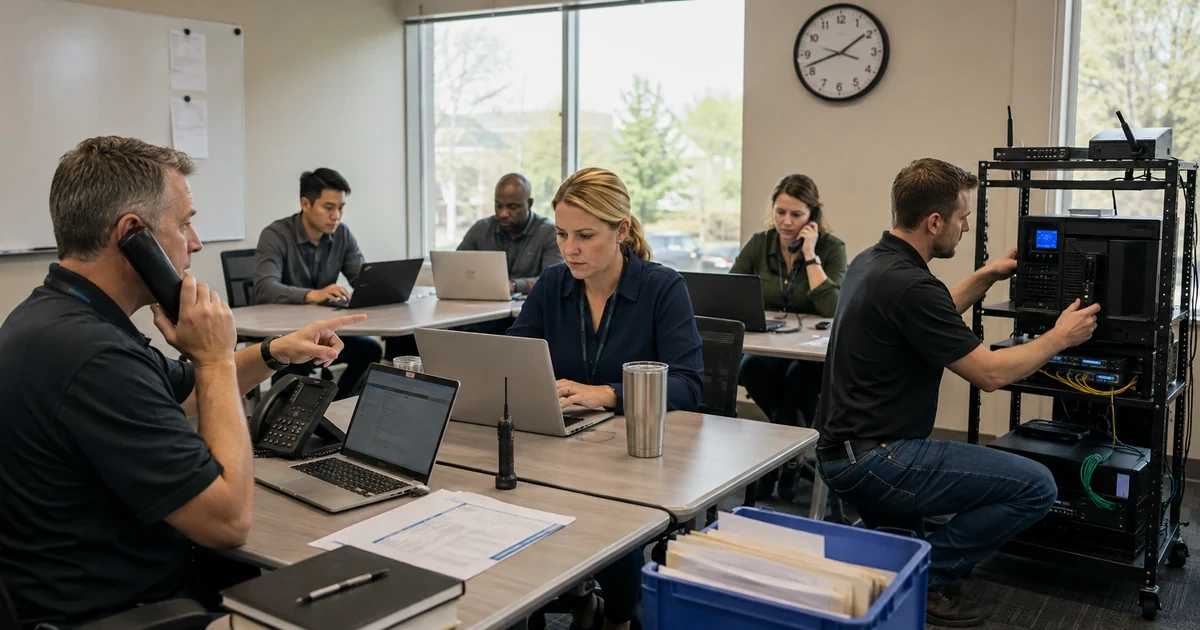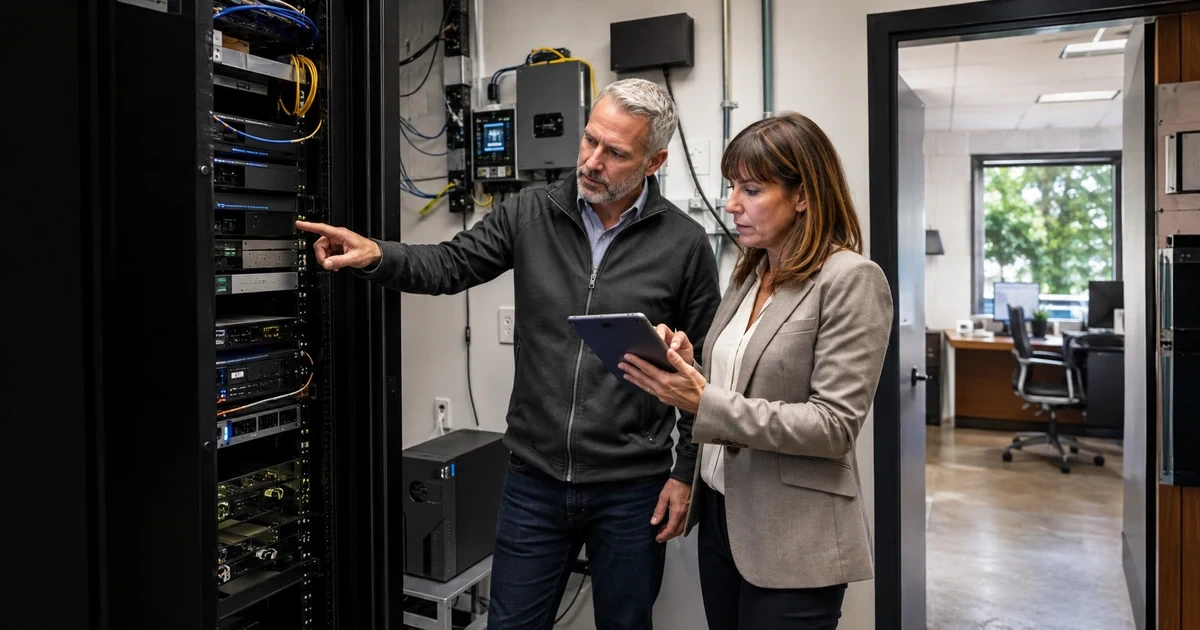
Many continuity failures begin outside the system named in the incident ticket. A cloud application may be healthy while employees cannot authenticate. A backup generator may run while the telecommunications room overheats. Two internet circuits may share one building entrance or carrier route. A second supplier may depend on the same distributor. A documented process may still stop because only one person knows the approval, password, machine setup, or customer exception.
A dependency assessment follows each critical service through the people, facilities, utilities, communications, technology, data, vendors, transportation, and decisions it needs. It looks for shared failure domains, hidden concentration, circular dependencies, untested failover, insufficient duration, and recovery strategies that require the resource they are meant to replace.
ALLMSP conducts continuity and technology dependency assessments in house for Lawrenceville, Suwanee, Gwinnett County, Metro Atlanta, and businesses across Georgia. We can test the path from business workflow through power, connectivity, cloud, identity, backup, devices, suppliers, and communications, then implement prioritized resilience improvements.
Trace critical services through every upstream and shared dependency
- Choose the service: Start with a high-impact customer, revenue, safety, operations, communication, or recordkeeping outcome.
- Map requirements: List staff, skills, authority, sites, utilities, equipment, systems, identities, data, networks, phones, suppliers, and logistics.
- Find concentration: Identify one person, room, circuit, carrier, power path, tenant, administrator, device, provider, route, or data source supporting multiple needs.
- Challenge independence: Verify that redundant resources do not share the same upstream provider, entrance, credential, platform, location, or failure condition.
- Test duration: Compare backup power, alternate work, spare inventory, fuel, capacity, contracts, and manual procedures with realistic outage length.
- Prioritize mitigation: Use business impact, likelihood, detection, workaround, recovery time, cost, and evidence to select improvements.
Map physical, cyber, geographic, logical, and human dependencies
Select one critical service and follow it from customer request to completed output. Record every employee role, approval, facility, utility, device, application, identity, database, file, network, phone, internet path, cloud service, supplier, carrier, transportation step, and external record required along the way. Include monitoring and support because a failed component that nobody detects can extend disruption. Mark timing, capacity, ownership, alternatives, and how each dependency is validated.
Classify the relationship to reveal hidden patterns. A physical dependency can include power, cooling, water, a building, equipment, or delivered materials. A cyber dependency can include identity, software, data, networks, cloud platforms, and security controls. A geographic dependency exists when supposedly separate resources share a building, utility corridor, region, weather event, or transportation route. A logical dependency arises from policy, contract, finance, approval, market, or human decisions. CISA uses these categories to show how disruptions can cascade across connected systems.
Look for circular dependencies. The backup console may require the same identity service that must be restored from backup. The phone failover contact may be stored only in the unavailable cloud drive. Remote work may require the office firewall, power, internet, and an administrator who cannot reach the site. A generator may depend on network monitoring or fuel delivery that depends on roads. Draw these loops and identify the first trustworthy resources needed to break them during recovery.
- Physical: Map facilities, power, cooling, water, access, equipment, materials, storage, transportation, and environmental conditions.
- Cyber: Trace identities, devices, applications, data, cloud, networks, communications, security, monitoring, and administration.
- Geographic: Identify shared buildings, entrances, utility corridors, carrier routes, regions, weather, transportation, and supply paths.
- Logical: Record contracts, approvals, policies, payment, insurance, regulation, market, vendor, and decision dependencies.
- Human: Find single-role knowledge, unavailable authority, specialized skills, credential custody, relationships, and undocumented exceptions.
The dependency map is useful when it shows how a failure outside the visible application can stop the service and which upstream resource must recover first.
Challenge redundancy, failover, capacity, duration, and detection claims
Verify independence rather than counting duplicates. Trace internet circuits to providers, building entrances, handoffs, equipment, power, firewalls, routing, and billing status. Trace cloud and SaaS dependencies to identity, DNS, payment, email, devices, browser access, APIs, data ownership, and support. Trace backup power to protected loads, battery runtime, generator capacity, transfer equipment, fuel, maintenance, and cooling. Two components provide little resilience when one shared condition disables both.
Test failover under safe controlled conditions. Confirm who authorizes it, what detects failure, whether switching is automatic or manual, which routes or services change, how users are informed, what security controls remain active, and how return to normal occurs. Measure capacity during failover. A backup circuit may support email but not cloud desktops, phones, cameras, and offsite backup together. An alternate employee may know the procedure but lack system permissions or contract authority.
Compare strategy duration with realistic incidents. UPS batteries may bridge minutes, not a workday. Temporary hotspots may have weak indoor coverage or data limits. Manual processes may work for twenty transactions but fail at normal volume. Spare equipment may lack current software, configurations, accessories, or licenses. Alternate suppliers may have the same regional shortage. Also test detection and communication. A redundant resource that failed months ago without an alert is not available when the primary service stops.
- Shared failure domain: Trace nominally separate resources through provider, route, site, power, identity, management, contract, and region.
- Failover action: Test detection, authority, switching, security, capacity, communications, monitoring, and return to primary service.
- Peak capacity: Measure users, transactions, bandwidth, power, equipment, storage, supplier volume, and support under degraded operation.
- Sustainable duration: Compare batteries, fuel, data plans, temporary labor, manual records, inventory, and alternate space with outage scenarios.
- Health visibility: Monitor standby circuits, backup power, spare systems, replication, alternate accounts, and vendor readiness before demand.
A resilience claim is credible only when independent paths are demonstrated, degraded capacity meets the minimum service, and standby resources remain monitored and ready for the required duration.
Prioritize resilience improvements using business impact and tested evidence
Rate each single point by the essential service affected, consequence over time, likelihood, warning, workaround, recovery duration, shared impact, evidence confidence, and cost of mitigation. Address hazards to people and property, high-impact active failures, unavailable recovery access, unsupported critical systems, and concentration across multiple essential services first. Distinguish immediate safeguards from durable correction.
Select mitigation that reduces the specific dependency. Options can include cross-training, delegated authority, offline contacts, alternate communications, additional connectivity with verified route diversity, redundant power and cooling, cloud or site diversity, protected backups, spare configured equipment, secondary suppliers, larger inventory, network segmentation, monitored failover, documented manual processes, or redesign of the business workflow. Sometimes improved detection, procedure, or contract terms reduce risk more effectively than purchasing another device.
Define acceptance before implementation. Record the expected failure condition, minimum service, capacity, duration, security controls, switch method, monitoring, evidence, owner, and retest. Exercise the changed path and update diagrams, inventories, contacts, procedures, budgets, and residual-risk decisions. CISA’s resilience framework notes that mitigation can include plans and procedures as well as physical investment. The goal is to make the critical service more dependable, not to accumulate duplicate technology without operational proof.
- Risk statement: Describe dependency, initiating failure, affected service, consequence, duration, existing safeguards, evidence, and uncertainty.
- Immediate safeguard: Reduce current exposure with communication, monitoring, access, inventory, procedure, or temporary capacity where justified.
- Durable mitigation: Remove concentration or improve independence, capacity, recovery, ownership, contract, and supportability.
- Acceptance test: Simulate the failure and prove minimum service, duration, security, monitoring, communication, and return to normal.
- Residual decision: Document remaining exposure, business owner, rationale, conditions, funding, and next review date.
A dependency assessment produces value when investments and procedures are tied to demonstrated reductions in interruption risk for named business services.
Continuity dependency assessments and resilience improvements from ALLMSP
ALLMSP can map essential workflows across people, facilities, power, internet, phones, identity, cloud, networks, data, backup, devices, vendors, and logistics. We test independence, failover, capacity, duration, detection, and recovery assumptions with our in-house team.
We can then implement prioritized improvements such as managed connectivity, network redesign, cloud resilience, backup and recovery, alternate access, cybersecurity, device readiness, phone routing, monitoring, documentation, and exercises. Each correction is tied back to a specific business service and acceptance test.
- Map: Trace critical services through physical, cyber, geographic, logical, supplier, and human dependencies.
- Challenge: Test redundancy, independence, failover, capacity, duration, detection, authority, and minimum operation.
- Improve: Prioritize safeguards and durable mitigations, prove them through tests, and maintain residual-risk decisions.
Continuity dependency and resilience references
Use dependency frameworks to broaden the assessment, then validate each resilience decision against the organization’s own services, providers, geography, resources, and outage scenarios.
- CISA infrastructure dependency primer. Explains physical, cyber, geographic, and logical dependencies, mutual reliance, and cascading effects.
- CISA resilience services. Provides the Infrastructure Resilience Planning Framework and resources for identifying dependencies and planning mitigation.
- FEMA Continuity Guidance Circular. Connects essential functions with staff, systems, data, sites, authority, communications, training, and recovery.
- Ready Business. Offers preparedness planning resources for business operations, communications, IT recovery, continuity, training, and exercises.
- NIST contingency planning guide. Provides a process for business impact, recovery requirements, priorities, strategies, procedures, tests, and plan maintenance.
Business continuity risk assessment FAQs
What is a single point of failure in business continuity?
It is one person, system, location, utility, provider, route, credential, decision, supplier, or resource whose loss can stop an essential service because no proven alternative exists.
How can two internet circuits still share one failure point?
They may use the same carrier, building entrance, conduit, street route, handoff, modem location, firewall, power source, configuration, billing account, or upstream provider.
What kinds of dependencies should a continuity assessment review?
Review physical, cyber, geographic, logical, human, supplier, utility, communications, transportation, financial, contractual, facility, data, and technology dependencies.
Why should failover capacity be tested?
A secondary resource may connect but lack enough bandwidth, power, equipment, staffing, inventory, or transaction capacity for the minimum business service under realistic load.
How is key-person risk reduced?
Document critical knowledge, provide trained alternates, delegate authority, separate credential custody, maintain contacts and procedures, test absence scenarios, and redesign tasks that depend unnecessarily on one person.
Can cloud services have continuity single points?
Yes. Identity, DNS, internet, devices, payment, account ownership, administrator access, regions, APIs, integrations, data export, support, and one cloud tenant can create concentration.
What should be tested about backup power?
Test protected loads, runtime, transfer, generator capacity, fuel, maintenance, alerts, network and carrier equipment, cooling, safe shutdown, restart, and the required outage duration.
How should resilience projects be prioritized?
Use safety, affected services, consequences over time, likelihood, warning, shared impact, workaround, recovery duration, evidence, cost, upcoming changes, and residual risk.
Can ALLMSP assess and fix technology continuity risks?
Yes. ALLMSP can assess dependencies and implement connectivity, networks, cloud, backup, cybersecurity, identity, phone, device, monitoring, documentation, and exercise improvements in house.
Where does ALLMSP provide continuity risk assessments?
ALLMSP serves Lawrenceville, Suwanee, Gwinnett County, Metro Atlanta, and businesses elsewhere in Georgia according to operating locations and assessment scope.