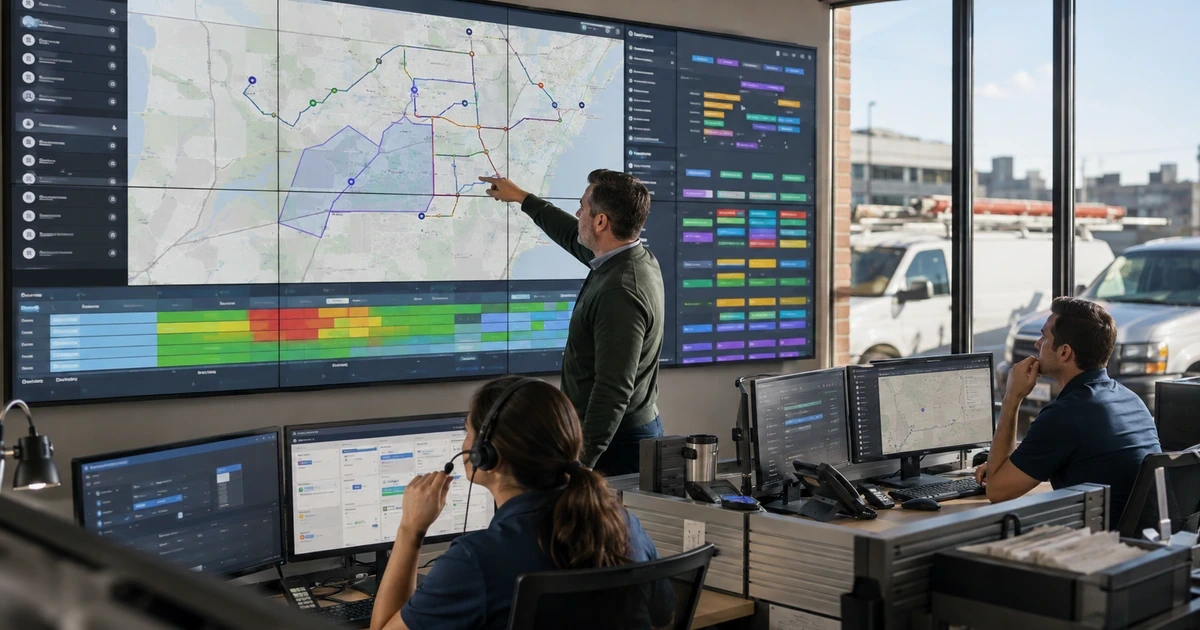






















































































































































Construction local marketing improves when accurate services, useful pages, real project proof, local profile trust, response speed, estimating follow-up, and awarded work are reviewed together. More calls do not help if they are for the wrong trade, outside the service area, or lost before an estimate.
Do not optimize through fake locations, keyword-stuffed business names, manufactured reviews, unlicensed claims, unauthorized project images, unsupported results, hidden conditions, or duplicate city pages. Preserve account ownership, permissions, and measurement history before major changes.
How to choose the right construction and contractor marketing improvements
A useful program increases qualified discovery for supported services and real locations, strengthens accurate pages and profiles, improves project proof, reduces irrelevant paid demand, shortens response, improves estimate follow-up, and connects marketing to awarded work and capacity.
- Pages and ads appear for trades, project types, locations, emergency work, or customer groups the contractor does not support.
- Licenses, team claims, warranties, project facts, photos, testimonials, and service areas lack current support or permission.
- Several location pages repeat the same copy without useful service, project, or operational information.
- Profile calls, forms, and Ads conversions are counted without service fit, site visit, estimate, proposal, or award status.
- Customers wait too long, plans or sensitive property details enter general forms, and estimate follow-up is inconsistent.
- Content is rewritten for rankings without a customer task, reviewer, source, project proof, internal path, or award measure.
Find qualified local demand and public trust gaps
Relevant impressions with weak clicks
Diagnosis: Use Search Console by query and page, then inspect title, description, position, device, service fit, location, visible answer, project proof, competing result type, and actual leads. Do not assume every impression deserves a click.
Construction and Contracting Firms Marketing improvement: Improve the useful answer, state the real service and geography clearly, add approved proof and internal context, and revise result text without unsupported claims or city repetition.
Measurement: Track qualified query clicks, click-through rate within comparable positions, valid inquiries, estimates, proposals, and awarded work for the same page group.
Thin or duplicate service and location pages
Diagnosis: Compare pages for unique scope, project fit, process, preparation, site requirements, licenses, service-area facts, proof, FAQs, internal links, qualified demand, estimates, and awards. Identify interchangeable content and fake locations.
Construction and Contracting Firms Marketing improvement: Consolidate overlap or rebuild around a distinct customer need. Explain how Lawrenceville, Suwanee, Gwinnett, Atlanta, or Georgia projects are served only when accurate and operationally useful.
Measurement: Track duplicate-page switching, qualified local clicks, estimates and awards by location, page engagement, and content consolidated or strengthened.
Business Profile inconsistency
Diagnosis: Review ownership, categories, eligibility, address or service area, hours, phone, website, services, photos, questions, reviews, edits, duplicates, and website consistency. Test call and page routes.
Construction and Contracting Firms Marketing improvement: Correct inaccurate information, resolve improper duplicates through supported processes, assign backup ownership and review response, document changes, and monitor edit rejections and suspension warnings.
Measurement: Track profile actions, connected calls, valid inquiries, edit rejections, duplicate resolution, ownership tests, and public accuracy.
Improve pages, profiles, project proof, campaigns, calls, and forms
Project photos and proof are weak or risky
Diagnosis: Review image quality, service relevance, project stage, permission, property and person privacy, captions, alt text, results, customer logos, location details, subcontractor attribution, safety and security exposure, mobile cropping, and page placement.
Construction and Contracting Firms Marketing improvement: Select clear approved images that show the actual work, obtain permissions and factual review, correct captions and alt text, remove unsafe details, organize by service and project, and preserve source and approval.
Measurement: Track approved project assets, permission coverage, gallery engagement, service-page inquiries, image corrections, removal requests, and projects represented accurately.
Paid search attracts the wrong work
Diagnosis: Review search terms, services, locations, schedules, devices, ads, pages, calls, forms, qualification, site visits, estimates, proposals, awards, and decline reasons. Separate DIY, jobs, suppliers, support, unsupported trades, and distant demand.
Construction and Contracting Firms Marketing improvement: Add precise negatives, tighten service and geography, align ads and pages, schedule around response coverage, improve qualification, and optimize toward estimates and awards rather than every call.
Measurement: Track irrelevant spend, cost per qualified estimate, proposal and award rate, response time, and spend by awarded service and location.
Forms collect too much or too little project context
Diagnosis: Review fields, free text, uploads, URLs, analytics parameters, notifications, CRM, mobile use, spam, privacy, plans, photos, access details, and secure follow-up. Test what each vendor receives.
Construction and Contracting Firms Marketing improvement: Collect only useful routing and qualification data, move plans and private details to approved systems, remove sensitive tracking, secure destinations, clarify next steps, and tune fields based on actual qualification.
Measurement: Track completion, safe-data findings, routing accuracy, qualified leads, spam, secure-file handoff, field abandonment, and estimate scheduling.
Calls are counted without qualification
Diagnosis: Compare phone clicks, connected and missed calls, duration, after-hours routing, emergencies, existing customers, jobs, suppliers, service and location fit, site visits, estimates, proposals, and awards. Identify provider-owned numbers.
Construction and Contracting Firms Marketing improvement: Keep numbers under company control, improve routing and coverage, define useful call outcomes, connect qualification to reporting, and preserve existing-customer support paths.
Measurement: Track connected and qualified calls, missed calls, response time, site visits, estimates, proposals, awards, and number ownership tests.
Connect analytics to qualification, estimates, proposals, and awards
Slow response and estimate follow-up
Diagnosis: Measure first useful response and estimate follow-up by source, service, location, day, time, owner, urgency, project value band, and capacity. Review failed notifications, duplicate calls, unanswered voicemail, and stale proposals.
Construction and Contracting Firms Marketing improvement: Set accountable routing and response expectations, create backup coverage, standardize status and notes, schedule estimate follow-up, surface capacity constraints, and review qualified work lost to delay.
Measurement: Track response time, contact rate, site visits, estimate turnaround, follow-up completion, proposal acceptance, and qualified projects lost to delay.
Reporting stops at leads and estimates
Diagnosis: Map source, service, location, valid inquiry, qualification, site visit, estimate, proposal, award, decline reason, project value band, and approved margin or capacity category. Identify unreconciled platform conversions.
Construction and Contracting Firms Marketing improvement: Use non-sensitive identifiers and standardized outcomes, repair event and status gaps, reconcile systems, and report awards and capacity alongside clicks, calls, and estimate volume.
Measurement: Track source reconciliation, qualified estimate rate, proposal rate, award rate, cost per award, unknown source, duplicate conversions, and time to outcome.
Content, profiles, and permissions lack maintenance owners
Diagnosis: Find assets without a responsible service leader, source, license or claim support, project permission, last and next review, change history, platform owner, search purpose, and lead or award outcome. Identify stale services, people, locations, photos, and links.
Construction and Contracting Firms Marketing improvement: Assign operational and editorial owners, classify review frequency, update useful material, archive versions, repair internal links and profiles, remove stale access, and retire content only after user and search effects are understood.
Measurement: Track on-time reviews, stale facts corrected, permissions renewed, broken paths repaired, profile accuracy, qualified demand after updates, and responsible consolidation.
Measure useful visibility and maintain accurate assets
Review optimization with owners, operations, estimating, dispatch or intake, project management, and marketing. Each decision should name the customer need, service, location, project proof, evidence, capacity, expected outcome, owner, due date, and later result.
- Qualified local visibility: Clicks and profile actions for supported services and real locations, separated from DIY, jobs, suppliers, unsupported work, and existing-customer demand.
- Public claim and project proof: Material services, credentials, photos, project facts, testimonials, warranties, and locations with current support, permission, approval, and version history.
- Inquiry response: Connected-call rate, form routing, time to first useful response, emergency handling, qualification, and estimate scheduling.
- Estimate quality: Valid inquiries that match service and geography, receive a site visit or estimate, and progress to a supported proposal.
- Award attribution: Approved non-sensitive linkage from source and service through estimate, proposal, awarded project, and value category.
- Public information accuracy: Website, profile, directories, phone, hours, licenses, services, locations, project proof, and team information matching current operations.
Official guidance and ALLMSP resources
- Georgia State Licensing Board for Residential and General Contractors.
- Georgia general contractor licensing rules.
- Google Business Profile representation guidelines.
- FTC endorsement and testimonial guidance.
- Google Analytics event documentation.
- Managed Marketing Services
- Managed IT Services
- Cybersecurity
Frequently Asked Questions
How can contractors improve relevant Search Console impressions that do not earn clicks?
Begin by checking whether use Search Console by query and page, then inspect title, description, position, device, service fit, location, visible answer, project proof, competing result type, and actual leads. Do not assume every impression deserves a click. Improve the useful answer, state the real service and geography clearly, add approved proof and internal context, and revise result text without unsupported claims or city repetition. Measure progress with track qualified query clicks, click-through rate within comparable positions, valid inquiries, estimates, proposals, and awarded work for the same page group.
Should contractors create a separate page for every nearby city?
Begin by checking whether compare pages for unique scope, project fit, process, preparation, site requirements, licenses, service-area facts, proof, FAQs, internal links, qualified demand, estimates, and awards. Identify interchangeable content and fake locations. Consolidate overlap or rebuild around a distinct customer need. Explain how Lawrenceville, Suwanee, Gwinnett, Atlanta, or Georgia projects are served only when accurate and operationally useful. Measure progress with track duplicate-page switching, qualified local clicks, estimates and awards by location, page engagement, and content consolidated or strengthened.
What should contractors optimize in Google Business Profile?
Begin by checking whether review ownership, categories, eligibility, address or service area, hours, phone, website, services, photos, questions, reviews, edits, duplicates, and website consistency. Test call and page routes. Correct inaccurate information, resolve improper duplicates through supported processes, assign backup ownership and review response, document changes, and monitor edit rejections and suspension warnings. Measure progress with track profile actions, connected calls, valid inquiries, edit rejections, duplicate resolution, ownership tests, and public accuracy.
How can contractors improve project galleries for trust and SEO?
Begin by checking whether review image quality, service relevance, project stage, permission, property and person privacy, captions, alt text, results, customer logos, location details, subcontractor attribution, safety and security exposure, mobile cropping, and page placement. Select clear approved images that show the actual work, obtain permissions and factual review, correct captions and alt text, remove unsafe details, organize by service and project, and preserve source and approval. Measure progress with track approved project assets, permission coverage, gallery engagement, service-page inquiries, image corrections, removal requests, and projects represented accurately.
How can contractors reduce irrelevant Google Ads inquiries?
Begin by checking whether review search terms, services, locations, schedules, devices, ads, pages, calls, forms, qualification, site visits, estimates, proposals, awards, and decline reasons. Separate DIY, jobs, suppliers, support, unsupported trades, and distant demand. Add precise negatives, tighten service and geography, align ads and pages, schedule around response coverage, improve qualification, and optimize toward estimates and awards rather than every call. Measure progress with track irrelevant spend, cost per qualified estimate, proposal and award rate, response time, and spend by awarded service and location.
How can contractors improve estimate-request forms without collecting unsafe data?
Begin by checking whether review fields, free text, uploads, URLs, analytics parameters, notifications, CRM, mobile use, spam, privacy, plans, photos, access details, and secure follow-up. Test what each vendor receives. Collect only useful routing and qualification data, move plans and private details to approved systems, remove sensitive tracking, secure destinations, clarify next steps, and tune fields based on actual qualification. Measure progress with track completion, safe-data findings, routing accuracy, qualified leads, spam, secure-file handoff, field abandonment, and estimate scheduling.
Which contractor phone calls should count as marketing conversions?
Begin by checking whether compare phone clicks, connected and missed calls, duration, after-hours routing, emergencies, existing customers, jobs, suppliers, service and location fit, site visits, estimates, proposals, and awards. Identify provider-owned numbers. Keep numbers under company control, improve routing and coverage, define useful call outcomes, connect qualification to reporting, and preserve existing-customer support paths. Measure progress with track connected and qualified calls, missed calls, response time, site visits, estimates, proposals, awards, and number ownership tests.
How quickly should contractors respond to new project inquiries?
Begin by checking whether measure first useful response and estimate follow-up by source, service, location, day, time, owner, urgency, project value band, and capacity. Review failed notifications, duplicate calls, unanswered voicemail, and stale proposals. Set accountable routing and response expectations, create backup coverage, standardize status and notes, schedule estimate follow-up, surface capacity constraints, and review qualified work lost to delay. Measure progress with track response time, contact rate, site visits, estimate turnaround, follow-up completion, proposal acceptance, and qualified projects lost to delay.
How can contractors measure marketing through awarded work?
Begin by checking whether map source, service, location, valid inquiry, qualification, site visit, estimate, proposal, award, decline reason, project value band, and approved margin or capacity category. Identify unreconciled platform conversions. Use non-sensitive identifiers and standardized outcomes, repair event and status gaps, reconcile systems, and report awards and capacity alongside clicks, calls, and estimate volume. Measure progress with track source reconciliation, qualified estimate rate, proposal rate, award rate, cost per award, unknown source, duplicate conversions, and time to outcome.
How should contractors maintain website and local marketing content over time?
Begin by checking whether find assets without a responsible service leader, source, license or claim support, project permission, last and next review, change history, platform owner, search purpose, and lead or award outcome. Identify stale services, people, locations, photos, and links. Assign operational and editorial owners, classify review frequency, update useful material, archive versions, repair internal links and profiles, remove stale access, and retire content only after user and search effects are understood. Measure progress with track on-time reviews, stale facts corrected, permissions renewed, broken paths repaired, profile accuracy, qualified demand after updates, and responsible consolidation.