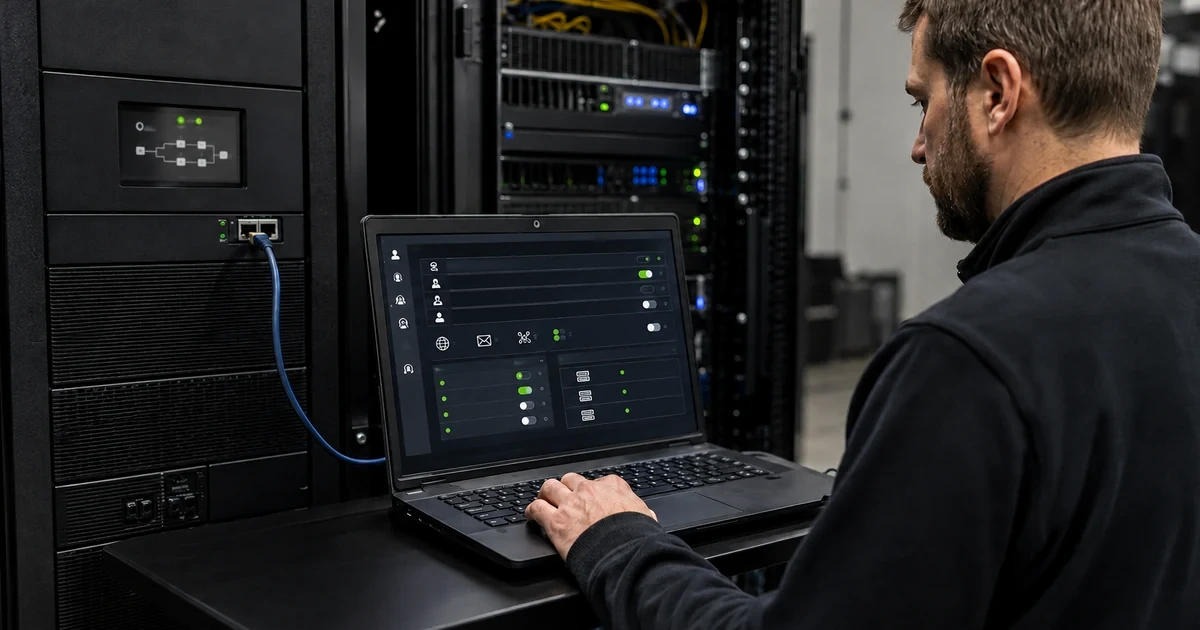

























































































































































Axis devices are computers at the physical edge. They hold network identity, accounts, certificates, configuration, analytics, event rules and sometimes sensitive recordings, so leaving them online for years with an unknown AXIS OS track or shared administrative password is a material operational risk.
The AXIS OS Hardening Guide describes secure-by-default protections and additional practices for professional systems. The lifecycle guide distinguishes active and long-term-support tracks and documents upgrade-path enforcement intended to prevent incompatible transitions and protect configuration.
This operating model converts those vendor capabilities into measurable fleet controls. It favors staged change, exact model and version evidence, service continuity and recoverability over one-time hardening screenshots.
Businesses in Lawrenceville, Suwanee, Gwinnett County, Metro Atlanta, and across Georgia can use ALLMSP to harden and update Axis devices with AXIS OS lifecycle controls. Our in-house team handles planning, technical work, testing, and documentation.
Key decisions at a glance
- Inventory exact model, restricted identity, AXIS OS track, software support dates, certificates, accounts, services, applications, storage, owner and site before declaring compliance.
- Use the AXIS OS hardening guidance as a risk-based baseline and preserve an approved exception path for VMS, integration and operational dependencies.
- Follow Axis-recommended and now-enforced upgrade paths, separating active and LTS track decisions by compatibility and risk.
- Build least privilege, unique credential custody, HTTPS and PKI, network restriction, time synchronization, logging and encrypted edge storage into daily operations.
- Validate video, events, recordings, analytics, time, certificates and integrations after every security or AXIS OS change.
Create an Authoritative Axis Device and Software Inventory

Build a record for every Axis device containing site, approved scene, exact model, restricted MAC or serial reference, hardware generation, Axis Edge Vault capability where present, IP and hostname, VLAN and switch port, mount, power source, AXIS OS version and track, software support end date, device manager or VMS ownership, installed ACAP applications, certificate issuer and expiration, account policy, enabled services, time source, edge storage and encryption, retention, configuration backup, warranty, criticality, exception state and operational owner. Reconcile purchasing, field labels, network discovery, AXIS Device Manager or Extend, the VMS and physical inspection. A device absent from any authoritative view is an exception. Distinguish offline maintenance, warehouse spare, repair, decommissioned and unknown states so stale entries cannot look compliant. Protect camera locations, network identifiers and credentials according to security policy. Use the inventory to identify unsupported models, unknown AXIS OS, expired certificates, shared credentials, unused services, unapproved applications, unencrypted storage and devices outside management. Sample electronic data against real hardware because replacement units can inherit old names and records. Assign remediation owner and date to every gap.
- Track hardware, AXIS OS, management, certificates, accounts, services, applications, storage and owner.
- Reconcile purchasing, field, network, management and VMS views.
- Separate offline, spare, repair, retired and unknown states.
- Protect camera locations and network identity as sensitive infrastructure data.
- Assign an owner and deadline to every inventory variance.
Apply a Risk-Based AXIS OS Hardening Baseline

Start with the current Axis hardening guidance and map each control to the organization’s risk, VMS architecture and network design. Preserve default protections such as the requirement to establish administrator credentials before operation, then add least-privilege client accounts for normal access. Restrict administrative interfaces to management networks and authorized hosts. Disable unused discovery, legacy, audio, remote-access, integration or application services only after dependency testing. Configure HTTPS and, where spoofing risk warrants it, replace self-signed certificates with CA-signed certificates managed by an approved PKI. Use 802.1X, Axis device ID or other network identity features through a deliberate authentication design rather than copying certificate files without trust validation. Maintain synchronized NTP, logging, tamper and security notifications. Encrypt supported SD storage and protect NAS with restricted access, modern SMB and disk encryption as appropriate. Review ACAP applications, signatures, permissions and update ownership. Store administrative secrets in a vault and avoid one password shared across cameras and human roles. Document controls that cannot be enabled, including the exact dependency, exposure, compensating control, owner and expiry.
- Map current Axis guidance to the site, VMS, network and risk model.
- Use least privilege and management-network restriction for administrative access.
- Manage HTTPS, PKI and network identity as verified trust systems.
- Encrypt supported edge storage and secure NAS paths.
- Time-limit exceptions for services, applications and integration dependencies.
Choose AXIS OS Tracks and Follow the Supported Upgrade Path

Classify each model and integration for an AXIS OS active or LTS track based on security needs, feature requirements, VMS and ACAP compatibility, certification, operational stability and vendor support. Record current version, approved target, release context, upgrade path, package source, hash where used, dependencies, downtime, recovery and ring. Axis documents that recent AXIS OS releases enforce recommended paths, including restrictions beginning with 12.6.85 and 11.11.169, so do not assume a device can jump directly from any old release to the newest build. Use the lifecycle upgrade guide or device-management upgrade tracks to determine intermediate steps. Review model support and release notes for every cohort. Back up configuration and confirm the ability to restore approved settings without assuming recordings are included. Verify power, network, time, credentials, free resources, management reachability and local support before starting. Factory default is not a casual workaround because it removes user configuration and can alter trust and recording behavior. A change record should make every intermediate version and validation checkpoint visible.
- Select active or LTS track from security, features, compatibility and stability needs.
- Record the current version, target, required intermediates, package and recovery plan.
- Follow Axis-recommended and enforced upgrade paths.
- Back up configuration and separately account for recordings and certificates.
- Never use factory default merely to bypass an upgrade-path problem.
Deploy AXIS OS and Security Changes in Controlled Rings
Use lab, low-criticality site, representative production and broad rings. Each ring must include the exact models, VMS versions, ACAPs, analytics, storage types, authentication methods, certificate paths and network conditions present in production. Define observation period, maintenance window, expected disconnect, communication, alert suppression, on-site recovery, spare coverage and stop thresholds. AXIS Device Manager and Extend can group versions by model and show ongoing or completed tasks, but management status is evidence to reconcile, not proof that video operations are healthy. Upgrade small cohorts and allow devices to restart fully. Validate identity, time, HTTPS, accounts, certificates, network authentication, VMS connection, streams, analytics, events, recording, edge storage, failover and monitoring before promotion. Pause for unreachable devices, configuration loss, certificate failures, recording gaps, stream regressions, analytic drift or abnormal resource behavior. Retain task results and sampled functional evidence for each cohort.
- Represent every material model, VMS, application, storage and authentication combination.
- Define observation, communications, recovery, spares and stop thresholds.
- Reconcile device-manager task status with actual video-system behavior.
- Validate security, streams, analytics, events, recording and monitoring after restart.
- Hold promotion on unreachable devices, trust failures, gaps or operational regressions.
Monitor Compliance, Certificates, Storage, and Security Events
Maintain dashboards for AXIS OS track and version, support status, certificate expiration, account policy, management reachability, unauthorized configuration drift, failed logins, time offset, storage encryption and health, application inventory, critical events and exception age. Separate unknown data from compliant data. Alert early enough to renew certificates and replace worn storage without emergency change. Review privileged access and departed personnel, and inspect whether VMS service accounts have accumulated unnecessary rights. Track devices that stop reporting, repeatedly restart, change address, lose time, reject certificates, fail authentication, fill storage or generate tamper conditions. Correlate with network and VMS telemetry because a camera may be healthy while its recording or viewer path is not. Periodically export or test backups through a controlled recovery exercise. Sample live configuration against the approved template without exposing secrets. Report risk by site and critical scene so remediation reflects business impact rather than raw device count.
- Measure software, certificates, accounts, drift, reachability, time, storage, applications and exceptions.
- Alert before certificate expiry or storage wear becomes an outage.
- Review privilege and service-account scope regularly.
- Correlate device, network, VMS and recording telemetry.
- Exercise configuration recovery and report risk by critical scene.
Retire or Transfer Axis Devices Without Leaving Data or Trust Behind
Authorize the disposition and identify recordings, investigation holds, configuration, certificates, credentials, applications, SD storage, VMS objects, DNS, DHCP, switch policy, monitoring and licenses tied to the device. Preserve evidence that must be retained through the approved chain, then remove or securely erase customer data. The Axis hardening guidance notes that factory default removes user configuration but edge recordings may require separate deletion, so verify storage rather than assuming reset erased it. Revoke customer certificates and network access, remove device and service accounts, delete management and VMS registrations, clear remote access and integration secrets, and update inventory. Unmount or handle SD cards according to the approved sanitization and custody procedure. For reuse, rebuild trust and configuration as a new onboarding event. For warranty return or recycling, record custody, destination, hardware identity and data handling without attaching passwords or sensitive maps. Close only when electronic and physical records agree.
- Identify recordings, holds, configuration, certificates, accounts, storage, licenses and integrations.
- Delete edge recordings separately when required, do not equate factory default with complete data erasure.
- Revoke certificates, accounts, network access, remote access and management registrations.
- Control SD-card sanitization and custody.
- Re-onboard reused hardware and reconcile physical and electronic disposition.
Official product documentation and ALLMSP resources
- Axis: AXIS OS Hardening Guide
- Axis: AXIS OS Lifecycle Guide
- Axis: AXIS Device Manager Extend
- Axis: Cybersecurity Reference Guide
- Axis: AXIS Device Manager Security Guide
- ALLMSP Axis Hardware Support
- ALLMSP Hardware Support
- ALLMSP IT Consulting
- ALLMSP Managed IT Services
- ALLMSP Cybersecurity Services
- Contact ALLMSP
Frequently Asked Questions
What belongs in an Axis cybersecurity inventory?
Track exact model and identity, site and scene, AXIS OS version and track, software support, manager and VMS, certificates, accounts, services, ACAPs, network, time, storage and encryption, backups, warranty, exception and owner.
Should an Axis fleet use the active or LTS AXIS OS track?
Choose per model and integration. Active favors newer features and fixes, while LTS can reduce compatibility change. Record the security, VMS, ACAP, certification and stability basis for the decision.
Why do AXIS OS upgrade paths matter?
Axis now enforces recommended paths on recent releases to prevent incompatible updates and protect configuration. Older devices may require an intermediate LTS or another documented step before the target version.
Does factory default erase Axis edge recordings?
Not necessarily. Axis distinguishes user configuration from recordings on SD cards or network storage. Inventory and erase customer data separately through the approved retention and sanitization process.
How should administrator accounts be handled on Axis devices?
Reserve administrative access for managed tasks, use unique credentials in controlled custody, create least-privilege client accounts for normal systems, restrict source networks, review access, and avoid human and service roles sharing one password.
When should an Axis device use a CA-signed certificate?
Use PKI-managed certificates when the architecture must protect against device impersonation or establish verifiable trust. Define issuance, renewal, revocation, private-key protection and outage handling before deployment.
What should be tested after an AXIS OS update?
Verify identity, time, HTTPS, accounts, certificates, network authentication, VMS connectivity, streams, image quality, analytics, events, recording, edge storage, failover, exports, monitoring and resource health.
How should Axis edge storage be protected?
Where supported, encrypt SD cards, monitor wear, control retention and removal, and protect NAS with restricted physical and network access, supported SMB and disk encryption based on risk.
What should stop an Axis update ring?
Pause for unreachable devices, incorrect upgrade path, configuration loss, certificate or authentication failures, recording gaps, stream regressions, analytic drift, time problems or abnormal resource behavior.
How can ALLMSP help harden Axis devices?
ALLMSP can establish inventory, map the hardening baseline, design credential and PKI controls, plan AXIS OS tracks and rings, verify integrations, monitor exceptions, rehearse recovery and retire devices securely.