Manufacturing AI creates value only when it improves a real operating decision. A useful project may help a quality team detect a defect sooner, give maintenance enough warning to schedule work, help a planner identify a likely material shortage, or reduce the time engineers spend finding the right production information. The goal is not to add an AI product. The goal is to improve a measurable production outcome without weakening safety, quality, security, or uptime.
This roadmap explains how to move from an operating problem to a controlled production system. ALLMSP can handle discovery, data integration, secure infrastructure, workflow design, pilot development, user training, monitoring, and ongoing optimization in-house. Manufacturers in Lawrenceville, Suwanee, Gwinnett County, and Metro Atlanta can also use our AI for Manufacturing and Engineering services when they need help applying the process to a real plant environment.
What a production-ready manufacturing AI project should accomplish
A dependable project has a clearly owned decision, a measured baseline, usable source data, a safe integration path, an action that follows the prediction, and an acceptance test that operations can understand.
- One operating decision: The project identifies who will use the result, when they need it, and what action they can take.
- A current baseline: The team measures the present defect rate, downtime, delay, labor time, scrap, or other operating cost before building anything.
- Known data ownership: Each source has an owner, purpose, timestamp, asset or part identity, retention rule, and quality check.
- Protected production systems: The design does not give an experimental tool uncontrolled access to PLCs, machines, recipes, engineering releases, or safety functions.
- Human review and fallback: Operators, engineers, quality staff, and maintenance staff know when to trust the result, when to question it, and how to continue if it is unavailable.
- Measured production performance: The pilot is judged by operating results and error rates, not by a polished demonstration.
Choose a use case and prove that the economics are real
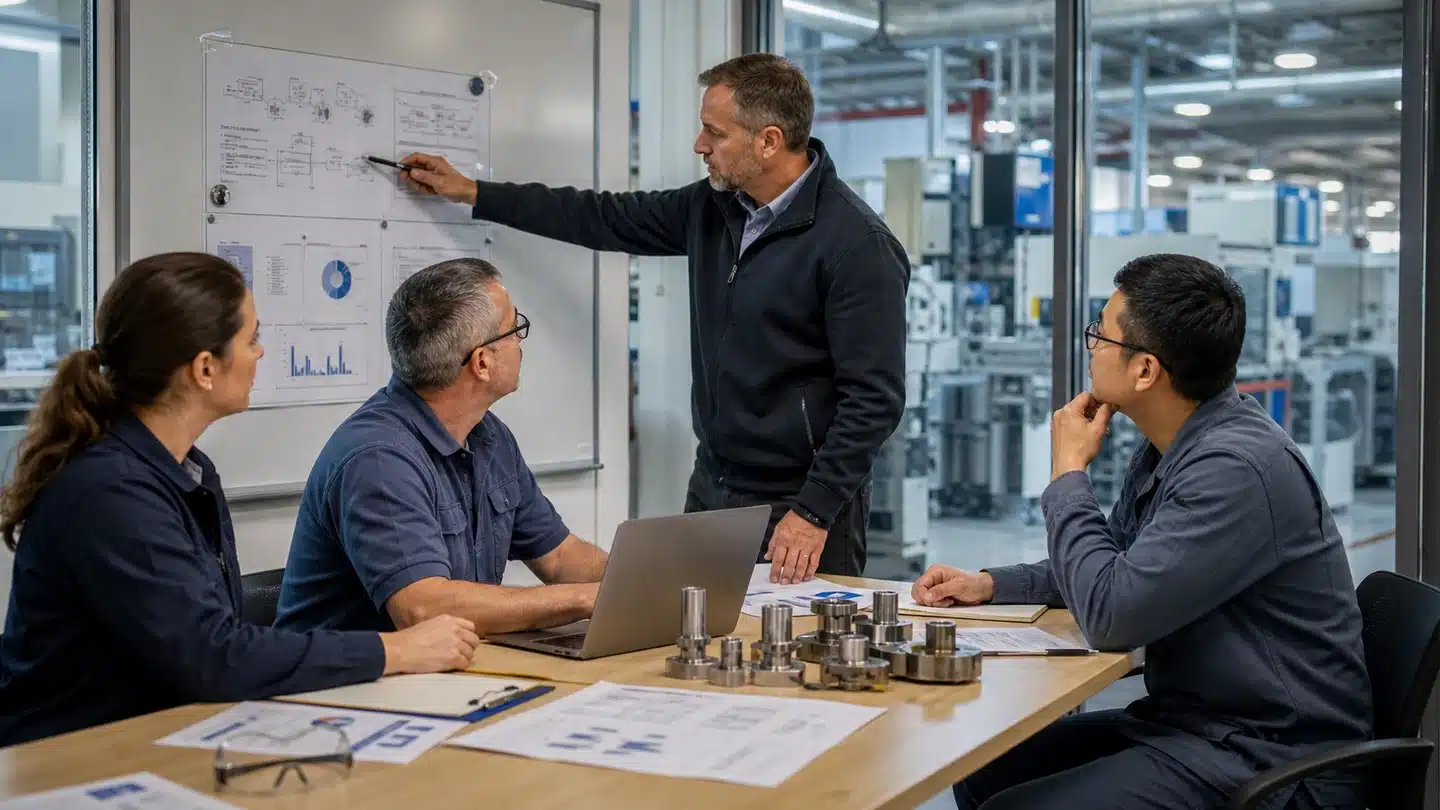
1. Define the decision before selecting the technology
Write the decision in operational terms. For example, maintenance needs to know which motor requires inspection during the next planned window, or quality needs to know whether a photographed surface defect requires containment. Name the user, timing, available action, and consequence of a wrong answer.
Evidence to collect: Current procedure, responsible role, response time, exception path, downtime or quality impact, and examples of both normal and abnormal conditions.
Pass test: A supervisor can explain exactly how the AI result changes the next action. If the result only creates another dashboard, the use case is not ready.
2. Measure the current cost and performance
Record a baseline before the pilot. Depending on the use case, this may include false reject rate, customer escapes, unplanned downtime, mean time to diagnose, maintenance labor, expedited freight, schedule changes, scrap, rework, or engineering search time. Use enough history to include changeovers, different products, shifts, suppliers, and seasonal demand.
Pass test: Finance and operations agree on how improvement will be calculated and which costs are estimates.
3. Score value, feasibility, risk, and adoption
Compare candidate projects using four separate scores. Value estimates the size and frequency of the problem. Feasibility examines whether representative data exists. Risk considers safety, quality, customer, compliance, and cybersecurity consequences. Adoption asks whether the people who receive the result can use it during normal work.
Pass test: The selected pilot has enough value to matter, a manageable production boundary, an available process owner, and a practical response when the model is uncertain.
Build a secure connection between plant and business systems
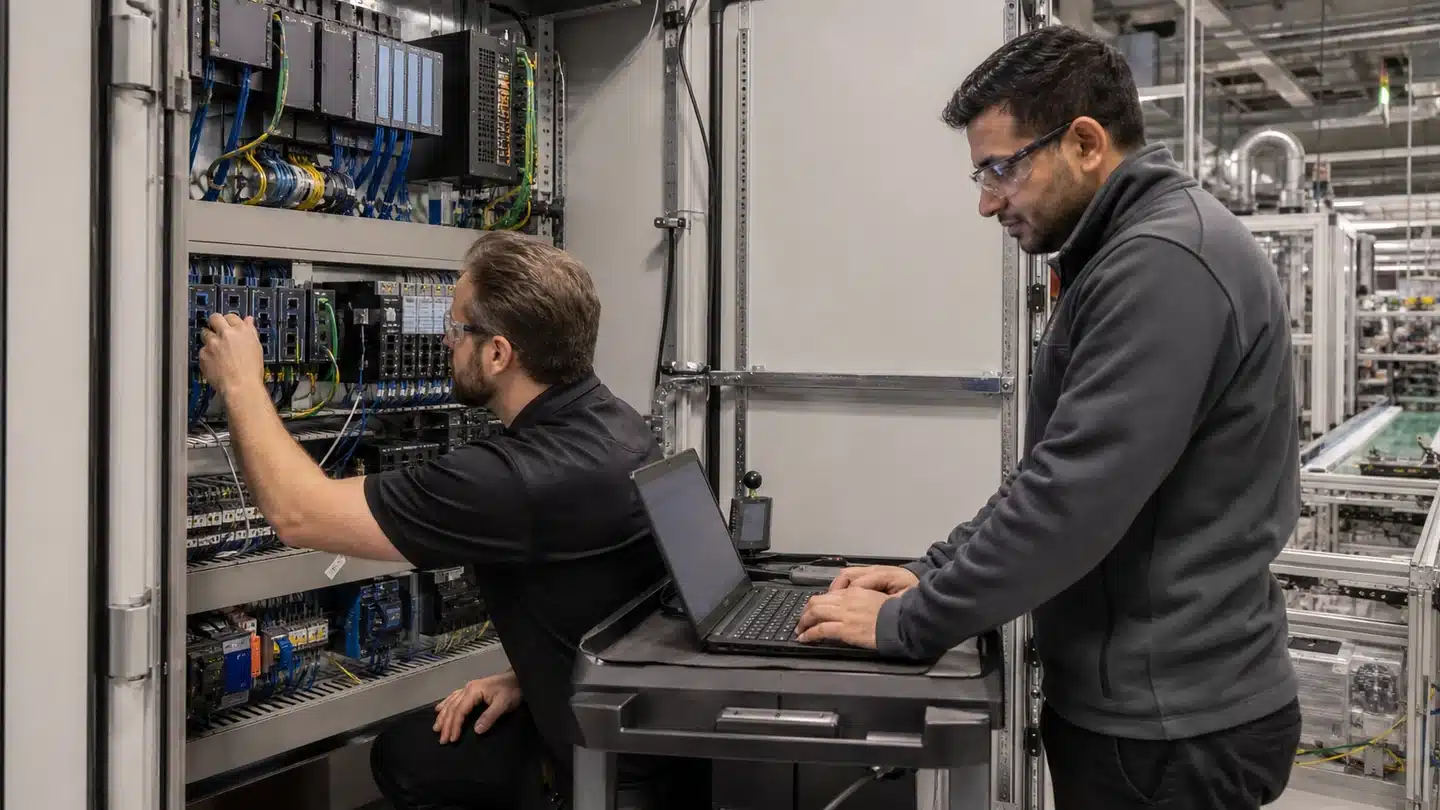
1. Map every system, owner, and data movement
Document the ERP, MES, QMS, CMMS, historian, engineering repositories, databases, sensors, inspection systems, spreadsheets, and manual records involved. Identify where part, asset, work order, lot, shift, recipe, operator, and timestamp context comes from. Resolve ownership and naming conflicts before training a model.
ALLMSP can build the required connections through ERP, CRM, and business system integration and data analytics and decision intelligence services.
2. Choose edge, cloud, or hybrid processing deliberately
Use edge processing when the decision requires low latency, local operation during an internet outage, or controlled handling of high-volume machine data. Use cloud services when elastic computing, shared analytics, or centralized model management provides a clear benefit. A hybrid design often keeps collection and immediate response near the line while centralizing reporting, training, and governance.
Pass test: The process continues safely during a network, cloud, model, or sensor failure.
3. Protect operational technology and credentials
Separate experimental workloads from production control. Use read-only collection where possible, managed service identities, protected secrets, network segmentation, allowlisted communication, logging, patch planning, and controlled remote support. Never allow a model to write directly to a safety function or production controller without an approved control design and independent safeguards.
Pass test: The pilot can be disabled without interrupting the machine, and its credentials cannot reach unrelated assets or administrative functions.
4. Design the action workflow around the result
Decide how an alert, recommendation, classification, or forecast enters daily work. It may create a draft maintenance request, place an item in a quality review queue, notify a planner, or present supporting evidence to an engineer. Assign an owner, response target, escalation path, and closeout record.
Pass test: Every result can be traced to a reviewed action, a documented dismissal, or an approved exception.
Run the pilot under real production conditions
1. Begin in shadow mode
Let the system produce results without controlling the process. Compare each result with the decision that qualified staff already make. Shadow mode reveals missing context, timing problems, weak labels, unusual products, and workflow friction without placing production at risk.
2. Test the conditions that usually break demonstrations
Include startup, shutdown, changeovers, planned maintenance, new products, low volume, sensor replacement, material changes, different lighting, network interruptions, and unusual shifts. Track false positives, false negatives, uncertain results, late results, and cases where the correct action was not available.
3. Train users on judgment and fallback
Users need to understand what the result means, what evidence supports it, which conditions are outside the pilot, how to report a questionable result, and how to continue when the system is unavailable. Training should use examples from the actual plant and role.
4. Approve production use in stages
Move from advisory output to workflow automation only after the pilot meets documented thresholds. Keep approval, rollback, monitoring, and change control proportional to the consequence of a wrong answer.
Measure performance, govern changes, and scale carefully
Production monitoring should combine model performance with operating performance. A technically accurate system may still fail if alerts arrive too late, employees ignore them, or the recommended action does not fit the maintenance, quality, or planning process.
- Operating result: Downtime avoided, scrap reduced, inspection time saved, schedule stability, maintenance lead time, or another agreed business measure.
- Decision quality: False positives, false negatives, confidence distribution, uncertain cases, and disagreement with qualified reviewers.
- Workflow performance: Response time, completion rate, dismissals, escalations, and work created without a responsible owner.
- Data health: Missing values, sensor drift, delayed feeds, changed identifiers, new product mixes, and source-system changes.
- System reliability: Availability, processing delay, failed integrations, credential errors, recovery time, and successful fallback tests.
Scale one controlled boundary at a time. A model that works on one line, product family, site, or shift should not be assumed to work everywhere. Repeat data validation and acceptance testing before adding a new operating context. Managed AI services can provide ongoing monitoring, support, retraining coordination, and optimization after deployment.
A practical 90-day manufacturing AI starting plan
- Days 1 through 15: Select one decision, document the present workflow, record the baseline, assign owners, and list failure consequences.
- Days 16 through 30: Inventory source data, test representative records, map integrations, choose the pilot boundary, and complete the security design.
- Days 31 through 60: Build the minimum working pipeline, run historical tests, begin shadow mode, and collect missed conditions and user feedback.
- Days 61 through 75: Correct data and workflow gaps, test changeovers and outages, train pilot users, and document fallback procedures.
- Days 76 through 90: Compare results with acceptance thresholds, calculate the operating impact, complete the production review, and decide whether to improve, scale, or stop.
A stopped pilot can still be a good result when it prevents a weak system from reaching production and documents what must change before another attempt.
Frequently Asked Questions
What is the best first AI use case for a manufacturer?
The best first use case solves a frequent and measurable operating problem with a defined owner and available response. It should have representative data, a manageable production boundary, and limited consequences while the team learns.
Should manufacturing AI run at the edge or in the cloud?
The answer depends on latency, connectivity, data volume, security, and recovery needs. Many plants use a hybrid design that collects and responds locally while centralizing training, reporting, and model management.
Can AI connect with an existing ERP, MES, QMS, or CMMS?
Yes, when the systems provide supported APIs, database access, exports, events, or controlled integration methods. The project still needs consistent part, asset, work order, lot, and timestamp context across those sources.
How much historical data does a manufacturing AI pilot need?
There is no universal amount. The data must cover enough normal operation, failures, products, shifts, changeovers, and seasonal conditions to test the decision honestly. Rare events may require a longer collection period or a different pilot design.
How should a manufacturer calculate ROI for an AI project?
Start with the current cost of the operating problem, then measure the improvement against the baseline. Include integration, sensors, software, support, training, false alarms, and process changes in the cost calculation.
Can an AI model control manufacturing equipment directly?
Direct control requires far more engineering, validation, safety review, and independent protection than an advisory system. Most first projects should recommend or queue an action for qualified review instead of writing directly to a controller.
What cybersecurity controls belong in a manufacturing AI project?
Use network segmentation, least-privilege identities, protected secrets, allowlisted communication, logging, patch planning, tested recovery, and a design that keeps experimental workloads away from safety and control functions.
How long should a manufacturing AI pilot run?
The pilot should run long enough to include the operating conditions that can change the result. A 60 to 90 day pilot is common, but a process with rare failures or seasonal demand may need more time.
What causes manufacturing AI pilots to fail?
Common causes include choosing technology before the operating decision, weak labels, inconsistent asset or part identities, missing workflow ownership, poor user adoption, uncontrolled system access, and judging success only by model accuracy.
Can ALLMSP handle manufacturing AI integration in-house?
Yes. ALLMSP can manage discovery, secure infrastructure, data connections, workflow automation, pilot development, user training, monitoring, support, and ongoing optimization as one accountable in-house team.