

























































































































































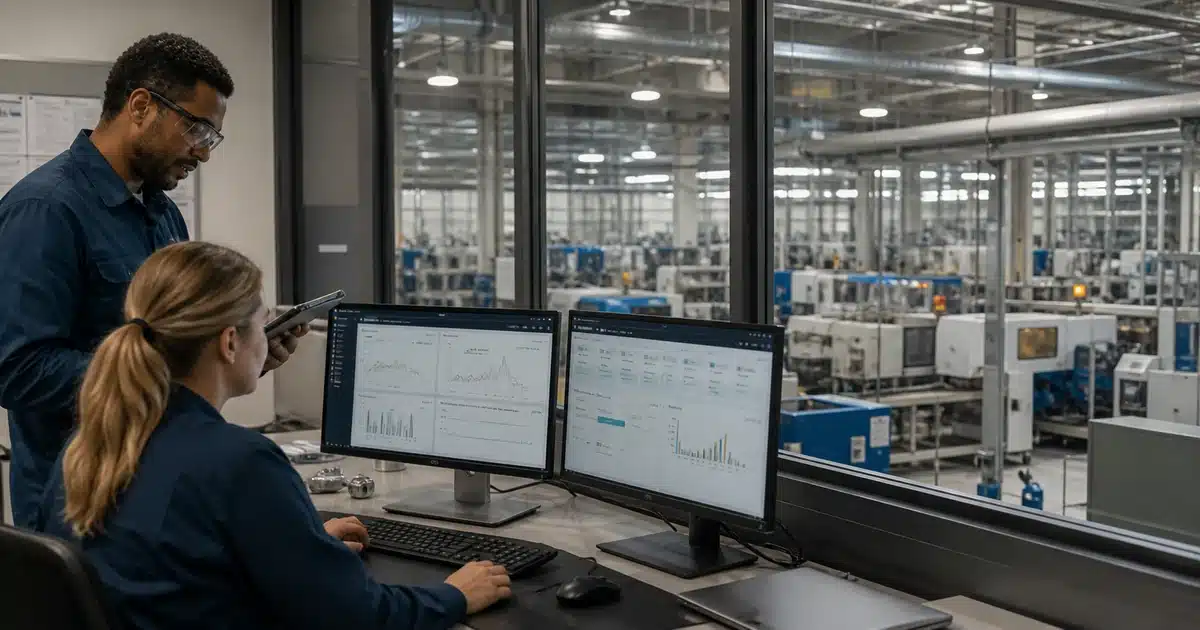
An AI project cannot repair manufacturing data by guessing what a record was supposed to mean. If asset names change between the historian and CMMS, if inspection results lack part and cavity context, or if production counts arrive without downtime and scrap reasons, the model may produce a confident answer that operations cannot trust.
This guide shows how to prepare ERP, MES, QMS, CMMS, historian, sensor, and engineering data for reliable analytics and AI. The work is not a one-time cleanup. It creates a governed data product with clear ownership, consistent context, security, quality monitoring, and a practical response when a source changes. ALLMSP provides business system integration and data analytics and dashboard services for manufacturers that want one in-house team to build and support the full pipeline.
What AI-ready manufacturing data should make possible
AI-ready manufacturing data lets qualified users trace a result back to the source event and understand the operating context that produced it.
- Stable identity: Parts, lots, assets, tools, work centers, recipes, operations, and work orders use controlled identifiers or documented crosswalks.
- Aligned time: Systems use known time zones, clock sources, sampling rates, and rules for late or out-of-order records.
- Operational context: Sensor and transaction records include product, process, shift, state, changeover, maintenance, and quality context when it matters.
- Known meaning: Units, codes, status values, reason codes, and calculated fields have owners and definitions.
- Controlled access: The pipeline protects engineering, customer, employee, supplier, financial, and production information.
- Measurable quality: Missing, duplicate, stale, impossible, and conflicting records are monitored instead of silently accepted.
Capture trustworthy context at the source
1. Inventory systems by business purpose and owner
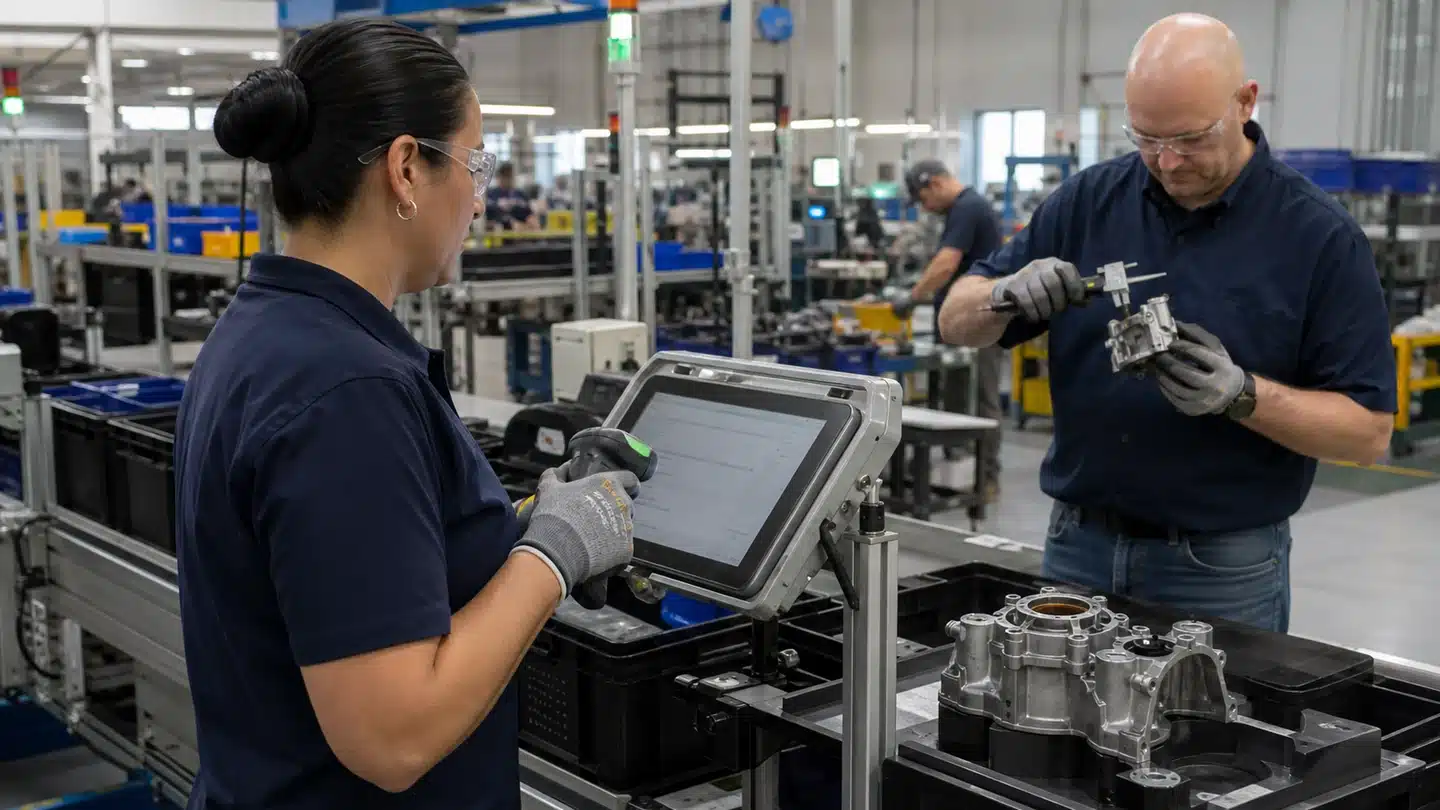
List the ERP, MES, QMS, CMMS, historian, laboratory systems, engineering files, databases, inspection stations, sensors, spreadsheets, and manual logs used by the target process. For each source, record the owner, authoritative fields, update timing, retention, access method, and known limitations.
Pass test: The project team can identify the source of truth for each field and knows who approves a definition or access change.
2. Establish a common identity model
Define how the project will identify sites, lines, work centers, assets, components, tools, part revisions, lots, work orders, operations, and defects. Use existing controlled identifiers when they are reliable. Where systems use different keys, create a governed crosswalk with an owner and effective dates.
Pass test: A sample event can be joined across production, quality, maintenance, and business records without relying on a person’s memory or a fragile description.
3. Record the conditions around each event
A temperature, vibration reading, inspection result, downtime code, or production count is only useful when its context is known. Capture operating state, product and revision, recipe, tool, shift, changeover, material lot, maintenance state, speed, and environmental conditions when they can affect the outcome.
Pass test: Reviewers can distinguish a real process change from a planned setup, idle period, sensor replacement, or product change.
Clean, align, and protect the integrated data
1. Profile the data before building the model
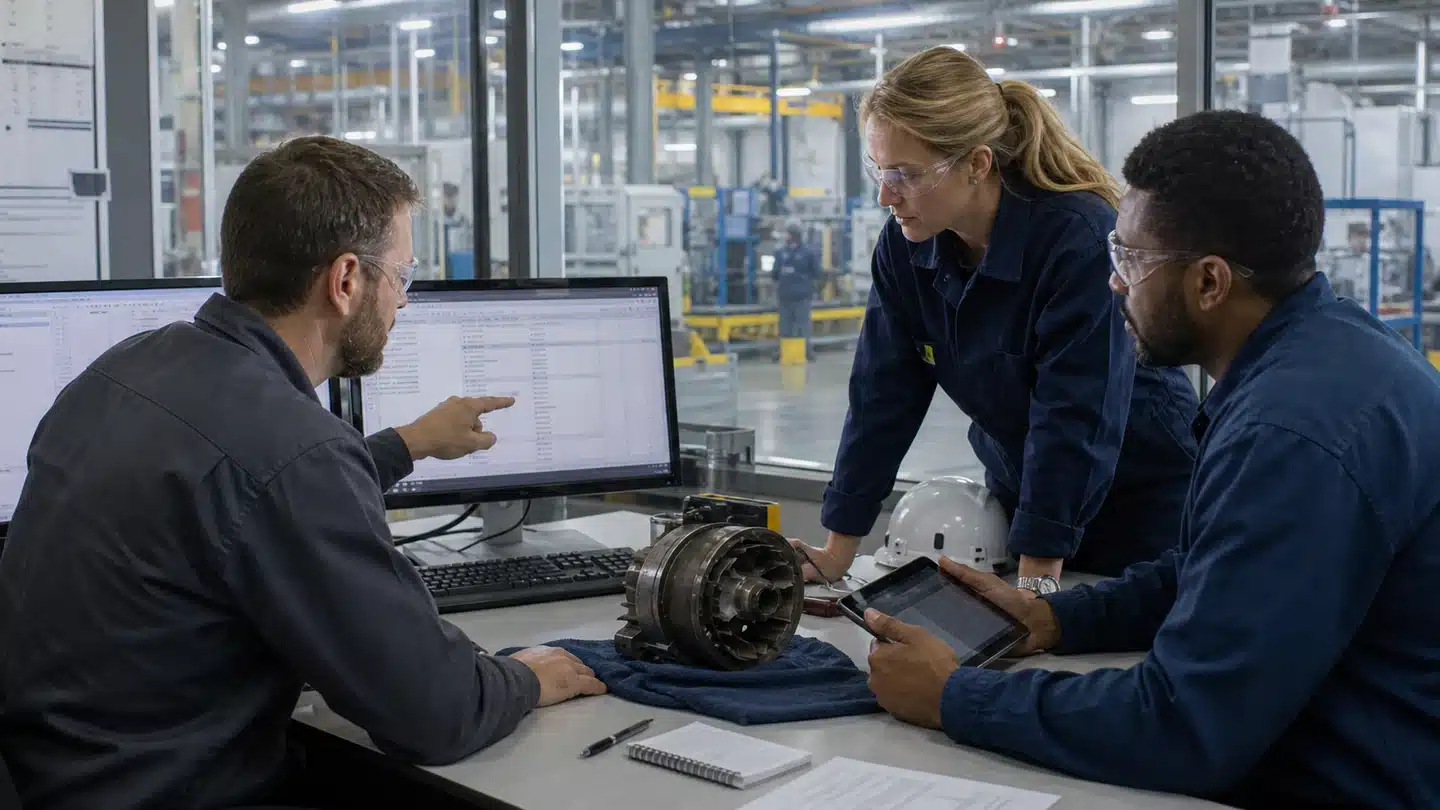
Measure completeness, uniqueness, range, frequency, delay, and consistency for each important field. Look for impossible values, duplicated events, missing intervals, changing codes, free-text reasons, stale exports, and records that arrive after the decision window.
Pass test: The team has a written data-quality baseline and can separate acceptable gaps from conditions that invalidate the use case.
2. Align time, units, and operating states
Normalize time zones, clock drift, daylight saving behavior, units, sampling rates, and status values. Preserve the original values and transformation logic. Do not interpolate or aggregate away a failure signature without review by the engineers who understand the process.
Pass test: Events from different systems appear in the correct operational sequence and calculated fields reproduce consistently.
3. Build a governed integration instead of a collection of exports
Use supported APIs, events, database views, or controlled file transfers. Add retry logic, duplicate protection, source timestamps, processing timestamps, lineage, and error reporting. Assign ownership for broken feeds and changed source fields.
Our cloud computing and migration services can support secure hybrid data platforms when a plant needs local collection with centralized analysis.
4. Apply least privilege and retention rules
Separate the identities used to collect, transform, train, review, and operate the system. Limit access by purpose, protect secrets, log administrative changes, encrypt sensitive data where appropriate, and retain only what the use case and business requirements justify.
Pass test: A project account cannot modify the source system or reach unrelated plants, customers, personnel records, or engineering repositories.
Create and validate a manufacturing data product
1. Build the narrowest useful dataset
Start with the fields needed for one decision. A smaller, documented dataset is easier to test and govern than a broad data lake with unclear purpose. Include raw observations, operating context, outcome labels, source identity, quality flags, and lineage.
2. Backtest against known production periods
Use periods with confirmed normal operation, failures, quality events, changeovers, shutdowns, sensor work, and product changes. Keep a holdout period that was not used to tune the model or rules. Review mistakes with operations, quality, maintenance, and engineering.
3. Validate labels and outcomes
A maintenance work order may not prove the recorded failure mode. A quality disposition may change after reinspection. A downtime reason may reflect the last selected code rather than the actual cause. Establish how labels are confirmed, corrected, and approved.
4. Monitor source and data drift
Alert on missing intervals, changed schemas, new codes, shifted distributions, clock problems, sensor replacement, new part families, and increased manual overrides. Route each alert to an owner who can judge whether the system remains valid.
Use a data-readiness scorecard before approving an AI pilot
Score each category from one to five and record the evidence. A high average should not hide a critical weakness. For example, excellent sensor coverage does not compensate for unreliable failure labels.
- Use-case definition: The decision, owner, action, timing, and consequence of error are documented.
- Source coverage: Representative normal, abnormal, changeover, maintenance, and product conditions are available.
- Identity and joins: Assets, parts, lots, operations, and work orders connect reliably across systems.
- Time and units: Clocks, time zones, sampling, units, and state transitions are understood.
- Label quality: Outcomes are confirmed by a controlled process instead of assumed from weak proxy fields.
- Security and ownership: Access, retention, lineage, source owners, and incident responsibilities are assigned.
- Operational adoption: Users can act on the result and provide feedback on questionable cases.
Any category that affects safety, customer quality, production control, or cybersecurity should meet its acceptance threshold before model development begins.
A 30-day manufacturing data-readiness assessment
- Week 1: Choose one decision, identify owners, map systems, and collect representative records from normal and abnormal operation.
- Week 2: Profile completeness, timestamps, identities, units, reason codes, labels, and join quality. Interview the people who create and correct the records.
- Week 3: Build a small governed dataset, document transformations and lineage, test security boundaries, and review ambiguous outcomes.
- Week 4: Backtest the proposed decision, score readiness, estimate the work required to close gaps, and approve a pilot only when the evidence supports it.
The assessment should end with a clear decision to proceed, collect more data, repair a source process, narrow the use case, or stop. Each outcome is more useful than beginning a model project with unknown data risk.
Frequently Asked Questions
Which manufacturing systems usually provide data for AI?
Common sources include ERP, MES, QMS, CMMS, historians, PLC and sensor platforms, laboratory systems, inspection equipment, engineering repositories, databases, and controlled manual records. The right sources depend on the operating decision.
Does a manufacturer need a data lake before starting AI?
No. Many useful pilots begin with a small governed dataset built for one decision. A broader platform may become valuable later, but it should not replace clear identity, context, ownership, and quality rules.
How do ERP and MES data differ in an AI project?
ERP usually provides business, order, inventory, purchasing, and financial context. MES provides more detailed production execution, operation, quantity, state, and traceability context. Reliable projects often need controlled joins between both.
Why are asset and part identifiers so important?
The identifiers let the team connect sensor events, maintenance records, production orders, quality results, and engineering context to the same physical item or process. Weak identifiers can create convincing but incorrect relationships.
How should manufacturers handle missing sensor data?
First identify why the data is missing and whether the gap changes the decision. Record the gap as a quality condition, avoid silent assumptions, and define when the model must abstain or the workflow must use a fallback.
What is a reliable manufacturing AI label?
A reliable label is an outcome confirmed by an accountable process. Examples include a verified defect classification, a confirmed failure mode, or a completed maintenance finding, not merely a convenient status code that may be inaccurate.
How can a manufacturer protect sensitive production data?
Use least-privilege identities, segmented networks, protected secrets, encryption where appropriate, logging, retention limits, controlled exports, and access reviews. Keep experimental systems away from unrelated plants and production-control functions.
What is data drift in manufacturing?
Data drift occurs when the inputs or their meaning change. New products, tools, recipes, sensors, suppliers, speeds, maintenance practices, or source-system updates can change the patterns that a model learned.
How long does a manufacturing data-readiness assessment take?
A focused assessment for one use case can often be completed in about 30 days when source access and owners are available. Complex multi-site or rare-event projects may require longer collection and validation.
Can ALLMSP connect plant and business systems for AI?
Yes. ALLMSP can handle source discovery, integration architecture, secure access, data pipelines, dashboards, AI pilots, monitoring, and ongoing support as one in-house engagement.