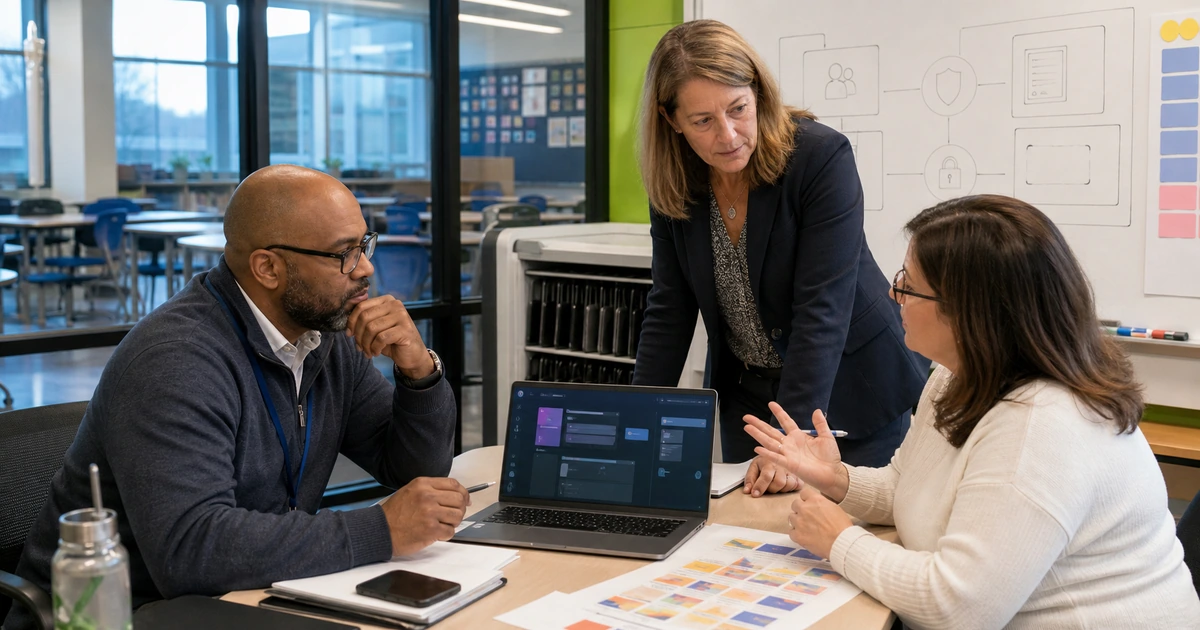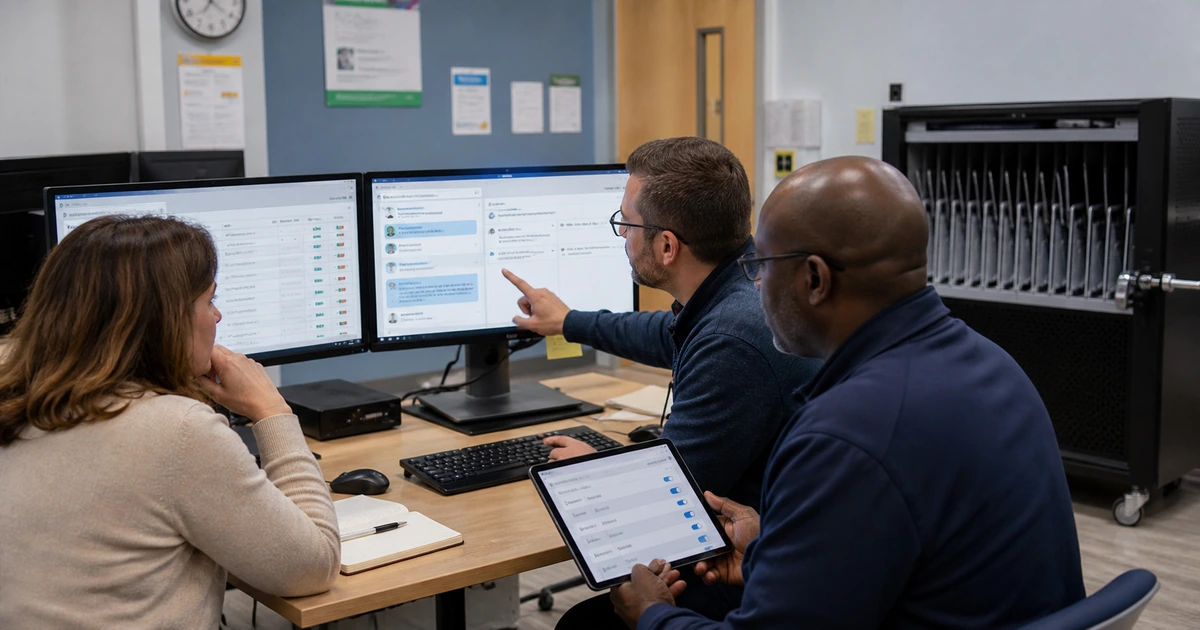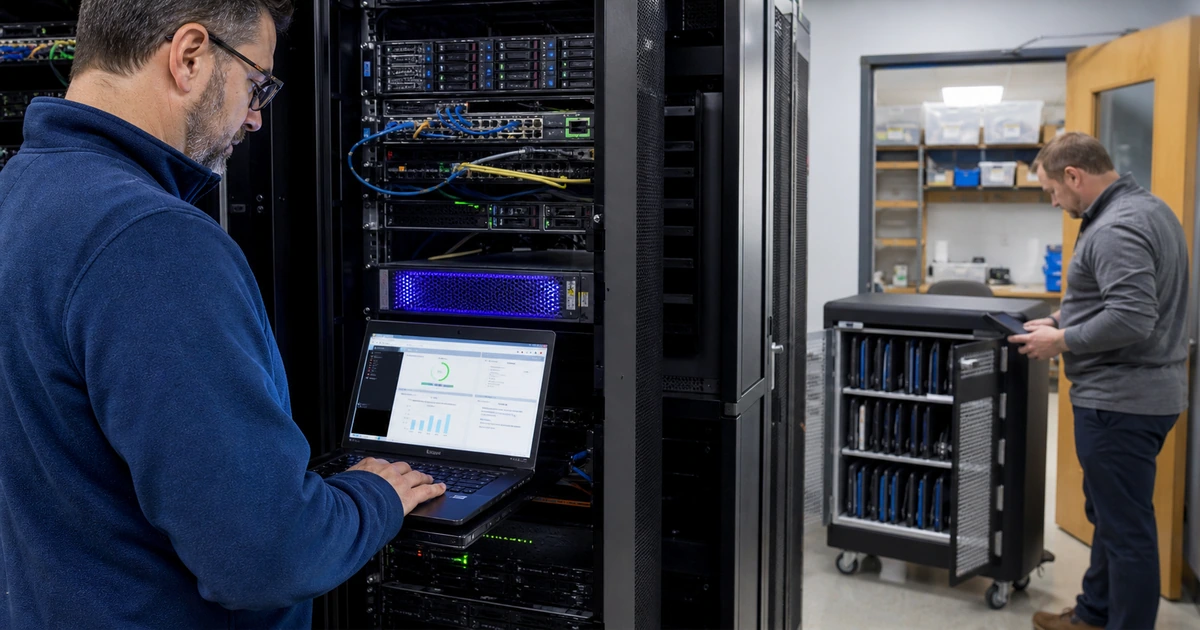
Schools operate an unusually broad technology environment. Faculty and staff accounts, student devices, guest access, classroom systems, cloud applications, vendors, families, shared equipment, and seasonal role changes all touch important data. A useful security program protects daily learning while making recovery possible when prevention fails.
A checklist should lead to evidence, not a row of unchecked promises. For every control, identify the owner, systems covered, exceptions, last test, current result, and next action. Start with the services whose failure would stop instruction, payroll, communications, safety, or access to student records.
ALLMSP provides in-house cybersecurity, managed IT, backup, cloud, identity, network, endpoint, and recovery support for schools in Lawrenceville, Suwanee, Gwinnett County, Metro Atlanta, and across Georgia.
The six layers of a school cybersecurity review
- Identity: Protect staff, student, administrator, service, vendor, and emergency accounts with appropriate authentication, roles, lifecycle controls, and monitoring.
- Devices: Inventory and manage laptops, Chromebooks, tablets, servers, phones, interactive displays, printers, cameras, and specialized classroom or facilities systems.
- Networks: Separate trusted, student, guest, device, facilities, voice, camera, and administrative traffic according to risk and operating need.
- Applications and data: Review cloud sharing, administrator roles, third-party access, retention, sensitive records, integrations, and unsupported applications.
- Detection and response: Make sure important logs, endpoint alerts, email threats, identity events, and network warnings reach people who can investigate and act.
- Backup and recovery: Protect independent copies, secure backup administration, test representative restores, and rehearse how the school will continue essential work.
Find the systems and access that matter most
Build the inventory from multiple sources because no single console sees everything. Compare identity directories, device management, endpoint security, network controllers, cloud admin centers, purchasing, help desk records, classroom inventories, and vendor lists. Investigate devices and accounts that appear in one source but not another.
Map access around roles and real work. Teachers, substitutes, students, counselors, nurses, administrators, vendors, and support staff need different systems and different privileges. Pay particular attention to accounts that can reset passwords, export student data, change security settings, create forwarding rules, manage backups, or reach several systems through one integration.
- Privileged accounts: Use separate administrator identities, strong multifactor authentication, limited assignment, sign-in alerts, and a reviewed emergency access process.
- Joiner and leaver process: Create, change, suspend, and remove access from authoritative requests tied to term dates, role changes, contractors, substitutes, and graduates.
- Service accounts: Document purpose, owner, permissions, credential storage, rotation, integrations, activity, and the impact of disabling each non-human account.
- Managed devices: Confirm enrollment, supported operating system, encryption, update status, endpoint protection, screen lock, inventory, and secure reset or disposal.
- Unknown technology: Find personal cloud storage, unsanctioned applications, unmanaged wireless devices, abandoned servers, direct internet exposure, and equipment using default credentials.
Risk should be ranked by likely interruption, data exposure, number of affected people, recovery difficulty, and whether the school can currently detect the condition. This produces a repair order grounded in operations rather than fear.
Reduce common attack paths without disrupting instruction
Strengthen the paths attackers use most often: stolen credentials, malicious email, unpatched endpoints, exposed remote access, excessive privileges, unsafe cloud sharing, and unmanaged third parties. Apply controls in pilot groups, communicate clearly, and test common classroom tasks so protection does not create workarounds that are harder to monitor.
Email and identity deserve special attention because one account may unlock cloud files, communication, applications, and password resets. Review multifactor coverage, legacy authentication, risky forwarding, impossible or unusual sign-ins, administrator changes, application consent, shared mailboxes, and recovery methods. Train users with examples that match current scams and the school’s reporting process.
- Patching: Set supported versions, maintenance windows, restart communication, exception approval, and reporting for devices that repeatedly fail updates.
- Endpoint protection: Confirm sensors are active, policies apply, alerts reach the security workflow, isolation works, and the team can identify the user and device quickly.
- Network controls: Use segmentation, secure management access, modern wireless security, guest isolation, protected remote access, and reviewed firewall rules.
- Cloud controls: Limit broad sharing, review external users, protect administrators, monitor risky activity, and restrict unapproved applications and connectors.
- Vendor access: Require named accounts, least privilege, multifactor authentication, approved connection methods, maintenance windows, logging, and prompt removal.
- Security awareness: Teach employees how to report suspicious messages, unexpected multifactor prompts, lost devices, exposed files, and unusual application behavior.
Track exceptions openly. A legacy classroom or facilities system may need temporary isolation and monitoring while replacement is planned. Undocumented exceptions are the ones most likely to become permanent exposure.
Prove that backups and incident procedures work
A successful backup job is not the same as a successful recovery. Identify the data and configurations needed for essential school operations, then test representative restores to a safe location. Include cloud data, servers, application exports, identity configuration, network devices, websites, and any system whose vendor backup does not meet the school’s recovery requirement.
Run tabletop exercises that begin with realistic detection, such as a compromised administrator, ransomware alert, stolen device, exposed student file, unavailable cloud service, or failed network core. The team should practice who declares the incident, how access is contained, where communication occurs, what evidence is preserved, which services are restored first, and how families or authorities are notified when required.
- Define recovery targets: Set acceptable data loss and restoration time for each critical service based on school operations rather than one blanket promise.
- Protect backup administration: Use separate identities, multifactor authentication, restricted networks, immutable or otherwise protected copies where appropriate, and alerts for destructive changes.
- Test restores: Recover files, mail, application data, server workloads, and configurations, then have the responsible department confirm that the result is usable.
- Practice communication: Prepare internal contacts, leadership decisions, alternate channels, vendor escalation, family messaging, and legal or regulatory review.
- Record lessons: Assign every gap, update the incident and recovery plans, repeat failed tests, and schedule the next exercise according to risk.
Keep printed or offline access to essential contacts and procedures. A plan stored only inside the unavailable or compromised environment cannot guide the first hours of response.
ALLMSP cybersecurity and recovery services for schools
ALLMSP can assess and support the complete school environment, including identity, Microsoft 365, Google Workspace, endpoints, servers, networks, wireless, email, cloud applications, backups, monitoring, and help desk operations. Findings are translated into an ordered work plan that considers the academic calendar, testing periods, maintenance windows, and limited school IT staffing.
Our in-house team can implement the corrections, train users, monitor systems, test recovery, document exceptions, and support incidents. Schools have one accountable service path when a problem crosses identity, network, device, cloud, security, or backup boundaries.
- Risk assessment: Evidence-based review of assets, access, vulnerabilities, configurations, vendors, monitoring, backups, and operating dependencies.
- Security implementation: Identity hardening, endpoint protection, patching, network segmentation, cloud controls, email security, and safer remote access.
- Managed monitoring: Alert collection, investigation, escalation, endpoint response, account containment, and documented incident handling.
- Backup and recovery: Protected copies, retention design, recovery targets, restore testing, application exports, and continuity procedures.
- Training and support: Practical employee education, phishing reporting, help desk coordination, administrator procedures, and recurring review.
The objective is dependable learning and administration, not a stack of security products that nobody has time to operate.
Official school cybersecurity and privacy resources
Use current federal guidance alongside Georgia requirements, school policy, insurance conditions, and the needs of the systems being protected.
- ALLMSP cybersecurity services. Local assessment, implementation, monitoring, training, incident readiness, and support.
- ALLMSP managed IT services. Help desk, identity, endpoints, networks, cloud, vendors, documentation, and ongoing operations.
Frequently asked questions about school cybersecurity and recovery
What should a school cybersecurity assessment cover?
Review identities, privileged access, devices, servers, networks, wireless, email, cloud services, student data, vendors, physical access, logs, alerts, backups, recovery, incident response, policies, training, and the operational dependencies that support instruction and administration.
Which school accounts need multifactor authentication first?
Prioritize administrators, staff, remote access, email, cloud storage, finance, backups, vendors, and accounts that can reset passwords or export data. Expand coverage based on risk and platform capability while planning age-appropriate access for student populations.
How often should student and staff access be reviewed?
Review access on a schedule tied to the academic calendar and after role changes, departures, vendor changes, security events, and major application updates. Privileged and third-party access should receive more frequent attention than ordinary low-risk accounts.
Does cloud storage eliminate the need for backup?
No. Cloud platforms provide availability and some recovery features, but schools still need to define retention, accidental deletion, malicious deletion, ransomware, administrator compromise, application configuration, legal needs, and recovery across the services they use.
What makes a school backup resilient?
Use independent protected copies, separate administrative access, strong authentication, monitoring, retention that matches the risk, coverage for critical cloud and on-site data, documented recovery targets, and regular restores that responsible departments confirm are usable.
How should a school respond to a suspicious email or login?
Give users a simple reporting method. The support or security team should preserve the message or alert, identify the account and devices involved, check sign-ins and changes, contain access when warranted, reset credentials safely, remove persistence, notify decision makers, and document the result.
How can schools secure older classroom and facilities equipment?
Inventory the equipment, identify the business need, change default credentials, limit network access, restrict management, monitor communication, document vendor support, maintain recovery information, and plan replacement. Isolation and compensating controls can reduce risk when immediate replacement is not practical.
How often should incident recovery be tested?
Test representative restores and response procedures throughout the year, after major changes, and before periods when downtime would be especially harmful. Frequency should reflect data change, system importance, threat, staffing, and the results of prior tests.
Can ALLMSP manage school cybersecurity from assessment through support?
Yes. ALLMSP handles assessment, identity, endpoints, patching, networks, cloud security, email protection, monitoring, backups, recovery tests, documentation, training, incident response coordination, and ongoing managed support in house.
Where does ALLMSP provide cybersecurity support for schools?
ALLMSP serves schools in Lawrenceville, Suwanee, Gwinnett County, Metro Atlanta, and across Georgia through on-site services, secure remote administration, monitoring, help desk support, projects, and recurring security reviews.
Sources
- U.S. Department of Education K-12 cybersecurity. Current federal resources for cyber readiness, reporting, privacy, and school communities. ↩
- CISA Protecting Our Future report. Recommendations and resources for K-12 cybersecurity risk. ↩
- Protecting Student Privacy. Education Department guidance for protected records and data sharing. ↩