













































































































































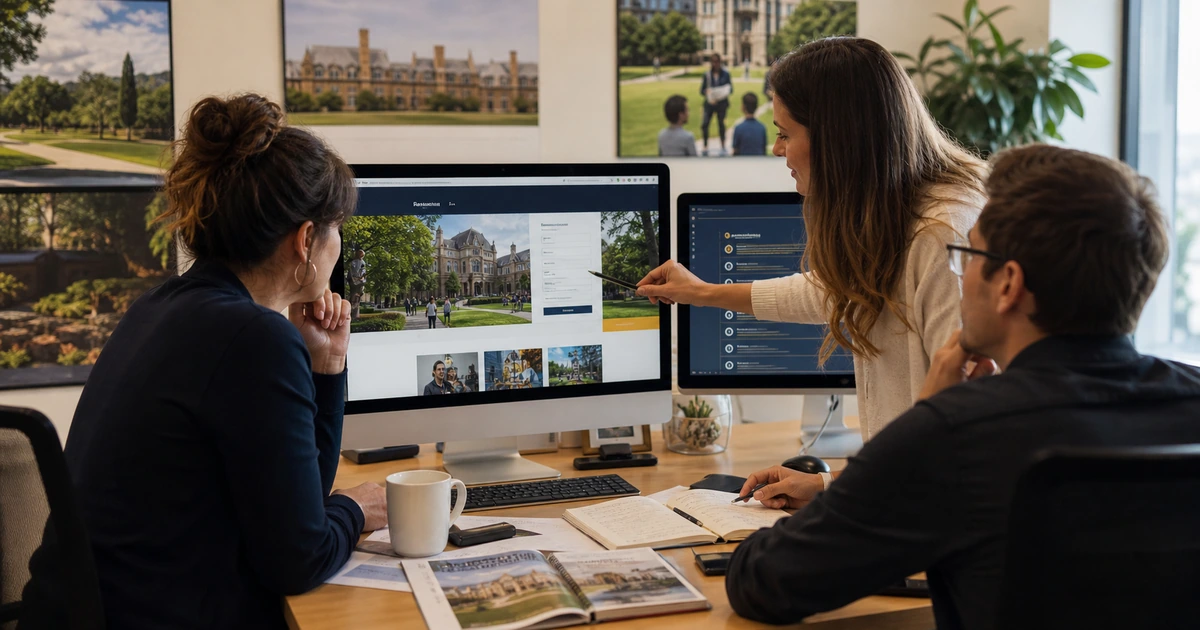
Families rarely begin with the school’s preferred navigation labels. They search for a grade level, program, learning approach, support need, location, tuition question, schedule, or outcome. A strong program page meets that specific need, answers the next questions in a sensible order, and makes it easy to speak with the right person.
The page should be useful before it is persuasive. Clear eligibility, curriculum, schedule, student experience, costs, next dates, evidence, and contact options help a family decide whether to continue. Thin pages that repeat the school mission or hide important details behind a form create avoidable calls and weak leads.
ALLMSP plans, writes, designs, builds, measures, and improves education websites for Lawrenceville, Suwanee, Gwinnett County, Metro Atlanta, and schools across Georgia. Website, analytics, search, advertising, forms, and follow-up can be handled as one connected system.
What a useful school program page must accomplish
- Match a real search: Use the language families use for the program, age, grade, need, schedule, and location without forcing keywords into every paragraph.
- Answer fit questions: Explain who the program serves, what students experience, requirements, timing, costs or cost resources, and what happens next.
- Provide believable evidence: Use specific curriculum details, facilities, staff expertise, student work, outcomes, accreditations, and original photography that belongs to the program.
- Make action easy: Offer a clear next step such as a question, tour, information session, application, or call, with a short mobile-friendly form.
- Connect the inquiry: Send useful source and page context into the school’s inquiry process so admissions can respond quickly and appropriately.
Research the question behind the search
Build the page around one program and a coherent group of search needs. Use Search Console queries, site search, admissions calls, email questions, tour conversations, paid search terms, competitor results, and faculty interviews. The goal is to understand what a family is trying to decide, not to collect every phrase that contains the program name.
Group questions by decision stage. Early visitors may ask what the program is and whether it fits their child. Later visitors need schedule, location, eligibility, cost, application steps, deadlines, and evidence. Put the most important answers on the page rather than requiring a download or contact form for basic facts.
- Program identity: Use one clear page title and opening explanation that state the program, audience, location, and meaningful distinction.
- Student experience: Describe what a normal day, course, project, service, or progression looks like with concrete examples.
- Practical details: Publish the schedule, grades or ages, prerequisites, transportation or format, important dates, and who can answer questions.
- Cost information: Explain tuition or fees, what is included, financial aid or funding resources, and when a family receives a firm answer.
- Decision evidence: Use current facts, named credentials, original program photography, outcomes with context, and answers from responsible staff.
A thorough page can rank for many related searches by covering the topic naturally. Create a separate page when the audience, program, location, or decision is meaningfully different.
Design the page for mobile reading and action
Most families will scan before they read. Use descriptive headings, short paragraphs, real photos, accessible labels, and a visible next step. Keep the page title specific and place the essential fit information near the top. Avoid sliders that hide critical facts and buttons whose labels do not explain what happens next.
The form should request only what admissions needs for the first response. Long application questions belong in the application system, not the initial inquiry. Confirm successful submission on screen, send a useful acknowledgment, notify the correct team, and preserve the program page and campaign source with the lead.
- Check the first screen: Confirm that the program name, audience, location, key value, and primary action are understandable without scrolling through decorative content.
- Test every breakpoint: Review headings, photos, tables, accordions, forms, buttons, menus, and sticky elements on common phone, tablet, laptop, and desktop widths.
- Use descriptive actions: Choose labels such as Schedule a Tour, Ask an Admissions Question, or View Application Steps instead of Learn More when the destination is known.
- Protect accessibility: Check keyboard use, focus order, color contrast, text alternatives, form errors, captions, zoom, and heading structure.
- Test the full inquiry: Submit from mobile, verify the thank-you state, notification, CRM record, source fields, acknowledgment, assignment, and response deadline.
A beautiful page that loses the inquiry or frustrates a phone user is not finished. Treat the complete path from search result to staff response as one experience.
Measure qualified interest and improve the page
Track actions that reflect genuine progress, not only page views. Useful events may include phone calls, form submissions, tour requests, information-session registrations, application starts, document downloads, and clicks to important cost or eligibility information. Connect those actions to the program page, source, campaign, and device.
Review search and behavior data together. Search Console can show the queries and pages receiving Google clicks. Analytics can show what visitors do on the site. Admissions data shows whether those interactions became useful conversations, tours, applications, and enrollments. The counts will not always match because the systems measure different things, so look for explainable trends and broken handoffs.
- Search relevance: Review queries, impressions, clicks, click rate, location, device, and whether the landing page answers the search intent.
- Page engagement: Check key actions, form starts, form completion, phone clicks, important content use, and where visitors abandon the process.
- Lead quality: Ask admissions whether inquiries fit the program, contain enough context, receive timely responses, and reach the correct person.
- Technical quality: Monitor indexing, mobile usability, loading performance, broken links, form errors, tracking gaps, and accessibility issues.
- Content freshness: Assign an owner to review dates, staffing, curriculum, tuition, policies, photos, outcomes, and calls to action before each enrollment cycle.
Improve the weakest part of the path first. More traffic will not solve a confusing program explanation, a broken mobile form, or inquiries that wait several days for a response.
How ALLMSP builds education pages that generate better inquiries
ALLMSP combines search research, content planning, web design, development, photography direction, analytics, conversion tracking, and marketing operations. We can work inside the school’s current website or rebuild a page system that staff can maintain without breaking design and tracking.
Our team also connects the technical handoff into forms, email, CRM, call tracking, appointment tools, and reporting. That makes it possible to improve the page using enrollment outcomes rather than judging success by rankings or traffic alone.
- Search and audience research: Queries, competitor results, admissions questions, local intent, program distinctions, and content gaps.
- Page architecture: A clear hierarchy for program fit, experience, details, evidence, questions, related paths, and the next action.
- Production: Original copy, responsive design, development, real imagery, accessibility, forms, speed, and quality assurance.
- Measurement: Search Console, analytics, Tag Manager, call and form tracking, source preservation, dashboards, and validation.
- Ongoing improvement: Regular review of search demand, behavior, lead quality, page accuracy, technical health, and enrollment outcomes.
The finished page should help the right family make a confident next step and give the school enough context to respond well.
Resources for school website and search improvement
Use official search and analytics documentation, then validate decisions against real family questions and enrollment outcomes.
- ALLMSP website design. Responsive strategy, content, development, accessibility, forms, and conversion improvement.
- ALLMSP online marketing. SEO, paid media, analytics, content, lead tracking, and ongoing optimization.
Frequently asked questions about school program pages
Should every school program have its own page?
Create a dedicated page when the program has a distinct audience, search demand, decision process, content, and next step. Closely related options can share a page when separating them would create thin or repetitive content.
What should appear near the top of a program page?
State the program name, who it serves, location or format, meaningful benefit, important fit detail, and primary next action. A visitor should understand the offer before encountering long history, broad mission language, or decorative content.
How much information should the inquiry form request?
Ask only for the information needed to route and answer the first inquiry. Name, contact method, program interest, student stage where appropriate, and an open question may be enough. Move application and protected record collection into the correct secure process.
How can a school page rank in Lawrenceville or Suwanee?
Provide accurate location and service information, answer local family questions, use original campus and program evidence, maintain consistent business details, earn relevant references, and build a technically sound page. Repeating city names without useful local substance will not create a strong experience.
What photos work best on school program pages?
Use current original photography of the actual learning environment, facilities, projects, staff, and student experience with appropriate permissions. Avoid generic stock classrooms, text-heavy graphics, repeated campus exteriors, and photos that do not represent the program.
Which actions should be tracked?
Track calls, form submissions, tour requests, event registrations, application starts, important downloads, and clicks to key decision information. Preserve the landing page and source so admissions can connect digital activity with later outcomes.
Why do Search Console and Analytics numbers differ?
They measure different systems. Search Console reports Google Search activity, while Analytics depends on website tagging, consent, page loading, and its own session logic. Compare trends and investigate large unexplained gaps instead of expecting every click and session to match.
How often should program content be reviewed?
Review it before every major recruitment cycle and whenever dates, costs, staff, curriculum, requirements, facilities, or policies change. Assign a named content owner and include forms, tracking, links, mobile layout, and accessibility in the review.
Can ALLMSP write, build, and measure the page?
Yes. ALLMSP handles research, content, design, development, imagery planning, mobile and accessibility testing, forms, analytics, search optimization, lead routing, reporting, and ongoing improvements with one in-house team.
How do we know whether a page is attracting the right families?
Combine relevant search queries, engagement, key actions, form context, response time, staff feedback, tour attendance, application progression, and enrollment outcomes. High traffic with poor-fit inquiries usually signals a mismatch in targeting, content, or the next step.
Sources
- Google Search Essentials. Core technical and people-first content practices for Google Search. ↩
- Search Console and Google Analytics for SEO. Official guidance on using search performance and website behavior together. ↩
- Core Web Vitals and search. Current guidance for loading, responsiveness, and visual stability. ↩