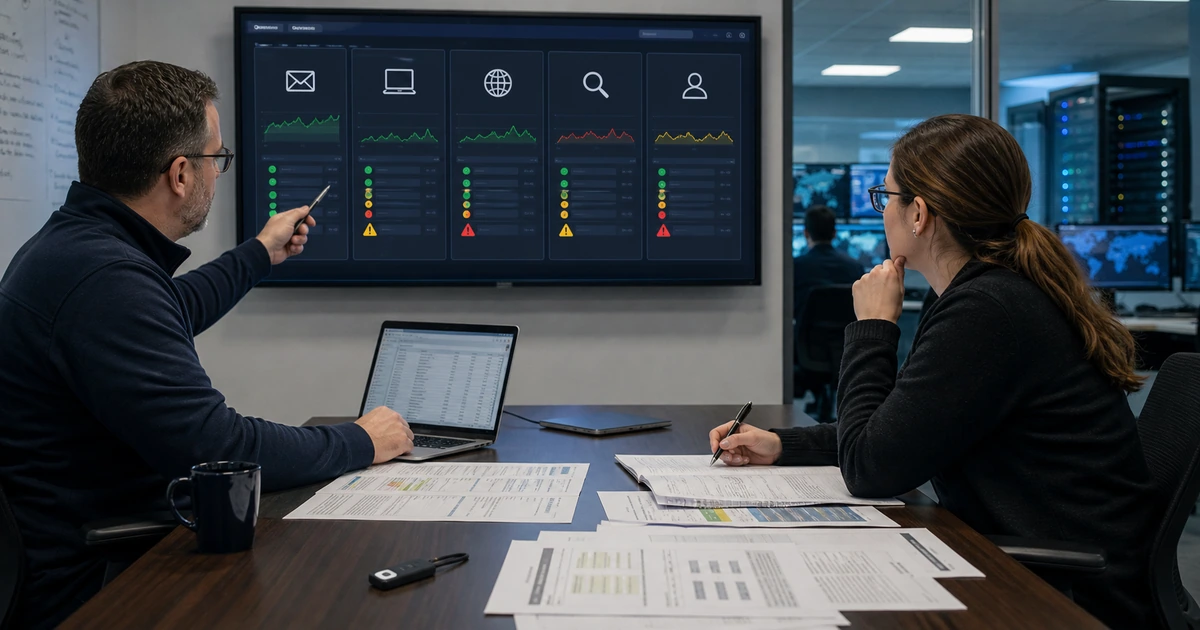
A business domain is part of the control plane for its website, email, customer portals, remote services, and brand identity. If the registrar or DNS account is compromised, an attacker may redirect traffic, interfere with email, request certificates, or prevent the organization from restoring service. A certificate alone cannot correct weak ownership, unsafe DNS changes, expired registrations, or forgotten subdomains.
The term SSL is still common, but modern websites use Transport Layer Security, or TLS. A secure setup connects company-controlled registration, protected administrative access, accurate DNS, appropriate DNSSEC, controlled certificate issuance, automated renewal, consistent HTTPS, and monitoring. It also documents the providers and records needed to recover when an account, nameserver, certificate, or deployment fails.
ALLMSP configures and manages domains, DNS, TLS certificates, hosting, email authentication, and website security through its in-house team for businesses in Lawrenceville, Suwanee, Gwinnett County, Metro Atlanta, and throughout Georgia. This guide explains how to establish a secure foundation before changing public traffic.
Protect the chain from domain ownership to encrypted customer traffic
- Inventory the portfolio: Record registered domains, subdomains, purposes, owners, registrars, nameservers, renewals, DNS zones, certificates, and dependencies.
- Secure registration: Use company ownership, named administrators, MFA, protected recovery, registry or registrar locks, current billing, and renewal alerts.
- Control DNS: Document authoritative providers, records, TTLs, change approval, DNSSEC, exports, monitoring, and rollback procedures.
- Manage certificates: Map names, issuers, validation, automation, keys, CAA, deployment, expiration, revocation, and responsible owners.
- Enforce HTTPS: Test certificate chains, hostname coverage, protocols, redirects, mixed content, applications, APIs, mail, and third-party callbacks.
- Verify operations: Monitor registration, DNS changes, resolution, certificates, renewals, website journeys, email authentication, and administrative access.
Inventory domains and establish company-controlled registrar ownership
Create a domain portfolio that includes active websites, redirect domains, defensive registrations, campaign names, customer portals, email domains, parked names, international domains, and domains held for future use. Record the registrable domain, purpose, legal owner, business owner, technical owner, registrar, registrant contact, administrative contacts, account identifier, nameservers, expiration, automatic renewal, payment method, privacy service, transfer status, and recovery method. Map every production and nonproduction subdomain to its service and owner.
Place each registration under a company-controlled account with named administrators and multifactor authentication. Avoid using an employee’s personal email as the only owner or recovery address. Protect the mailbox and phone used for recovery, maintain a second authorized administrator, review login history, and remove departed users promptly. ICANN explains that registrar lock status can protect against unauthorized transfer. Higher-value domains may support additional registry lock services or stronger change procedures through the registrar.
Test continuity before an emergency. Confirm that renewal notices reach monitored company addresses, payment information is current, the business can access support, and recovery does not depend on the website or email service that the domain enables. Store registrar, registry, DNS, hosting, certificate, and emergency contact details in an approved system available during an outage. Export registration and DNS records on a schedule and after material changes.
- Domain record: Track name, purpose, owner, registrar, account, contacts, nameservers, lock, expiration, renewal, billing, recovery, and status.
- Subdomain record: Map hostname, service, environment, owner, DNS records, certificate, hosting, data, users, monitoring, and retirement.
- Account control: Require company identity, named administrators, MFA, protected recovery, least privilege, login review, and prompt offboarding.
- Renewal control: Verify automatic renewal, valid payment, notices, backup contacts, budget, support path, and an alert well before expiration.
- Emergency record: Store registrar, registry, DNS, hosting, certificate, ownership evidence, support, escalation, and recovery steps outside the dependency.
Secure domain ownership gives the business an accountable starting point for every DNS, certificate, website, and email decision that follows.
Design authoritative DNS, DNSSEC, certificate issuance, and renewal automation
Document the authoritative DNS architecture and every record. Include delegation, nameserver addresses, A and AAAA records, CNAMEs, mail exchange, TXT, service, CAA, verification, and application-specific records. Record purpose, owner, destination, TTL, dependency, last validation, and retirement date. Remove abandoned records carefully after confirming they are not used by certificates, email, authentication, vendors, or forgotten applications. Restrict zone administration and use a reviewed change request with pre-change export and rollback values.
Evaluate DNSSEC with the registrar and DNS provider. DNSSEC protects the authenticity and integrity of DNS responses through a chain of trust, but an incorrect delegation signer record or key transition can make a domain unreachable. NIST SP 800-81 Revision 3 provides current guidance for authoritative, recursive, encrypted, protective, and DNSSEC deployments. Record who manages keys and delegation, how rollover occurs, how changes are validated from independent resolvers, and how an emergency correction will be coordinated.
Build a certificate inventory and automate issuance and renewal through supported tooling. Record every hostname, issuer, account, validation method, private-key location, deployment target, expiration, renewal schedule, monitoring, and revocation process. Use separate staging and production issuance where supported. CAA records can limit which certificate authorities may issue for a domain, but the policy must reflect every legitimate platform and subdomain path. Test CAA resolution and certificate automation before enforcing a restrictive policy.
- DNS record: Document type, name, value, purpose, owner, TTL, provider, dependency, validation, rollback, review, and retirement.
- DNS change: Require request, business reason, evidence, affected services, approver, export, exact value, TTL, timing, test, and rollback.
- DNSSEC plan: Record provider support, signing, delegation signer data, algorithms, key ownership, rollover, validation, monitoring, and recovery.
- Certificate record: Track names, issuer, account, validation, key, environment, deployment, dates, automation, alerts, owner, and revocation.
- CAA policy: List approved certificate authorities, wildcard policy, subdomain exceptions, validation dependencies, test process, and change owner.
DNS and certificate automation are dependable only when the business understands the delegation, issuance path, ownership, and recovery procedure.
Deploy HTTPS, validate websites and email, and transition to monitored operations
Install the complete certificate chain on every intended endpoint and verify hostname coverage, validity, trust, supported protocols, cipher configuration, server-name indication, proxies, load balancers, origins, applications, and APIs. Redirect HTTP to the preferred HTTPS hostname in a single deliberate path. Update canonical URLs, sitemaps, internal links, media, scripts, styles, forms, callbacks, webhooks, analytics, and third-party configurations. Test for mixed content and avoid a blanket redirect that hides important legacy paths or breaks verification endpoints.
Review email authentication whenever a domain or DNS environment changes. Inventory legitimate sending systems and configure SPF, DKIM, and DMARC based on actual mail flows. DMARC builds on SPF and DKIM alignment and can provide aggregate reports that help identify authorized and unauthorized use. Begin with monitoring and data review, correct legitimate senders, then increase policy deliberately. Preserve approved forwarding and third-party services and avoid publishing a strict policy before the organization understands its complete sending estate.
Use a launch and operations checklist. Validate resolution from independent networks, website and API journeys, certificate chain, redirects, email receipt, authentication, forms, payments, scheduling, analytics, and monitoring. Confirm that automatic renewal runs with enough time to correct a failure and that alerts reach a primary and backup. Monitor registration expiration, nameserver and record changes, DNSSEC validation, certificate transparency or issuance where appropriate, certificate expiration, revocation events, and critical customer paths.
- TLS validation: Check hostname, chain, trust, dates, protocols, ciphers, proxy, origin, automation, key protection, renewal, and revocation.
- HTTPS migration: Update redirects, canonical URLs, sitemaps, internal links, content, APIs, callbacks, forms, analytics, and external services.
- Email authentication: Inventory senders, configure SPF and DKIM, monitor DMARC alignment and reports, correct flows, and advance policy carefully.
- Launch test: Verify DNS, DNSSEC, TLS, redirects, websites, applications, APIs, email, forms, transactions, devices, networks, and monitoring.
- Operations handoff: Assign renewals, alerts, access reviews, DNS changes, certificate inventory, email reports, incidents, and recurring validation.
The secure setup is complete when customers reach the intended encrypted service, business email remains trustworthy, renewals are automated, and failures are visible.
Domain, DNS, SSL, and TLS setup from ALLMSP
ALLMSP can inventory domain portfolios, establish business ownership, secure registrar access, migrate or configure DNS, implement DNSSEC where appropriate, automate TLS certificates, set CAA policy, enforce HTTPS, configure email authentication, validate services, and establish monitoring. Our in-house team also manages hosting, websites, cybersecurity, email, backups, and incident response.
We provide domain and certificate services for businesses in Lawrenceville, Suwanee, Gwinnett County, Metro Atlanta, and throughout Georgia, including complex websites, cloud services, customer portals, ecommerce, email, and multi-domain portfolios.
- Control: Inventory domains, restore company ownership, protect accounts, configure renewals, document dependencies, and secure recovery.
- Configure: Manage DNS, DNSSEC, certificates, CAA, HTTPS, redirects, email authentication, and connected applications.
- Monitor: Watch registration, DNS changes, resolution, issuance, expiration, renewals, email alignment, and critical service journeys.
Official domain, DNS, certificate, and email references
Use current registrar, registry, DNS-provider, certificate-authority, hosting, email, and application documentation together with these references.
- NIST Secure DNS Deployment Guide. Provides modern guidance for authoritative, recursive, encrypted, protective, and DNSSEC deployments.
- ICANN guidance about locked domains. Explains registrar lock status and how it helps protect against unauthorized domain transfer.
- Let’s Encrypt certificate documentation. Provides guidance for certificate issuance, validation, automation, chains, renewal, revocation, and monitoring.
- IETF DMARC specification. Defines domain-based email authentication, reporting, alignment, and policy using SPF and DKIM results.
SSL and domain security setup FAQs
What should a business domain inventory contain?
Include domains, subdomains, purpose, owner, registrar, contacts, nameservers, locks, expiration, renewal, billing, recovery, DNS records, certificates, email, services, and retirement plans.
Who should own a company's domain registration?
The business should control the registrar account through company-managed identities, named administrators, MFA, protected recovery, current billing, and documented offboarding.
What is the difference between SSL and TLS?
SSL is the familiar historical term. Modern encrypted web connections use TLS, and certificates bind approved names and public keys into the trust process.
What does DNSSEC protect?
DNSSEC helps clients verify that signed DNS data is authentic and has not been altered, but it requires careful provider support, delegation, key rollover, monitoring, and recovery.
What is a CAA record?
Certificate Authority Authorization is a DNS record that can limit which certificate authorities may issue certificates for a domain or wildcard names.
Should TLS certificate renewal be automated?
Yes, when the platform supports reliable automation. Monitor the process, renew early enough to correct failure, protect account keys, and test deployment to every endpoint.
What should be tested during an HTTPS migration?
Test certificates, protocols, redirects, canonical URLs, internal links, mixed content, forms, APIs, callbacks, payments, analytics, email, mobile devices, and monitoring.
How does domain security relate to business email?
The same domain and DNS publish mail routing and authentication records. Registrar or DNS compromise can disrupt delivery or enable convincing impersonation.
Can ALLMSP manage domains, DNS, and certificates together?
Yes. ALLMSP handles ownership, registration, DNS, DNSSEC, TLS, CAA, HTTPS, email authentication, monitoring, and incident support through its in-house team.
Where does ALLMSP provide domain and SSL support?
ALLMSP secures domain registration, DNS, and certificates for businesses in Lawrenceville, Suwanee, Gwinnett County, Metro Atlanta, and across Georgia.