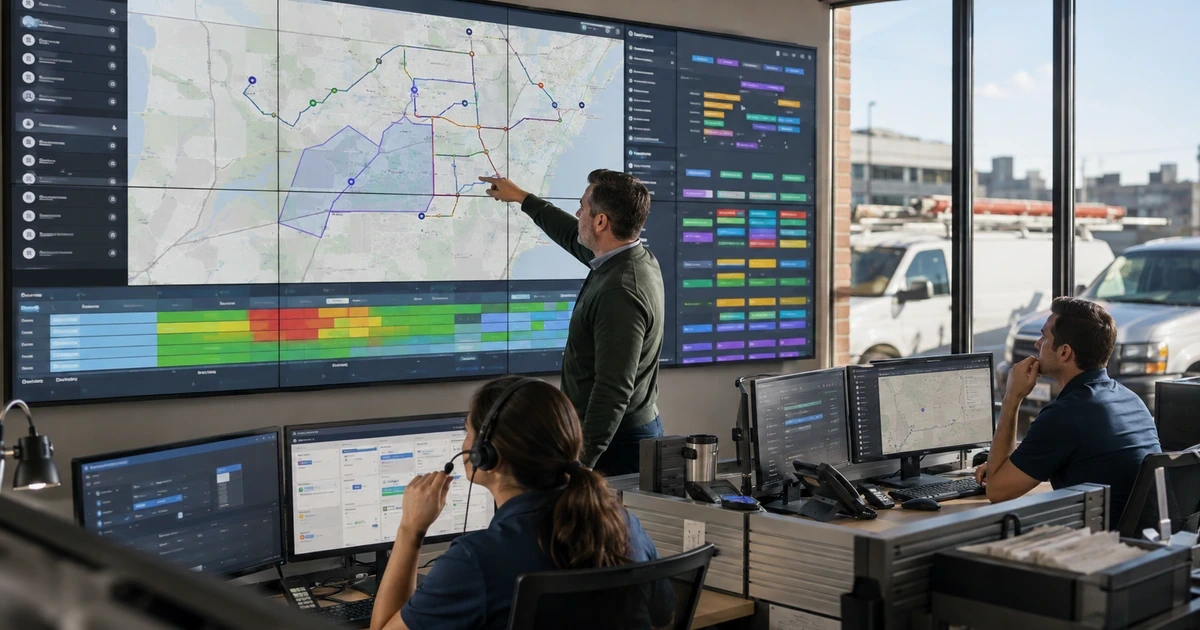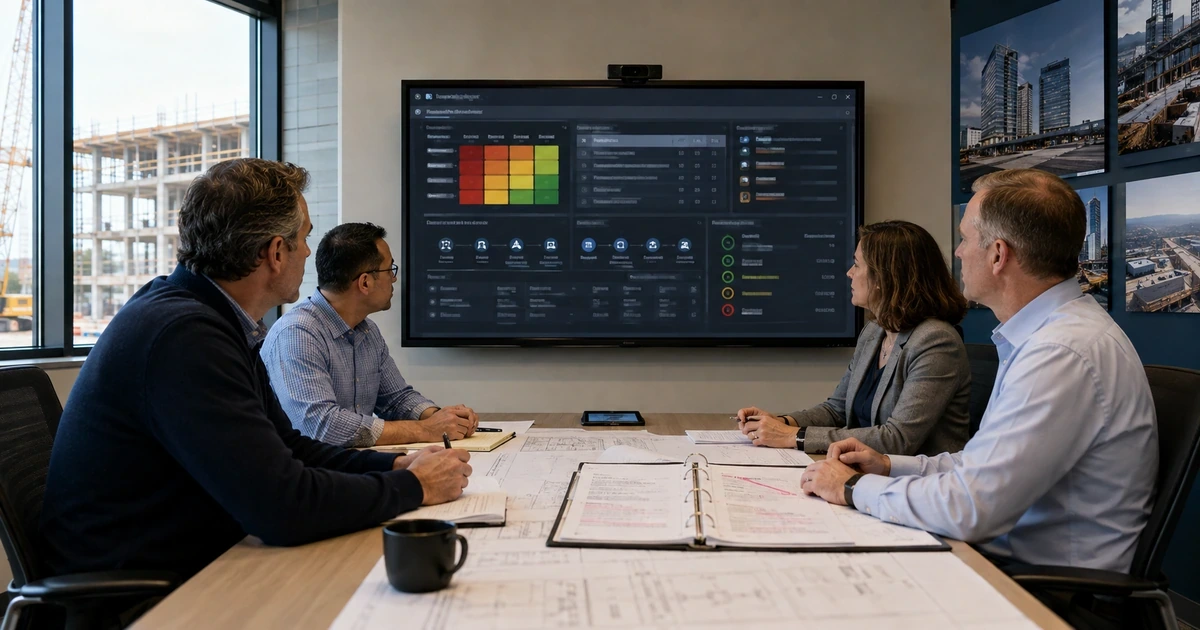
Construction AI governance establishes where AI may be used, which information it may process, who remains responsible for decisions, what evidence is required, and how the organization responds when a system behaves unexpectedly. Contractors need this structure because project information can include owner and customer records, bids, pricing, designs, subcontractor data, employee information, credentials, site images, access systems, schedules, safety-related observations, and contractual communications.
A workable program should encourage useful experimentation while preventing personal accounts, unapproved uploads, hidden automations, and unsupported output from becoming part of the official project record. Controls should scale with consequence. A private draft summary needs fewer approvals than a system that changes a schedule, sends a customer message, recommends a payment, evaluates a worker, or influences a safety or design decision.
ALLMSP helps construction and field-service organizations in Lawrenceville, Suwanee, Gwinnett County, Metro Atlanta, and across Georgia create and operate AI governance. Our in-house team can inventory tools, classify use cases, review providers, secure data and identities, implement approved platforms, test workflows, train users, monitor systems, investigate incidents, and maintain the program as technology changes.
A construction AI governance system that supports real work
- Inventory uses and dependencies: Record AI assistants, embedded features, models, APIs, automations, data sources, connected systems, users, providers, owners, and operating status.
- Classify consequence: Distinguish private assistance, internal analysis, project workflow, external communication, automated action, and decisions affecting safety, contracts, money, or people.
- Protect project information: Apply contractual, privacy, intellectual property, confidentiality, retention, access, customer, owner, designer, and subcontractor requirements.
- Require evidence and review: Define testing, source support, human approval, uncertainty, documentation, fallback, and authority for each material use case.
- Control providers and change: Review terms, data use, models, features, subprocessors, regions, integrations, service identities, updates, costs, and exit capability.
- Operate the lifecycle: Monitor performance, corrections, incidents, access, drift, adoption, provider changes, business results, and the decision to improve or retire a system.
Create an AI register and risk-based approval path
Discover actual use through staff interviews, managed application inventories, browser extensions, expense records, cloud projects, identity logs, API keys, integrations, source repositories, project-platform features, and workflow tools. Separate a personal experiment from a shared assistant, embedded product capability, connected automation, custom model, and production service. Unknown tools should be contained until ownership, data exposure, purpose, and support can be established.
Maintain a concise register for material uses. Record the business purpose, system, model or feature, provider, owner, users, projects, input data, connected resources, output, human decision, consequence tier, tests, known limitations, retention, monitoring, cost, incident route, and review date. Link detailed technical evidence instead of copying it into a register that becomes too cumbersome to maintain.
- Limited assistance: Allow approved drafting, search, or summarization with protected accounts, permitted data, source verification, and no automatic project action.
- Operational workflow: Require managed integration, role-based access, evaluation, human approval, logging, monitoring, support, fallback, and change control.
- External communication: Add factual review, customer or project authority, approved records, disclosure when required, retention, and a process to correct errors.
- High consequence: Apply deeper multidisciplinary review where output can affect safety, design, contract, schedule, cost, payment, employment, legal rights, or difficult-to-reverse work.
- Prohibited behavior: Block unapproved provider uploads, credential sharing, sensitive-data use outside scope, hidden automation, unsupported final decisions, and attempts to bypass security controls.
- Exception handling: Give users a documented way to request a new tool or use case, report a problem, preserve urgent work, and obtain a timely accountable decision.
Risk tiers keep routine assistance practical while reserving stronger evidence and leadership authority for uses that can materially affect a project or person.
Protect contracts, designs, project records, and connected systems
Map each use case to the obligations governing its information. Review customer and owner agreements, design and consultant terms, subcontractor requirements, licensing, confidentiality, intellectual property, insurance, privacy, public-project rules, records retention, litigation holds, and platform terms. An AI provider’s default settings do not replace the contractor’s responsibility to control project information and authorized use.
Secure the complete system, not only the prompt box. Apply managed identities, multifactor authentication, least privilege, project boundaries, device management, protected secrets, connector restrictions, logging, data-loss controls, backup, tested recovery, and departure cleanup. Separate development, test, and production where automation can write to business systems. Preserve original records and reviewer decisions so the organization can reconstruct what occurred.
- Data classification: Identify public, internal, confidential, personal, financial, credential, design, contract, safety-related, customer, owner, and subcontractor information.
- Approved sources: Name the projects, folders, repositories, databases, mailboxes, calendars, records, and versions an AI use may retrieve or process.
- Provider review: Check data use, retention, deletion, training, subprocessors, location, encryption, administrative access, audit evidence, availability, export, and contract changes.
- Identity and integration: Use dedicated service accounts, minimum permissions, protected tokens, controlled network paths, field validation, monitoring, rotation, and revocation.
- Record integrity: Link output to source evidence, preserve versions and timestamps, record reviewer corrections, prevent duplicate writes, and separate drafts from approved project records.
- Continuity: Document fallback work, provider outage response, rollback, data export, replacement capability, recovery priorities, and the records needed to continue the project.
Governance becomes real when contractual decisions and technical controls describe the same data, users, systems, and operating boundaries.
Monitor AI performance, incidents, and meaningful change
Review behavior after deployment rather than assuming the original test remains valid. Track unsupported statements, reviewer correction, missing sources, unusual access, failed integrations, duplicate actions, user bypass, provider changes, cost, downtime, model behavior, and performance across important project types. Retain reference cases so affected behavior can be retested when data, prompts, providers, models, or workflows change.
Prepare an incident process for both security and operational failure. Events may include unauthorized disclosure, compromised credentials, malicious document instructions, incorrect project actions, unreliable cost or schedule output, fabricated support, lost audit evidence, provider outage, or a public message that should not have been sent. Preserve the timeline and artifacts, contain the workflow, assess affected projects and people, notify authorized leaders, correct the system, rerun tests, and document the decision to resume or retire it.
- Quality review: Compare current output, source support, error categories, corrections, uncertainty, important edge cases, and downstream outcomes with approved criteria.
- Access review: Reconcile users, administrators, service identities, tokens, connected systems, project scope, shared files, provider roles, and former employees or subcontractors.
- Change triggers: Review new models, providers, features, data, prompts, retrieval sources, permissions, integrations, projects, uses, contracts, and applicable requirements.
- Incident evidence: Capture affected records, versions, users, access, requests, outputs, system actions, containment, communications, recovery, testing, and accountable decisions.
- Portfolio decision: Choose to expand, improve, restrict, replace, or retire each material use based on current value, risk, support burden, cost, and operating evidence.
- Safe retirement: Disable automations, revoke access and secrets, export required records, preserve evidence, notify users, remove dependencies, and verify the approved replacement or manual process.
Lifecycle review keeps construction AI aligned with changing projects, people, providers, obligations, and business priorities instead of leaving yesterday’s controls in place indefinitely.
Construction AI governance and security from ALLMSP
ALLMSP can build the AI inventory, acceptable-use rules, risk tiers, provider review, data controls, managed identities, testing standards, approval workflows, monitoring, incident procedures, and governance evidence for a contractor. We implement the cloud, network, endpoint, backup, integration, logging, and support controls needed to make the approved operating model work in the field and office.
Organizations across Lawrenceville, Suwanee, Gwinnett County, Metro Atlanta, and Georgia can use ALLMSP for an initial governance baseline, a project-specific AI deployment, or ongoing technical oversight. One in-house team connects policy, construction systems, cybersecurity, user support, training, and continuous improvement from end to end.
- Governance baseline: Tool and use inventory, data exposure, provider review, consequence tiers, ownership, controls, urgent corrections, and prioritized roadmap.
- Control implementation: Approved platforms, managed identity, project permissions, integrations, testing, human approval, logging, monitoring, documentation, and training.
- Ongoing oversight: Access reviews, provider and model changes, performance checks, user support, incident response, revalidation, reporting, cost control, and retirement.
Primary resources for construction AI governance
Use recognized AI risk and secure-development guidance as a foundation, then apply it to the contractor’s contracts, projects, records, systems, workforce, and decision authority.
- NIST AI Risk Management Framework. A voluntary structure for trustworthy AI governance, context, measurement, and risk treatment.
- NIST Generative AI Profile. Companion guidance for risks that are specific to or intensified by generative AI.
- CISA secure AI system development guidelines. Secure-by-design recommendations for AI development, deployment, and operation.
- ALLMSP AI Governance and Security. AI policy, approved tools, data protection, testing, monitoring, incident readiness, and managed oversight.
Construction AI governance FAQs
Why does a construction company need AI governance?
Governance defines approved uses, protected information, provider and integration controls, human authority, testing, monitoring, incident response, and accountability before AI output becomes part of project or business work.
What belongs in a construction AI inventory?
Include assistants, embedded software features, models, APIs, automations, providers, accounts, users, projects, data sources, connected systems, owners, purpose, consequence, tests, costs, and operating status.
Can employees use public AI tools with project documents?
Only when the organization has approved the provider, account, data type, purpose, retention, training use, terms, and security controls. Confidential, contractual, personal, financial, design, and credential information often requires stricter handling.
How should AI use cases be risk tiered?
Consider the data, user, project stage, external effect, ability to reverse the action, human review, contractual obligation, and consequence for safety, design, schedule, cost, payment, employment, privacy, or legal rights.
What human oversight is appropriate for construction AI?
The person who already owns the underlying decision should receive source evidence, proposed output, uncertainty, correction controls, and authority to approve, reject, or request more information before consequential action.
How should an AI provider be evaluated?
Review ownership, data use, retention, deletion, training, subprocessors, location, encryption, administrative access, model and feature changes, audit evidence, availability, cost, export, support, and exit capability.
What changes should trigger AI revalidation?
Revalidate affected behavior after material changes to models, prompts, providers, data, project platforms, field mappings, permissions, integrations, user roles, project types, contracts, or the decision supported by output.
What counts as a construction AI incident?
Examples include unauthorized disclosure, compromised access, malicious input, unsupported project output, incorrect automated action, missing evidence, provider outage, public error, or behavior that no longer meets approved acceptance criteria.
Can ALLMSP run construction AI governance in house?
Yes. ALLMSP handles inventory, policy, provider review, identity, cybersecurity, cloud, data controls, integrations, testing, documentation, monitoring, incident support, training, and ongoing technical governance in house.
Where does ALLMSP provide construction AI governance services?
ALLMSP serves contractors and field-service organizations in Lawrenceville, Suwanee, Gwinnett County, Metro Atlanta, and across Georgia with local and remote support.