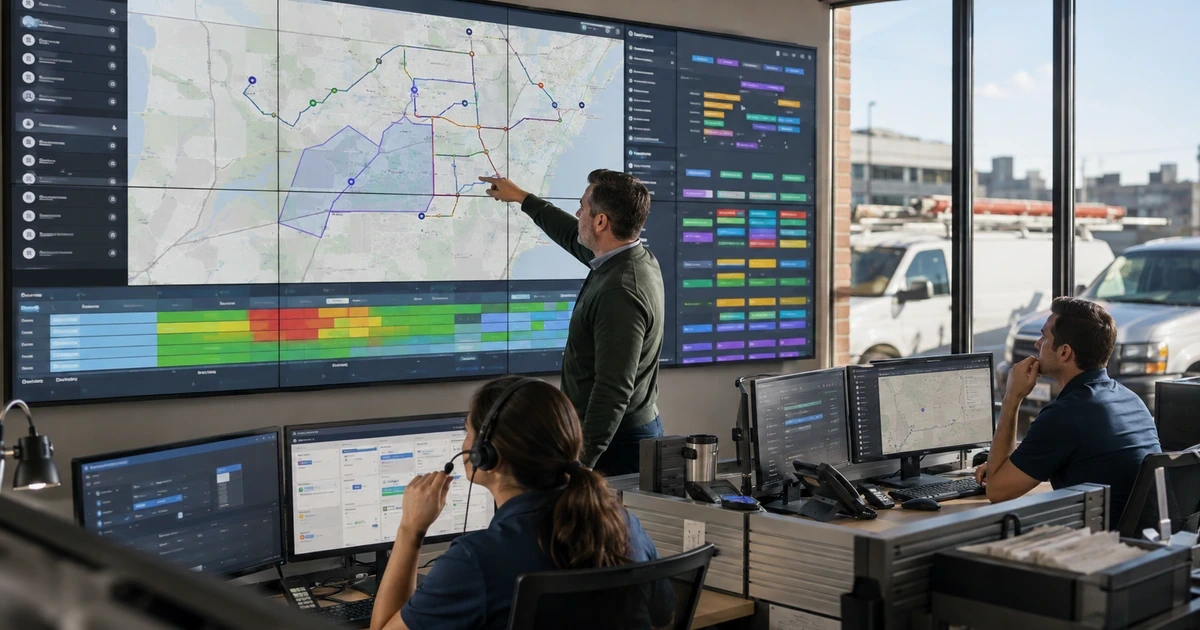
A construction security review should collect evidence from identities, project rosters, drawings, field devices, subcontractors, financial workflows, connectivity, providers, support tickets, backups, closeouts, and incidents. The review should test real project paths, not only compare settings with a generic checklist.
Preserve contracts, approvals, project records, drawings, financial evidence, safety and training records, audit logs, closeout material, and replacement ownership before removing users or systems. Coordinate changes around bids, inspections, deliveries, payroll, billing, closings, and active incidents.
Evidence to collect before changing construction and contracting IT
The review produces a dated record of project and system scope, tested evidence, affected jobs and data, field and financial consequence, owner, immediate containment, durable correction, due date, and retest. It separates office, jobsite, subcontractor, provider, and process problems.
- Current project, worker, subcontractor, design-team, owner, provider, device, application, location, and administrator inventories.
- Identity, group, project, drawing, external, privileged, financial, service-account, token, session, recovery, and remote-support exports.
- Drawing revisions, RFI and submittal logs, change approvals, daily records, support tickets, security alerts, phishing and payment events, and device status.
- Backup scope, project and accounting exports, restore evidence, outage tests, closeout archives, warranty records, and recent departures.
- Licensing and contractual requirements, insurer conditions, provider responsibilities, incident contacts, and accepted exceptions.
Confirm projects, ownership, identity, external access, and authority
Project, system, and record ownership
What to check: Sample active, canceled, closed, and warranty projects and capture business and technical owners, system of record, identifiers, administrators, integrations, retention, export, recovery, and closeout.
What to do next: Assign accountable ownership, correct identifiers and project mapping, transfer administration, document record locations, repair export and recovery, and close abandoned dependencies.
Identity, project, and external permissions
What to check: Compare worker and company rosters with active, canceled, closed, and unrelated projects. Capture inherited groups, confidential views, last use, sponsor, end date, downloads, and public links.
What to do next: Correct role and project groups, close stale links, remove unrelated and inactive projects, expire external users, transfer ownership, and retest allowed and denied paths.
Privileged and financial authority
What to check: List high-impact roles by person with need, approval, last use, separation of duties, callback verification, monitoring, expiration, and backup coverage. Sample representative changes and transactions.
What to do next: Remove unnecessary authority, separate daily and administrative roles, add dual approval and known-channel verification, expire emergency access, alert on changes, and retest transactions.
Test drawings, devices, field connectivity, finance, monitoring, and support
Drawing, RFI, submittal, and change control
What to check: Trace sampled decisions from current field view to source, responsible reviewer, dates, revision, superseded material, approval, cost and schedule effect, and audit history.
What to do next: Publish current records in the approved platform, close unsafe attachments and duplicate folders, correct roles and notifications, preserve history, train users, and verify field and offline views.
Field device, mobile, and connectivity control
What to check: Match workers and locations to devices and collect ownership, last seen, health, encryption, protection, apps, local administrator, remote tools, connectivity, offline status, loss, and recovery.
What to do next: Recover unassigned systems, quarantine risk, enroll and patch devices, replace unsupported equipment, remove unknown remote tools and local privilege, secure jobsite networks, and correct offline and loss procedures.
Email, phishing, and payment-change verification
What to check: Test owner, executive, vendor, subcontractor, supplier, payroll, and change-order impersonation, hidden mailbox rules, callback independence, approvals, and after-hours escalation.
What to do next: Correct email protection, remove malicious rules and forwarding, refresh trusted contacts, require independent verification, reduce authority, train affected roles, and monitor high-risk changes.
Application integrations and service identities
What to check: Record owner, purpose, projects, permissions, data, credential, last use, logs, failure behavior, billing, support, export, and removal path. Identify employee-owned and duplicate integrations.
What to do next: Disable unknown connections after preserving evidence, reduce scope, transfer ownership to managed identities, rotate secrets, add monitoring, remove duplicates, and document continuity.
Review backup, closeout, continuity, and incident readiness
Monitoring and support evidence
What to check: Choose representative critical and warning events and capture receipt, owner, investigation, containment, resolution, project and deadline context, user communication, and permanent correction.
What to do next: Fix missing telemetry and routing, define severity and coverage, add project and location context, test a known event, and correct recurring failures that workers have normalized.
Backup, outage, and project closeout
What to check: Match critical records to protected copies and capture retention, immutability, failures, restore time, project deadlines, final ownership, external access removal, and archive recovery.
What to do next: Add missing scope, isolate backup administration, correct jobs, run clean restores, complete project exports and archives, close temporary access, and repeat outage and closeout tests.
Incident response for office and field
What to check: Run account takeover, payment fraud, ransomware, lost device, exposed drawings, provider outage, or subcontractor compromise and capture decisions, timing, affected jobs, continuity, recovery, and follow-up.
What to do next: Correct authority, contacts, evidence, containment, financial verification, field procedures, communication, provider roles, recovery, and training, then repeat the exercise.
Prioritize active exposure, payment risk, and project deadlines
Present findings by affected project, location, worker or company, record, financial or schedule effect, evidence, immediate containment, durable correction, owner, due date, and retest. Give field and office leaders specific decisions rather than a generic score.
Priority 1: Active compromise, payment exposure, or field interruption
Act immediately on confirmed compromise, exposed project or payroll information, uncontrolled privileged access, fraudulent payment changes, active malicious sessions, failed critical backup, or outages threatening safety communication, payroll, inspection, delivery, or billing.
Priority 2: Material project-control failure
Urgently correct missing MFA, broad project access, stale subcontractors, outdated drawings, unmanaged field devices, unknown integrations, untested recovery, or broken closeout ownership.
Priority 3: Governance and support weakness
Address incomplete inventories, stale procedures, recurring field workarounds, inconsistent training, poor alert context, and lower-impact drift after active project and financial risk is controlled.
Priority 4: Planned improvement
Sequence automation, reporting, device upgrades, connectivity, and workflow changes after the firm can support, protect, recover, and close the current environment.
Frequently Asked Questions
How should contractors review ownership of project systems and records?
Review the following systems and records: Project and application inventory, owners, project numbers, contracts, workspaces, accounting jobs, drawing sets, integrations, providers, billing, backup, archive, and warranty. Sample active, canceled, closed, and warranty projects and capture business and technical owners, system of record, identifiers, administrators, integrations, retention, export, recovery, and closeout. If evidence is incomplete or a control fails, assign accountable ownership, correct identifiers and project mapping, transfer administration, document record locations, repair export and recovery, and close abandoned dependencies. Retest and document closure.
How can contractors audit project and subcontractor permissions?
Review the following systems and records: Directory, email, project platform, drawings, collaboration, estimating, accounting, field apps, subcontractor and design-team access, service identities, invitations, links, and expiration. Compare worker and company rosters with active, canceled, closed, and unrelated projects. Capture inherited groups, confidential views, last use, sponsor, end date, downloads, and public links. If evidence is incomplete or a control fails, correct role and project groups, close stale links, remove unrelated and inactive projects, expire external users, transfer ownership, and retest allowed and denied paths. Retest and document closure.
What financial and administrative permissions should construction firms review?
Review the following systems and records: Cloud and application administration, local administrators, accounting, payroll, vendor master, banking, ACH, checks, purchase orders, changes, pay applications, release, reconciliation, recovery, and emergency access. List high-impact roles by person with need, approval, last use, separation of duties, callback verification, monitoring, expiration, and backup coverage. Sample representative changes and transactions. If evidence is incomplete or a control fails, remove unnecessary authority, separate daily and administrative roles, add dual approval and known-channel verification, expire emergency access, alert on changes, and retest transactions. Retest and document closure.
How should a construction IT review test current drawings and change records?
Review the following systems and records: Drawing and specification history, field distribution, RFI, submittal, design response, markup, change event, pricing, approval, cost, schedule, email attachments, synchronization, and offline copies. Trace sampled decisions from current field view to source, responsible reviewer, dates, revision, superseded material, approval, cost and schedule effect, and audit history. If evidence is incomplete or a control fails, publish current records in the approved platform, close unsafe attachments and duplicate folders, correct roles and notifications, preserve history, train users, and verify field and offline views. Retest and document closure.
What should construction firms verify about field devices and jobsite connectivity?
Review the following systems and records: Inventory, endpoint and mobile management, encryption, protection, patching, local privilege, shared device mode, remote support, jobsite internet, Wi-Fi, guest access, printers, IoT, offline work, loss, return, and disposal. Match workers and locations to devices and collect ownership, last seen, health, encryption, protection, apps, local administrator, remote tools, connectivity, offline status, loss, and recovery. If evidence is incomplete or a control fails, recover unassigned systems, quarantine risk, enroll and patch devices, replace unsupported equipment, remove unknown remote tools and local privilege, secure jobsite networks, and correct offline and loss procedures. Retest and document closure.
What should contractors test to reduce business email and payment fraud?
Review the following systems and records: Email authentication, anti-phishing, suspicious-message reporting, mailbox rules, forwarding, delegated access, vendor and payroll changes, invoice routing, callback contacts, dual approval, and training. Test owner, executive, vendor, subcontractor, supplier, payroll, and change-order impersonation, hidden mailbox rules, callback independence, approvals, and after-hours escalation. If evidence is incomplete or a control fails, correct email protection, remove malicious rules and forwarding, refresh trusted contacts, require independent verification, reduce authority, train affected roles, and monitor high-risk changes. Retest and document closure.
Why should construction firms audit project and accounting integrations?
Review the following systems and records: Estimating, project, drawings, schedule, accounting, payroll, time, fleet, forms, BI, file transfer, APIs, connectors, automation, browser extensions, and service identities. Record owner, purpose, projects, permissions, data, credential, last use, logs, failure behavior, billing, support, export, and removal path. Identify employee-owned and duplicate integrations. If evidence is incomplete or a control fails, disable unknown connections after preserving evidence, reduce scope, transfer ownership to managed identities, rotate secrets, add monitoring, remove duplicates, and document continuity. Retest and document closure.
How can contractors tell whether IT alerts and support are effective?
Review the following systems and records: Identity, email, endpoint, jobsite network, cloud, project, accounting, backup, remote-support alerts, ticketing, after-hours escalation, recurring incidents, and field feedback. Choose representative critical and warning events and capture receipt, owner, investigation, containment, resolution, project and deadline context, user communication, and permanent correction. If evidence is incomplete or a control fails, fix missing telemetry and routing, define severity and coverage, add project and location context, test a known event, and correct recurring failures that workers have normalized. Retest and document closure.
What evidence proves construction project continuity and closeout?
Review the following systems and records: Backup, project and accounting exports, drawings, email, photos, configurations, offline procedures, contacts, closeout checklist, archive, warranty, provider exit, and recent exercises. Match critical records to protected copies and capture retention, immutability, failures, restore time, project deadlines, final ownership, external access removal, and archive recovery. If evidence is incomplete or a control fails, add missing scope, isolate backup administration, correct jobs, run clean restores, complete project exports and archives, close temporary access, and repeat outage and closeout tests. Retest and document closure.
How often should construction firms test office and jobsite incident response?
Review the following systems and records: Incident plan, employee reporting, monitoring, insurer and counsel contacts, owner and project communication, provider and subcontractor escalation, financial controls, evidence, field continuity, and exercise records. Run account takeover, payment fraud, ransomware, lost device, exposed drawings, provider outage, or subcontractor compromise and capture decisions, timing, affected jobs, continuity, recovery, and follow-up. If evidence is incomplete or a control fails, correct authority, contacts, evidence, containment, financial verification, field procedures, communication, provider roles, recovery, and training, then repeat the exercise. Retest and document closure.