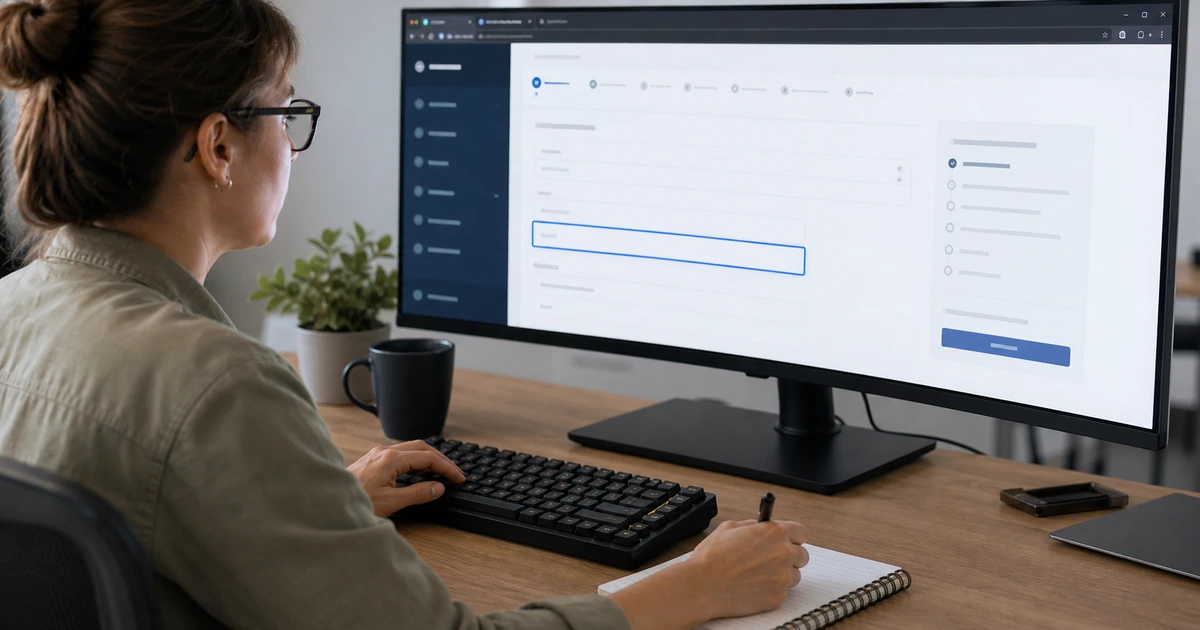
A landing page should help one defined audience understand an offer, decide whether it fits, and complete a meaningful next step without searching through unrelated material. When a page underperforms, changing colors or adding more copy rarely solves the underlying problem. The first task is to determine whether the traffic, promise, content, proof, action, mobile experience, and measurement system agree with one another.
A practical audit connects each page to its source. Search ads, social campaigns, email, referral links, QR codes, and organic search can bring visitors with different expectations. Google describes landing page experience in terms that include usefulness, relevance, navigation, and whether the page meets expectations created by the ad. That makes message match an operating requirement, not a cosmetic preference.
ALLMSP audits and improves landing pages in house for organizations in Lawrenceville, Suwanee, Gwinnett County, Metro Atlanta, and throughout Georgia. We can review campaign structure, page content, responsive design, accessibility, speed, forms, calls, analytics, routing, follow-up, and testing so improvements are based on evidence and connected to business outcomes.
Find the highest-impact landing page improvements before redesigning
- Map the visit: Record the campaign, audience, search intent, promise, device, destination, primary action, owner, and expected outcome.
- Check message match: Compare the source language with the headline, offer, location, proof, qualification details, and call to action.
- Test mobile use: Review loading, layout, text, images, navigation, buttons, forms, phone actions, and confirmation on real devices.
- Validate access: Check labels, instructions, keyboard use, focus, contrast, errors, target size, zoom, and assistive technology.
- Trace conversion: Confirm that calls, forms, purchases, bookings, values, consent, routing, outcomes, and duplicates are measured correctly.
- Prioritize evidence: Rank changes by business impact, user friction, traffic, confidence, effort, dependency, risk, and testability.
Audit the complete path from campaign promise to completed action
Begin with an inventory rather than a visual critique. For each active page, record its URL, campaign sources, audience, search terms, ads or messages, offer, service area, primary action, secondary action, traffic, conversion definition, business owner, technical owner, and last meaningful update. Open the exact ad, email, listing, or link that sends traffic. A page can look polished and still fail because the visitor lands on a generic service page after clicking a specific promise.
Read the first screen as a new visitor. The page should quickly identify the service or product, intended customer, relevant location when location affects the offer, differentiating reason, and next step. Compare nouns, commitments, dates, prices, eligibility, and calls to action with the source. If an ad promotes emergency network support in Lawrenceville, a visitor should not have to infer that service from a broad technology page. Remove claims that cannot be supported and explain important conditions before the form.
Follow every conversion path from start to finish. Place a test call, submit each form, use scheduling, test checkout when applicable, and confirm the destination after submission. Verify delivery, notification, ownership, response target, duplicate handling, spam protection, CRM or ticket creation, and reporting. Record what a customer sees when a request succeeds or fails. A thank-you message is not proof that the business received usable information.
- Traffic record: List campaign, channel, audience, query or message, device mix, geography, cost, and landing destination.
- Promise check: Match the headline, offer, scope, proof, location, qualifications, availability, and next step to the source.
- Action test: Complete calls, forms, scheduling, chat, purchase, download, and confirmation paths with documented results.
- Ownership check: Identify who receives each inquiry, how quickly it must be handled, and where unresolved requests escalate.
- Evidence baseline: Capture traffic, qualified actions, conversion rate, call quality, form quality, speed, errors, and device differences.
The audit should reveal where expectation, usability, technology, and follow-up break the same customer journey instead of producing an isolated list of design opinions.
Evaluate mobile performance, accessibility, speed, and conversion friction
Review the page at common phone, tablet, laptop, and desktop widths. On mobile, confirm that the headline, useful image, proof, and primary action appear in a sensible order without overlap or sideways scrolling. Buttons should have enough separation for accurate tapping. Sticky headers, chat controls, cookie notices, and call buttons must not cover content or form controls. Images should remain sharp while using appropriate dimensions and compression.
Measure field performance and reproduce slow interactions. Google’s Core Web Vitals focus on loading, responsiveness, and visual stability through Largest Contentful Paint, Interaction to Next Paint, and Cumulative Layout Shift. Use field data when available, then use laboratory tools to diagnose large images, delayed fonts, render-blocking resources, third-party scripts, layout shifts, and slow form behavior. Test important pages after consent tools, analytics, advertising tags, chat, and scheduling integrations load because those components can change the real experience.
Treat accessibility as part of conversion quality. WCAG 2.2 calls for labels or instructions where content requires user input and text descriptions when errors are detected. Check semantic headings, visible focus, keyboard order, contrast, zoom, meaningful alternative text, descriptive links, target size, error identification, and status messages. Ask people who use mobile devices, keyboards, screen readers, or magnification to test important paths when possible. An inaccessible action excludes customers and hides defects that often affect everyone.
- Responsive layout: Check order, alignment, wrapping, spacing, image crop, readable width, overflow, and action visibility at each breakpoint.
- Field speed: Review real-user loading, interaction, and layout-stability data by device and important page group.
- Form access: Provide programmatic labels, clear instructions, useful autocomplete, visible focus, and errors that explain correction.
- Interaction safety: Keep controls large and separated, prevent accidental taps, preserve entered data, and avoid unexpected movement.
- Third-party impact: Measure analytics, advertising, chat, consent, scheduling, video, fonts, and other integrations after full load.
A landing page is ready for optimization only after customers can read it, operate it, and complete its primary action reliably across the devices they actually use.
Prioritize changes with evidence and run controlled improvement cycles
Group findings by journey rather than by department. A weak conversion rate may combine broad targeting, a mismatched promise, slow mobile rendering, an unnecessary form field, and delayed follow-up. Estimate affected traffic and business value, then score each finding by severity, confidence, reach, effort, dependency, risk, and ability to measure. Fix broken actions, misleading claims, privacy problems, inaccessible controls, and major mobile failures before testing subtle copy or layout preferences.
Write a change hypothesis in plain language. State the observed problem, evidence, affected audience, proposed change, expected behavior, primary measure, guardrail measure, observation period, and decision rule. Use an A/B test when traffic and tooling can support a valid comparison. For lower-volume local pages, use sequential testing with careful annotations, stable campaigns, and enough time to observe qualified calls or leads. Do not declare success from a small increase in button clicks if inquiry quality declines.
Release changes with a test and rollback plan. Verify every traffic source, parameter, form, call, notification, conversion event, and responsive state after publication. Annotate analytics and advertising platforms, monitor errors, and compare results with the baseline. Preserve screenshots and decisions so the next review can distinguish intentional changes from regressions. Revisit pages when offers, services, staff, locations, campaigns, devices, customer questions, or measurement requirements change.
- Fix first: Prioritize broken actions, false expectations, privacy exposure, inaccessible controls, mobile failures, and missing delivery.
- Hypothesis: Record problem, evidence, audience, change, expected behavior, measure, guardrail, duration, and decision rule.
- Quality measure: Track qualified calls, useful submissions, sales outcomes, appointment outcomes, revenue, and support burden where appropriate.
- Release check: Retest source links, parameters, page states, forms, calls, notifications, events, consent, and responsive layouts.
- Review cadence: Reassess after material campaign, offer, product, location, workflow, platform, or customer-behavior changes.
The best improvement plan fixes verified customer obstacles first, protects conversion quality, and preserves enough evidence to make the next decision better.
Landing page audits and conversion improvement from ALLMSP
ALLMSP can inventory campaign destinations, evaluate message match, test responsive layouts, improve accessibility, diagnose speed, repair forms and call paths, configure measurement, document routing, and build a prioritized optimization plan through our in-house team.
We support businesses and organizations in Lawrenceville, Suwanee, Gwinnett County, Metro Atlanta, and across Georgia. The work can connect website design, paid campaigns, local search, analytics, CRM or ticket routing, AI-assisted follow-up, and ongoing managed marketing without separating the page from the process it serves.
- Audit: Connect traffic, promise, page experience, action, delivery, attribution, and business outcome with tested evidence.
- Improve: Correct content, responsive design, accessibility, performance, forms, calls, integrations, and follow-up.
- Measure: Define qualified outcomes, establish baselines, document releases, monitor results, and prioritize the next change.
Official landing page quality and accessibility references
Use current platform and accessibility documentation as a baseline, then test the complete customer journey with the organization’s real campaigns, devices, forms, systems, and response team.
- Google Ads landing page definition. Explains how usefulness, relevance, navigation, and visitor expectations contribute to landing page experience.
- Google Ads Quality Score guidance. Describes landing page experience, ad relevance, and expected click-through rate as diagnostic components.
- Google Core Web Vitals. Defines user-centered loading, interaction, and visual-stability measures for web pages.
- Web Content Accessibility Guidelines 2.2. Provides testable accessibility requirements for content, navigation, controls, forms, errors, and interaction.
Landing page audit and optimization FAQs
What should a landing page audit include?
Review the traffic source, audience, promise, page content, proof, offer, responsive design, accessibility, speed, primary action, forms, calls, tracking, delivery, follow-up, and business outcome.
What is message match on a landing page?
Message match means the page accurately continues the visitor’s source promise, including the service, problem, wording, offer, location, audience, conditions, and requested action.
Why can a professional-looking landing page still perform poorly?
It may attract the wrong traffic, contradict the campaign, load slowly, hide the action, use weak proof, create form friction, fail on mobile, or lose inquiries after submission.
Which landing page problems should be fixed first?
Start with broken or misleading paths, privacy exposure, inaccessible controls, major mobile defects, failed delivery, and severe performance problems before testing decorative changes.
How should mobile landing pages be tested?
Use real phones and representative browsers to test loading, layout, text, image crops, buttons, forms, calls, keyboard behavior, error handling, confirmations, sticky controls, and orientation changes.
Do Core Web Vitals matter for landing pages?
They provide useful evidence about loading, responsiveness, and layout stability. They should be reviewed with conversion quality, accessibility, form reliability, and business outcomes rather than alone.
How many form fields should a landing page use?
Ask only for information that is necessary to route, qualify, complete, or safely respond to the request. Test whether every field’s value justifies its privacy and completion cost.
Should every landing page change use an A/B test?
No. Controlled A/B testing is useful with sufficient traffic and reliable measurement. Lower-volume pages can use documented sequential changes, stable campaigns, and longer observation periods.
Can ALLMSP repair landing pages and campaign tracking together?
Yes. ALLMSP can handle content, design, development, responsive testing, accessibility, performance, forms, calls, analytics, routing, and recurring optimization in house.
Where does ALLMSP provide landing page optimization?
ALLMSP serves Lawrenceville, Suwanee, Gwinnett County, Metro Atlanta, and organizations across Georgia through onsite and secure remote collaboration.