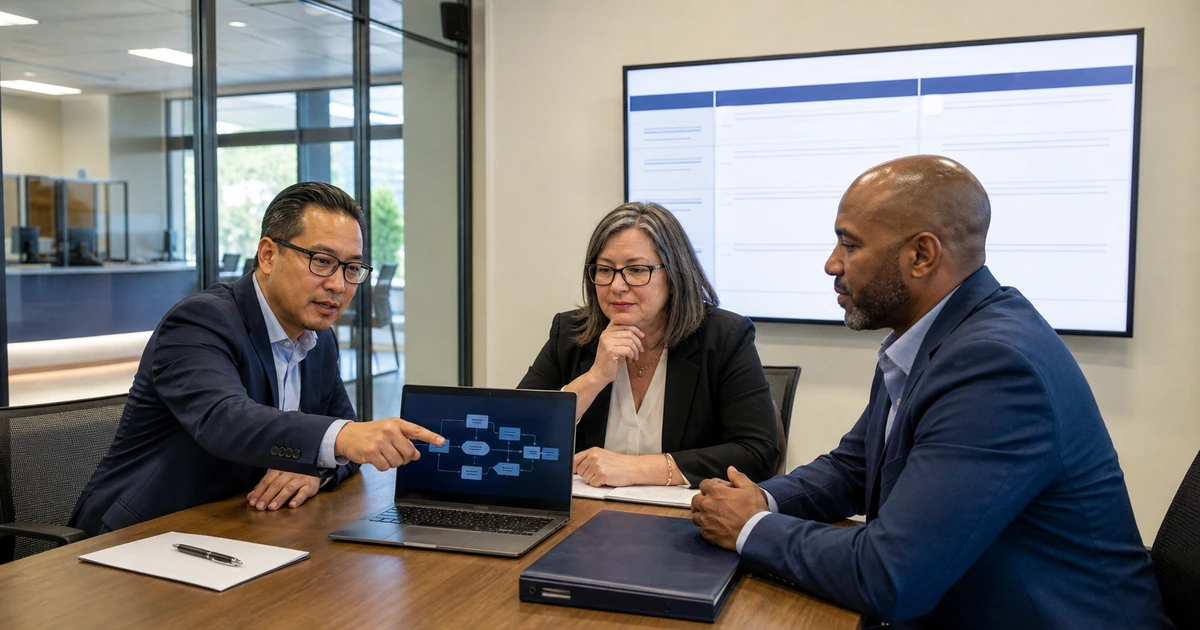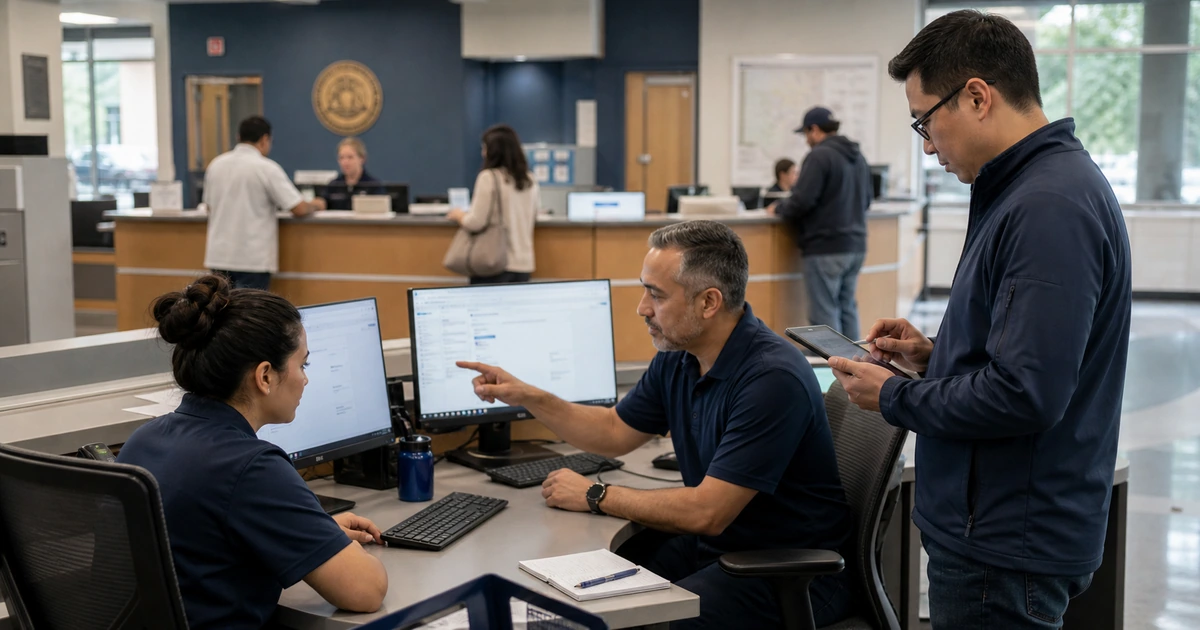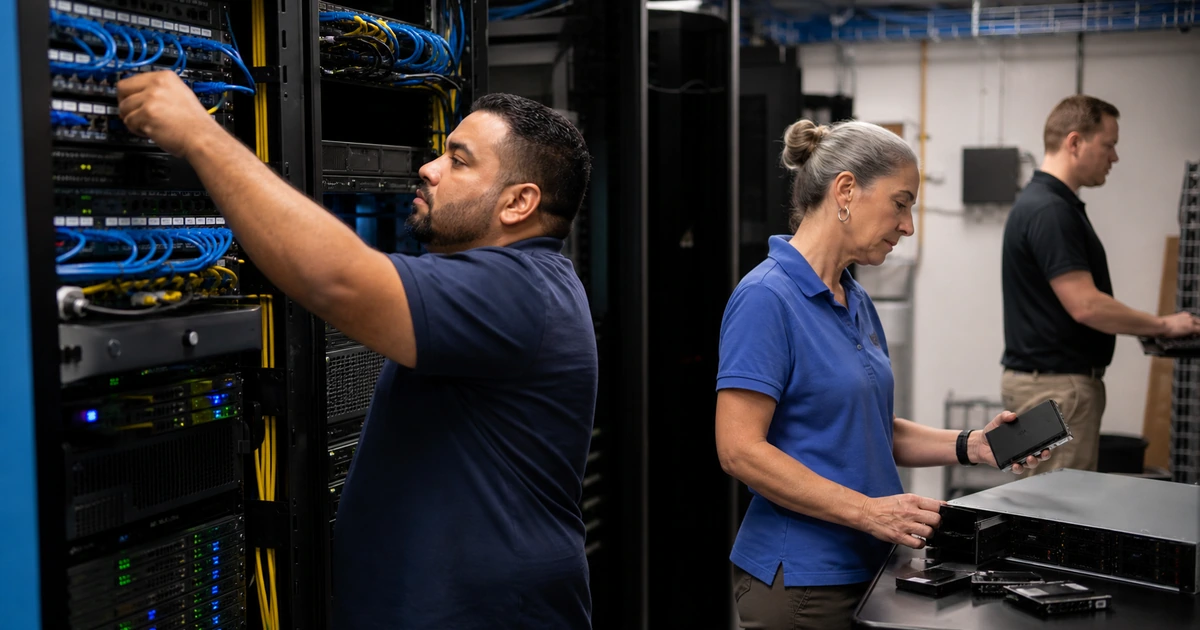
Local governments operate services that residents depend on while maintaining identities, payments, court or case data, public records, utilities, facilities, email, websites, mobile devices, and specialized systems. A single compromised administrator or failed recovery process can affect several departments at once. Cybersecurity therefore has to connect technical controls with service continuity and clear authority.
A useful review begins with the services and records that must remain available. It identifies owners, systems, identities, vendors, network paths, dependencies, recovery order, and acceptable downtime. The team can then prioritize high-impact controls such as managed assets, multifactor authentication, privileged-access separation, timely patching, secure remote access, monitored backups, logging, and practiced incident response.
ALLMSP provides managed IT, cybersecurity, backup, monitoring, and recovery support for public organizations in Lawrenceville, Suwanee, Gwinnett County, Metro Atlanta, and throughout Georgia. We assess the environment, implement protections, correct gaps, train users, test recovery, document operations, and support the live systems in house.
A practical government cybersecurity checklist
- Prioritize public services: List essential services, records, systems, facilities, users, vendors, dependencies, restoration targets, and the consequences of interruption or unauthorized change.
- Control identity: Use managed accounts, phishing-resistant multifactor authentication where supported, separate administrator credentials, least privilege, recurring access reviews, and prompt offboarding.
- Know every asset: Maintain supported inventories for endpoints, servers, network devices, cloud services, applications, websites, operational technology, accounts, data, and third-party connections.
- Reduce exposure: Patch known vulnerabilities, limit internet-facing services, secure remote access, segment networks, harden configurations, protect email, and remove unsupported systems.
- Detect and respond: Centralize useful logs, monitor endpoints and identities, define escalation, preserve evidence, rehearse common incidents, and keep current communication contacts.
- Prove recovery: Protect multiple backup copies, isolate at least one recovery path, monitor every job, test clean restores, document priorities, and measure actual recovery time.
Map essential services, identities, systems, and vendors
Start with operations rather than a tool list. For each essential public service, record the business owner, supporting application, identity provider, devices, network, data, facility, vendor, integration, backup, manual fallback, recovery time, and contact needed to restore it. This reveals shared dependencies that a department-only inventory can miss.
Reconcile technical inventories with purchasing, contracts, network scans, cloud administration, mobile management, website hosting, and service desk records. Mark unknown owners, unsupported products, public exposure, stale accounts, shared credentials, missing backups, and systems that cannot be rebuilt from documented information. Assign a correction date and an accountable person for each high-risk gap.
- Identity inventory: Include employees, officials, contractors, service accounts, shared mailboxes, application identities, emergency access, privileged roles, recovery methods, and connected apps.
- Technology inventory: Track model or service, operating system, location, owner, purpose, support status, warranty, encryption, management state, exposure, and replacement plan.
- Data inventory: Identify records and confidential information, authoritative source, approved access, transfer paths, retention, backup, export, deletion, and legal or policy requirements.
- Vendor inventory: Record service provided, access, data handled, security responsibility, incident contact, renewal, recovery commitment, transition plan, and evidence supplied.
- Risk priorities: Rank gaps by public-service impact, exploitation likelihood, breadth of access, data sensitivity, recovery readiness, and the availability of a compensating control.
The inventory becomes useful when every critical item has an owner, a current state, a required correction, and a tested recovery path.
Implement high-impact protections and reliable detection
CISA’s Cross-Sector Cybersecurity Performance Goals offer a focused baseline for organizations that need to prioritize. Local governments should adapt those practices to their systems and risks, with particular attention to multifactor authentication, separate privileged accounts, vulnerability remediation, protected backups, logging, incident response, and secure configurations.
Design controls for the way employees and vendors actually work. Remote administration should use approved devices, strong authentication, limited access paths, and logging. Email defenses should combine technical filtering with a visible reporting process and rapid response. Network segmentation should limit how far a compromised workstation, camera, public Wi-Fi device, or legacy system can reach.
- Authentication: Require multifactor authentication, block legacy methods, protect recovery, separate privileged roles, review risky sign-ins, and remove dormant credentials.
- Endpoint protection: Use managed configuration, encryption, timely patches, endpoint detection, application controls where appropriate, secure local privileges, and remote response capability.
- Network protection: Document boundaries, restrict management interfaces, segment public and sensitive systems, secure wireless access, monitor changes, and preserve known configurations.
- Cloud protection: Review tenant settings, external sharing, administrator roles, applications, audit logs, retention, alerts, data export, and backup beyond native recycle features.
- Detection operations: Route actionable identity, endpoint, email, network, cloud, and backup alerts to a staffed response process with severity, ownership, evidence, and closure.
A control is complete only when it is enabled, monitored, tested, documented, and assigned to someone who can act when it fails.
Prepare for ransomware, outages, and clean recovery
Backups must be designed around restoration, not storage. Identify the systems and records needed first, create multiple protected copies, isolate at least one path from ordinary administrator compromise, monitor failed jobs, preserve configuration and credentials, and test restoration into a clean environment. Record the time, dependencies, validation, and problems found during each exercise.
An incident plan should tell employees what to do during the first hour. Define how to report suspicious activity, who can isolate systems, how leaders and counsel are notified, where clean communication occurs, which evidence is preserved, when insurers or authorities are contacted, and how public information is approved. Practice realistic scenarios with department leaders rather than leaving response entirely to IT.
- Backup scope: Cover servers, cloud data, line-of-business applications, identity configuration, websites, network settings, databases, documents, and other systems required for essential services.
- Recovery order: Restore trustworthy identity, core network and security, communications, essential records, priority applications, public channels, and remaining services according to documented dependencies.
- Clean restoration: Verify known-good systems, credentials, patches, security tools, data integrity, logging, and user acceptance before reconnecting recovered services.
- Tabletop exercise: Rehearse compromised email, stolen credentials, ransomware, vendor outage, lost device, website takeover, backup failure, and loss of the primary facility.
- After-action work: Assign each lesson, owner, deadline, validation test, budget need, policy change, and documentation update, then confirm completion at the next review.
Recovery confidence comes from a measured restore and practiced decisions, not from a dashboard that reports the last backup as successful.
ALLMSP cybersecurity and recovery for Georgia government
ALLMSP can assess identity, endpoints, servers, networks, cloud services, email, websites, applications, vendors, logging, backups, and incident readiness. We implement prioritized corrections, monitor the environment, manage patches and alerts, train employees, document response, and conduct restoration and tabletop tests.
Our in-house team supports Lawrenceville, Suwanee, Gwinnett County, Metro Atlanta, and public organizations across Georgia. Managed IT, cybersecurity, backup, networking, help desk, AI governance, website security, and recovery remain coordinated through one accountable service team.
- Security assessment: Service and asset inventory, identity review, exposure testing, configuration audit, backup analysis, vendor risk, and prioritized remediation.
- Managed protection: Endpoint security, patching, identity controls, email defense, network monitoring, cloud administration, alert response, and user support.
- Recovery readiness: Backup design, monitored jobs, clean restores, incident procedures, tabletop exercises, evidence, and continuous correction.
Official local government cybersecurity resources
Use current government guidance to prioritize practical protections, then test them against the agency’s actual services and recovery needs.
- ALLMSP Cybersecurity. Local assessment, implementation, monitoring, response, training, backup, and recovery support.
Local government cybersecurity FAQs
Which cybersecurity controls should a small local government prioritize first?
Start with complete asset and account visibility, multifactor authentication, separate privileged access, prompt offboarding, supported and patched systems, endpoint detection, secure remote access, protected backups, useful logging, an incident contact plan, and tested restoration.
Why should administrators use separate accounts?
A separate privileged account reduces the time powerful credentials are exposed to email, browsing, and ordinary work. It also improves logging, supports tighter authentication, and makes it easier to restrict or monitor administrative actions.
Are Microsoft 365 or Google Workspace recycle features a complete backup?
No. Native retention and recovery features are valuable, but the agency should evaluate independent backup against deletion, compromised administrators, retention gaps, application limits, legal needs, configuration recovery, and the required restoration process.
How often should a government restore test be performed?
Test critical systems on a recurring risk-based schedule and after major platform, backup, identity, network, application, or retention changes. Include clean-environment restoration, timing, dependency order, data validation, security checks, and business-owner acceptance.
What should employees do when they receive a suspicious email?
Use the approved reporting method without forwarding the message normally, avoid links and attachments, report any entered credentials or approved prompts immediately, keep the device available for review, and follow instructions from the authorized response team.
How can a local government secure vendor remote access?
Approve the exact purpose, use named accounts and multifactor authentication, restrict source, time, system, and privilege, require managed connection methods, log activity, review access regularly, prohibit shared credentials, and remove every token and route when access ends.
What belongs in a government cyber incident plan?
Include reporting, severity, authority, isolation, evidence, clean communication, legal and insurance contacts, public communication approval, vendor coordination, recovery priorities, credential resets, service validation, documentation, and after-action ownership.
How can network segmentation reduce government risk?
Segmentation limits communication between public Wi-Fi, office users, servers, cameras, facilities, operational systems, vendors, and management interfaces. Well-designed controls can reduce lateral movement and preserve essential services during a compromise.
Can ALLMSP manage security monitoring and incident response?
Yes. ALLMSP manages identities, endpoints, patches, email protection, network monitoring, cloud settings, alerts, backups, user support, documentation, containment coordination, restoration, and recurring improvement through an in-house team.
Where does ALLMSP offer municipal cybersecurity services?
ALLMSP serves Lawrenceville, Suwanee, Gwinnett County, Metro Atlanta, and public agencies throughout Georgia. Support can cover a focused assessment, remediation project, co-managed environment, or complete managed IT and security service.
Sources
- CISA Cross-Sector Cybersecurity Performance Goals. A prioritized set of high-impact cybersecurity outcomes for organizations of different sizes. ↩
- CISA Ransomware Guide. Preparation, prevention, response, and recovery recommendations from CISA and its partners. ↩
- NIST Cybersecurity Framework. A risk-based framework organized around govern, identify, protect, detect, respond, and recover. ↩