



















































































































































Page views cannot show whether a resident found the right office, understood a requirement, completed a form, received an acknowledgment, or obtained a useful answer. Government communications need a measurement model that follows the public task from the original question through the agency response while respecting privacy and avoiding unnecessary collection.
The most useful evidence comes from several systems. Search Console can reveal the phrases and pages that bring people from Google. Website analytics can show paths and completed events. Site search exposes unanswered questions. Forms, calls, email, service desks, and case systems show what happened after the visit. Accessibility reports and resident feedback explain barriers that event counts cannot.
ALLMSP builds privacy-aware measurement and improvement programs for public organizations in Lawrenceville, Suwanee, Gwinnett County, Metro Atlanta, and across Georgia. Our in-house team configures analytics, tags, search tools, dashboards, forms, call tracking, account governance, accessibility checks, and the technical links needed to connect public communication with service outcomes.
A government communications measurement framework
- Define the public task: State what the resident is trying to accomplish and what evidence shows a useful answer, completed transaction, successful handoff, or resolved request.
- Map the journey: Connect search results, map listings, website pages, documents, forms, calls, email, case records, acknowledgments, and final outcomes without exposing unnecessary personal information.
- Create meaningful events: Measure service actions such as form completion, payment handoff, document access, call connection, appointment request, subscription, and accessibility contact rather than every click.
- Protect privacy and integrity: Limit collected fields, filter internal activity, control access, document retention, verify consent behavior, and test that events fire once in the correct property.
- Combine quantitative and human evidence: Review analytics with search terms, call reasons, support tickets, form errors, staff observations, resident feedback, and accessibility findings.
- Turn findings into corrections: Assign an owner, action, priority, deadline, validation method, and follow-up measure for every approved improvement.
Define outcomes before installing more tracking
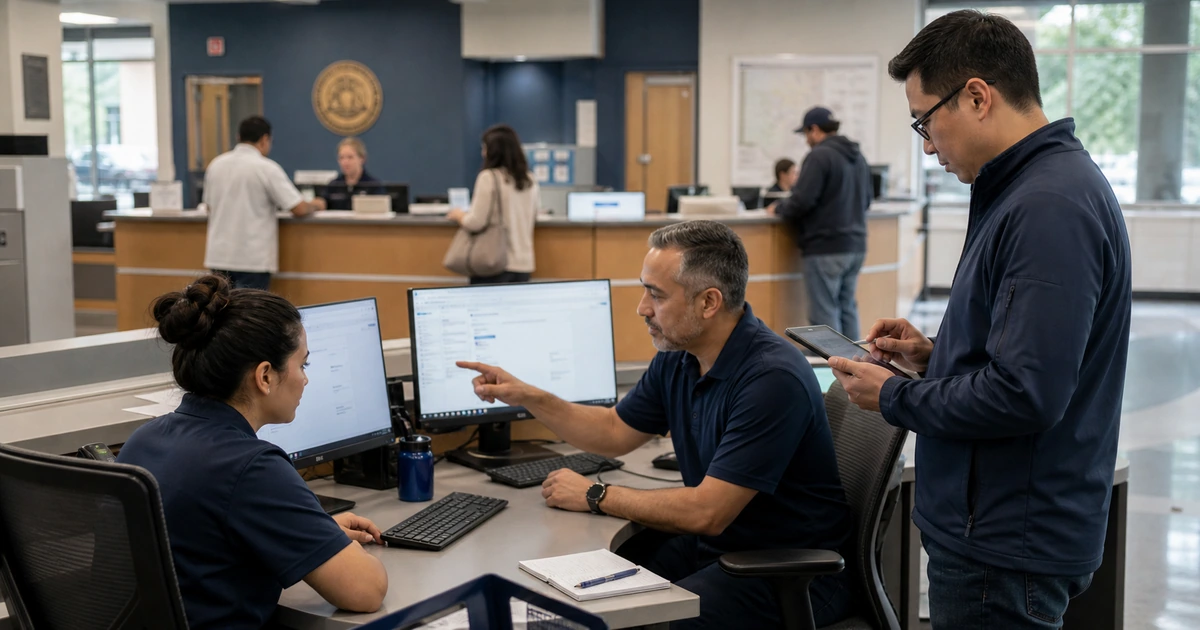
Meet with service owners and frontline staff to choose a small set of high-demand journeys. For each one, identify the resident’s question, expected answer or action, systems involved, responsible team, common barrier, successful outcome, and information that must not enter analytics. This prevents a dashboard from becoming a collection of convenient metrics with no service meaning.
Create a measurement specification in plain language. It should name the event, trigger, page or system, required fields, prohibited fields, property, owner, validation steps, retention, reporting use, and known limits. Link the event to an operational measure such as resolved requests, not merely to a button color or page layout.
- Discovery: Use external search queries, site search, call reasons, emails, counter questions, form failures, and support records to identify resident demand.
- Outcome: Define the completed public result, including acknowledgment, correct routing, response, payment, appointment, delivery, closure, or successful self-service.
- Funnel: Select the few steps that explain where the task succeeds or fails rather than instrumenting every interaction without purpose.
- Service quality: Add accuracy, accessibility, response time, repeat contact, rework, complaint, and unresolved dependency measures where they affect the resident experience.
- Data boundary: Document which identifiers, form values, query parameters, recordings, or sensitive details must be excluded, minimized, transformed, or protected.
A measurement plan should tell the agency what decision it can make when a number changes.
Configure trustworthy analytics and search evidence
Use agency-controlled accounts for analytics, tag management, search verification, advertising, listings, and dashboards. Separate production from testing, document administrators, restrict publishing rights, and keep change history. A hidden tag added by a former vendor can produce duplicate events, collect unexpected fields, or send public data to an account the agency cannot access.
Validate from the browser through the destination report. Test desktop and mobile, consent states, internal traffic, cross-domain services, forms, calls, payment handoffs, downloads, campaign parameters, errors, and repeat submissions. Compare event counts with the receiving system because a green preview screen does not prove that the service team received a usable request.
- Search Console: Review queries, pages, devices, indexing, sitemaps, structured data, page experience, and changes after content or technical updates.
- Site search: Group frequent terms, misspellings, zero-result searches, repeated searches, exits, and queries that reveal missing or poorly named services.
- Analytics: Use clearly named events and key outcomes, exclude sensitive values, filter staff where appropriate, control referrals, and document reporting limitations.
- Forms and calls: Match web events with delivery, acknowledgment, routing, answer, case creation, spam disposition, and resolved outcome instead of counting a click alone.
- Quality checks: Monitor sudden traffic loss, duplicate events, broken tags, unexpected hosts, self-referrals, bot spikes, missing conversions, and unauthorized configuration changes.
Trustworthy reporting depends on ownership, documentation, end-to-end testing, and regular comparison with operational records.
Use a recurring review to improve public service
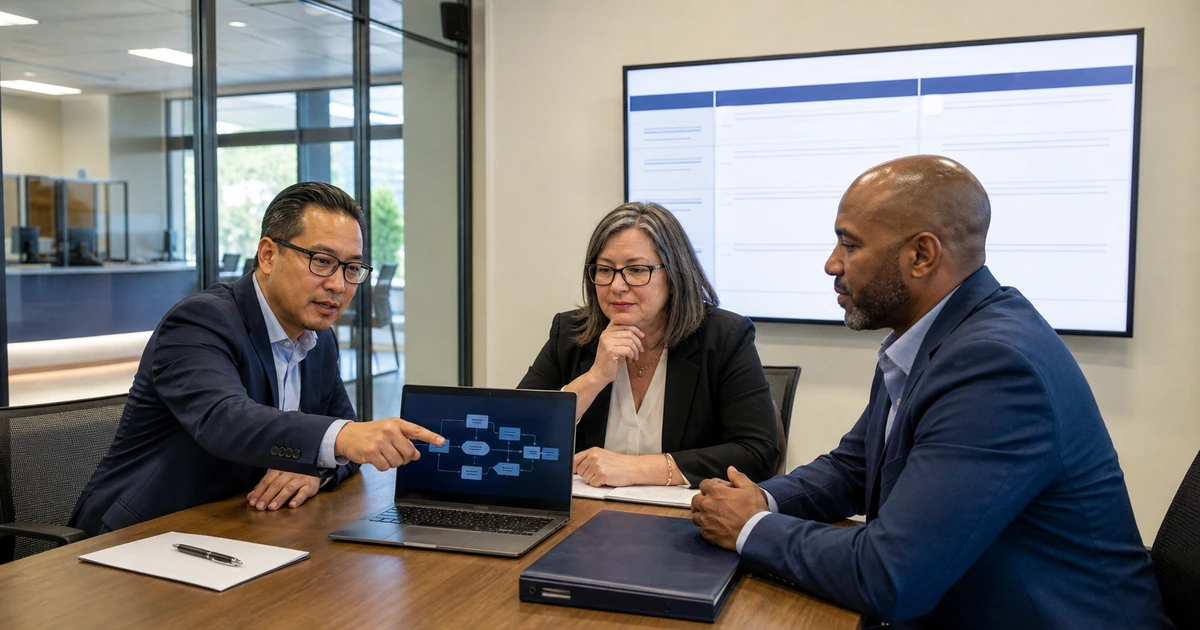
Build a dashboard for decisions, not decoration. Start with the high-demand tasks, show trend and target, segment where a difference can lead to action, and include notes for outages, campaigns, content releases, deadlines, or policy changes. Pair the report with a short working session that assigns corrections and follows them to validation.
Investigate changes before declaring success. Higher form completion may reflect a repaired error, but it may also result from duplicate firing. Lower calls may indicate better self-service or a broken phone number. A ranking increase has limited value when the page does not answer the question or the destination team cannot respond.
- Monthly service review: Examine top tasks, failed searches, mobile performance, form errors, calls, accessibility reports, response outcomes, and unresolved technical issues.
- Issue record: Capture evidence, affected service, likely cause, resident impact, owner, correction, deadline, test method, release date, and measured result.
- Content improvement: Rewrite unclear requirements, consolidate duplicate pages, add missing answers, correct local information, repair internal links, and retest the full journey.
- Technical improvement: Fix performance, indexing, structured data, forms, integrations, tracking, security, accessibility, and recovery issues in a controlled release.
- Outcome review: Compare the same period and task after the change, account for seasonality or external events, and retain what was learned for the next decision.
The measurement program earns its value when evidence leads to a tested improvement that residents and service teams can feel.
Government analytics, SEO, and conversion tracking from ALLMSP
ALLMSP can audit account ownership, repair Analytics and Tag Manager, configure Search Console, map service outcomes, test forms and calls, create dashboards, improve local visibility, fix technical SEO, and establish a review process that connects findings to completed work. We also maintain the website and integrations that produce the data.
Our Lawrenceville-based team serves Suwanee, Gwinnett County, Metro Atlanta, and agencies throughout Georgia. Marketing measurement, website development, accessibility, AI automation, security, hosting, and managed IT remain coordinated in house.
- Measurement audit: Ownership, properties, tags, events, privacy, search visibility, forms, calls, dashboards, and operational outcome mapping.
- Technical implementation: Analytics, Tag Manager, Search Console, conversion events, cross-domain tracking, dashboarding, monitoring, and documentation.
- Ongoing optimization: Monthly findings, assigned corrections, content and technical updates, validation, local SEO, and service outcome reporting.
Official resources for government digital measurement
Use platform documentation and government service guidance to build measurements that are technically valid and connected to public outcomes.
- ALLMSP Google Marketing Services. Google Ads, Analytics, Tag Manager, Search Console, Business Profile, and ongoing optimization.
Government analytics and SEO FAQs
What should a government website measure instead of page views?
Measure completed public tasks, correct handoffs, form errors, acknowledgment and response time, unresolved searches, repeat contact, accessibility reports, mobile performance, call outcomes, resolved requests, and resident feedback.
How do Search Console and Analytics differ?
Search Console shows how Google Search discovers and presents the site, including queries, pages, indexing, and devices. Analytics shows behavior after a visit. Used together, they connect discovery with on-site actions while leaving operational outcomes to forms, calls, and case systems.
Should personal information be sent to analytics tools?
Avoid sending unnecessary personal or sensitive information. Review form fields, URLs, query parameters, user identifiers, recordings, advertising features, consent, retention, exports, and integrations against agency policy, contracts, and applicable requirements.
How can a public agency measure form success accurately?
Track valid completion at the correct system event, then compare analytics with actual delivery, acknowledgment, routing, spam disposition, case creation, and resolved outcome. Test duplicate submission, validation errors, mobile, interruptions, and third-party handoffs.
What do zero-result site searches reveal?
They can expose missing content, resident vocabulary that differs from agency labels, misspellings, stale navigation, unavailable services, or important questions buried in documents. Group and review them with call and support data.
How often should a government analytics setup be audited?
Review ownership, tags, events, privacy settings, integrations, and reports on a regular calendar and after website, form, domain, vendor, consent, campaign, payment, or platform changes. Monitor critical events continuously for unexpected loss or duplication.
Can local SEO help a city or public authority?
Yes. Accurate service pages, locations, map listings, titles, headings, structured information, internal links, mobile performance, accessibility, and trustworthy references help residents reach the correct official source for relevant local searches.
Why can conversion counts be wrong?
Common causes include duplicate tags, events firing before completion, cross-domain breaks, self-referrals, internal traffic, bots, changed forms, consent behavior, test data, imported duplicates, and a destination system that never received the request.
Can ALLMSP manage analytics and implement the fixes it identifies?
Yes. ALLMSP handles account governance, measurement design, tag implementation, Search Console, dashboards, website changes, forms, integrations, accessibility, SEO, testing, documentation, and recurring optimization in house.
Where does ALLMSP provide government analytics and SEO services?
ALLMSP supports public organizations in Lawrenceville, Suwanee, Gwinnett County, Metro Atlanta, and across Georgia. Services can cover a measurement repair, website project, local visibility program, or ongoing optimization.
Sources
- Google Search Console and Analytics guidance. Official guidance on using both products to understand search discovery and on-site behavior. ↩
- Google Analytics key events. Official instructions for marking business-important actions and reporting them as key events. ↩
- Digital.gov web analytics. Government-focused practices for measuring and improving digital services. ↩