






















































































































































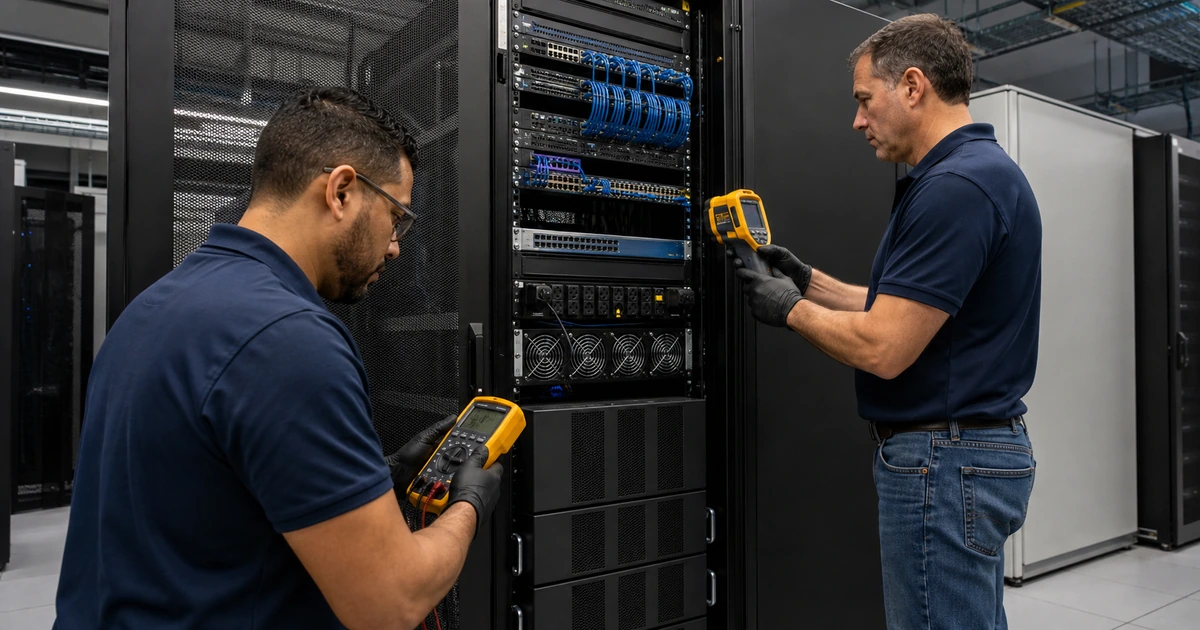
A rack is not ready because its lights are on and the door closes. Acceptance requires evidence that equipment is supported correctly, cables reach the intended endpoints, power remains within approved limits, cooling reaches equipment inlets, monitoring detects problems, critical services survive expected failures, and support staff can understand the installation without relying on memory.
Testing should reflect the rack’s role in the business. An office network closet, retail location, production facility, medical office, school, or multi-site hub may support very different services and outage consequences. The acceptance plan should trace each requirement to an inspection, measurement, functional test, document, responsible owner, result, correction, and final approval.
ALLMSP performs rack acceptance, cabling verification, power and thermal observation, continuity exercises, documentation, and recurring maintenance with its in-house team. We support businesses in Lawrenceville, Suwanee, Gwinnett County, Metro Atlanta, and across Georgia with practical tests tied to their real network and operational dependencies.
Prove the rack is safe to support and ready for operation
- Inspect construction: Verify enclosure, anchoring, loading, rails, clearances, pathways, cables, doors, grounding, labels, cleanliness, and room conditions.
- Test cabling: Match approved standards and scope with copper or fiber test results, endpoint maps, patch checks, and corrected failures.
- Measure power: Record circuits, UPS and distribution load, redundant feeds, alarms, battery condition, runtime, shutdown, and recovery.
- Challenge cooling: Measure representative inlet conditions during realistic load, inspect airflow paths, test alerts, and investigate hot areas.
- Exercise continuity: Test approved internet, network, power, device, monitoring, communication, restoration, and escalation scenarios.
- Complete handoff: Deliver records, credentials, configurations, test evidence, training, deficiencies, warranties, owners, and maintenance schedules.
Inspect rack construction and verify every cable against current records
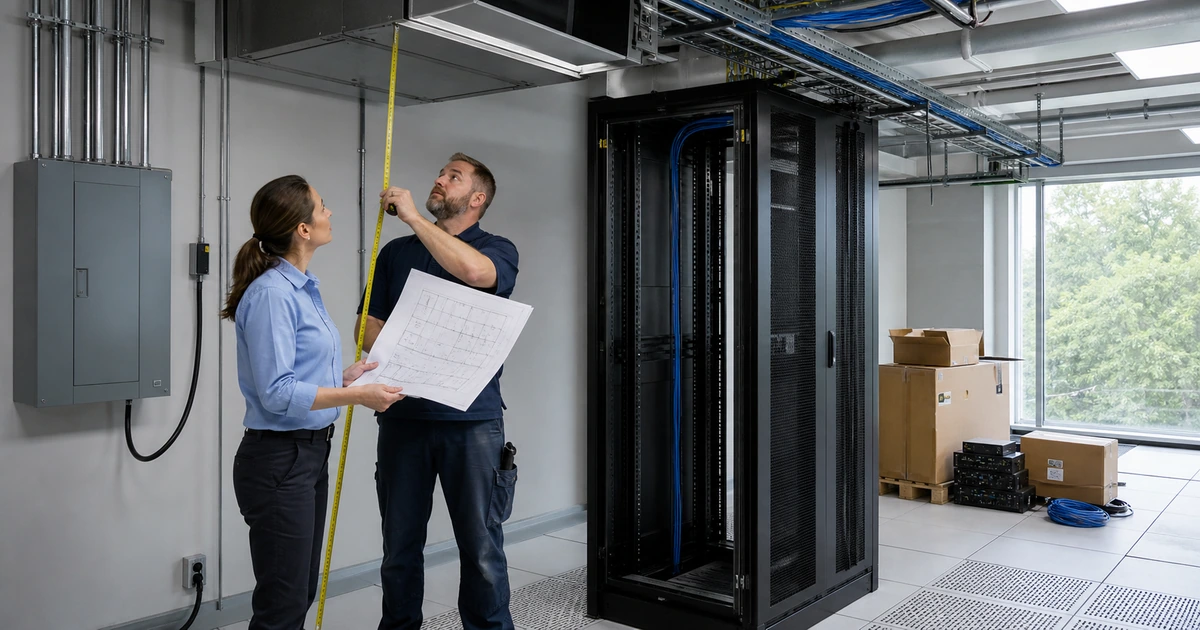
Begin with a physical inspection against the approved design and manufacturer instructions. Check rack model, placement, orientation, anchoring, leveling, load distribution, rails, mounting hardware, doors, panels, locks, service clearances, cable entry, managers, blanking, airflow obstructions, equipment support, sharp edges, housekeeping, lighting, room access, water exposure, fire systems, electrical access, and stored materials. Record deficiencies with photographs and assign the qualified owner needed to correct them.
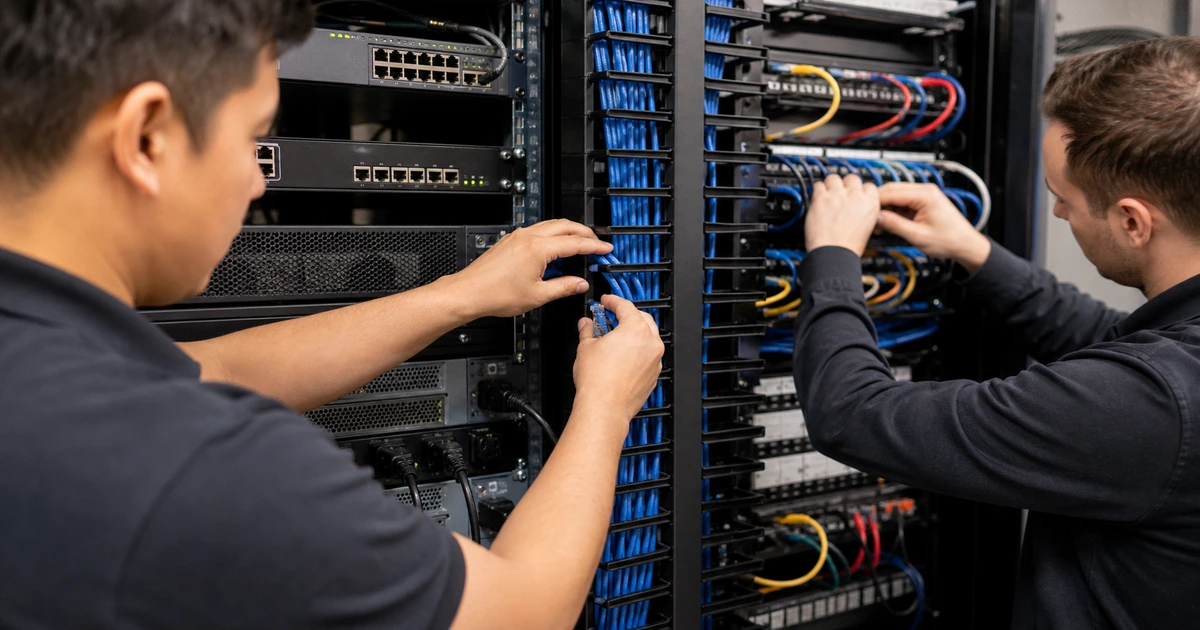
Verify telecommunications records in both directions. Select room, rack, panel, port, cable, outlet, device, service, and switch records, then confirm the physical label and endpoint. Select physical cables and confirm that the records identify both ends and current function. TIA-606 addresses administration systems for telecommunications infrastructure, which is why a label should connect to maintained records instead of operating as an isolated sticker. Resolve duplicates, missing identifiers, stale destinations, and undocumented changes.
Review test requirements from the cable design and contract. Permanent links, channels, fiber segments, patch cords, backbone links, and specialized systems require different equipment, reference methods, limits, and reports. Use calibrated test instruments appropriate to the media and agreed standard. Preserve complete results with cable identifiers, endpoints, tester, adapter, test limit, date, result, length, faults, technician, and remediation. Retest failed links after correction and do not substitute a simple link light for required certification evidence.
- Physical checklist: Inspect rack, anchoring, load, rails, doors, access, pathways, support, airflow, grounding, room conditions, and hazards.
- Bidirectional audit: Trace records to physical infrastructure and physical infrastructure back to records for a representative or complete sample.
- Cable test plan: Define media, link type, standard, limit, tester, calibration, adapters, identifiers, sample or full scope, and acceptance.
- Failure handling: Record fault, diagnosis, correction, technician, retest, final result, affected service, and approver.
- Evidence package: Preserve photographs, inspection results, cable reports, exceptions, correction proof, dates, owners, and acceptance status.
Physical and cabling acceptance creates a trustworthy baseline for every future incident, move, addition, replacement, and audit.
Measure power, UPS behavior, equipment inlet conditions, and environmental alerts
Verify the power map from source to device. Confirm circuit identifiers, receptacles, UPS inputs and outputs, power distribution, connected loads, dual power supplies, management connections, overload settings, alarms, and documentation. Measure load under representative operating conditions using appropriate equipment and qualified personnel. Compare results with circuit, UPS, distribution, rack, and manufacturer limits. Investigate imbalance, unexpected consumption, unprotected dependencies, false redundancy, damaged cords, loose connections, heat, and unauthorized extensions.
Test UPS operation according to approved procedures and manufacturer guidance. Confirm self-test status, battery condition, replacement records, network management, alert delivery, time synchronization, load, estimated runtime, actual runtime where safely testable, graceful shutdown, startup sequencing, bypass, and recovery after power returns. Include network equipment needed for alerts and shutdown communication. Coordinate any test that can interrupt service, and never create an uncontrolled utility failure merely to demonstrate that batteries exist.
Measure temperature and humidity at representative equipment inlets during normal and higher expected load. ASHRAE guidance distinguishes equipment inlet conditions from general room conditions, so include lower, middle, and upper rack locations when the design warrants them. Inspect intake and exhaust direction, recirculation, blocked vents, missing blanking, cable obstructions, doors, filters, room cooling, and heat from UPS batteries. Test sensor thresholds, delay, notification route, escalation, after-hours response, and recovery messages.
- Power verification: Confirm circuits, receptacles, UPS, distribution, supplies, load, redundancy, alarms, management, labels, and records.
- Runtime evidence: Record protected load, battery state, test method, duration, shutdown, bypass, restart, alerting, result, and limitations.
- Inlet measurement: Capture temperature and humidity at representative equipment intakes, load state, time, sensor, and room condition.
- Airflow inspection: Review intake, exhaust, doors, blanking, open units, cable openings, obstructions, return path, cooling, and density.
- Alert test: Trigger approved power and environmental conditions and verify detection, delivery, owner, escalation, closure, and audit record.
Measured load, runtime, inlet conditions, and alert delivery show whether the rack can remain reliable outside the ideal conditions of installation day.
Exercise service continuity and deliver an operational handoff
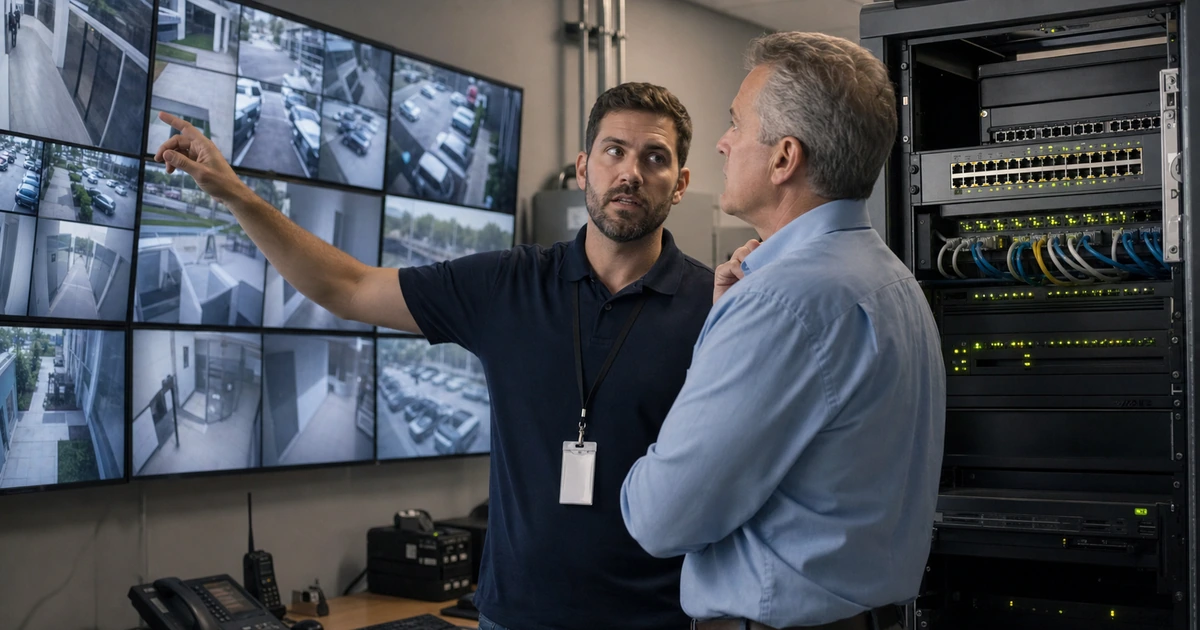
Build a dependency map for critical services. Trace each internet circuit, firewall, switch, wireless controller, server, storage device, phone service, camera system, access-control system, building controller, and remote connection through network, power, cooling, identity, DNS, cloud, carrier, and management dependencies. Define expected behavior when one component, uplink, power source, internet circuit, or monitoring path fails. Not every site requires redundancy, but every important limitation should be known and accepted.
Run controlled functional tests with business owners and technical staff. Verify internet, internal networks, voice, wireless, servers, storage, cameras, access, printing, remote administration, monitoring, backups, and site-to-site connections as applicable. Exercise approved failover and recovery paths, maintenance access, configuration restoration, alternate communication, and escalation. Record start time, observable impact, detection, alerts, decisions, actions, restoration, data integrity, employee experience, gaps, owners, and retest dates.
Complete the handoff with current operational records. Deliver rack elevations, equipment and support inventory, network and power diagrams, panel and port schedules, cable reports, configuration and backup locations, monitoring dashboards, alert owners, UPS and battery records, warranties, vendor contacts, access procedures, emergency contacts, maintenance calendar, spare inventory, change process, known limitations, and signed acceptance. Train authorized employees to report alarms and avoid unapproved changes. Schedule a follow-up after normal operations reveal real load and support patterns.
- Dependency map: Trace service through devices, links, power, cooling, identity, DNS, cloud, carriers, monitoring, and support.
- Functional test: Verify each required business service from a realistic endpoint and record result, timing, owner, and evidence.
- Continuity exercise: Test approved failure, detection, communication, decision, failover, recovery, integrity, rollback, and lessons learned.
- Operational handoff: Deliver records, configurations, tests, access, monitoring, contacts, warranties, training, exceptions, and acceptance.
- Maintenance cadence: Schedule inspection, cleaning, alerts, batteries, firmware, configurations, tests, documentation, capacity, and lifecycle review.
A rack becomes production infrastructure when the business can detect problems, follow documented decisions, recover service, and maintain an accurate baseline.
Rack acceptance testing and ongoing infrastructure support from ALLMSP
ALLMSP can inspect rack construction, verify labels and records, coordinate cable testing, measure power and thermal conditions, test UPS monitoring, validate services, exercise continuity, correct technical findings, and deliver complete documentation. Our in-house team can continue with monitoring, maintenance, change control, network support, and future expansion after acceptance.
We provide rack and network infrastructure testing in Lawrenceville, Suwanee, Gwinnett County, Metro Atlanta, and across Georgia. The acceptance scope is matched to the site’s services, equipment, risk, building conditions, and business tolerance for interruption.
- Inspect: Verify construction, equipment, pathways, cables, labels, power, environment, access, records, and deficiencies.
- Test: Measure cabling, load, UPS, runtime, thermal conditions, alerts, business services, failover, and recovery.
- Handoff: Deliver evidence, documentation, training, support ownership, maintenance, change control, limitations, and acceptance.
Official references for rack testing and operation
Acceptance criteria should follow the project design, applicable standards, manufacturer instructions, local requirements, and the decisions of qualified electrical, mechanical, fire, structural, facilities, and technology professionals.
- TIA-942 data center infrastructure standard. Addresses coordinated data center and computer-room infrastructure, including telecommunications, power, cooling, safety, and security.
- TIA-606 administration standard announcement. Describes administration systems used to identify and manage telecommunications infrastructure.
- ASHRAE data center resources. Collects guidance on thermal conditions, power, cooling, and energy in data processing environments.
- ASHRAE data center handbook chapter. Provides detailed context for data center and telecommunications facility environmental design.
- Eaton server rack cooling guide. Explains practical cooling-load and rack-cooling considerations from an equipment manufacturer.
Network rack testing and acceptance FAQs
What should a network rack acceptance test include?
Include physical construction, loading, access, cable records and tests, power, UPS, temperature, humidity, airflow, alerts, services, failover, documentation, training, and correction tracking.
Is a working network link enough to prove cabling quality?
No. A link light does not replace the test method and acceptance limits required by the cable design, standard, contract, media, and intended application.
Why should labels be checked in both directions?
Records can look complete while physical labels are wrong. Tracing records to hardware and hardware back to records exposes stale, duplicated, missing, and mismatched identifiers.
How should rack power be tested?
Qualified personnel should verify circuits, UPS units, distribution, loads, redundant supplies, alarms, runtime, shutdown, bypass, restart, labels, and documentation under approved procedures.
Why is a room thermostat not enough for rack cooling?
Equipment inlet conditions can vary by rack height, load, airflow, obstructions, recirculation, and exhaust paths, so representative intake measurements are needed.
Should UPS runtime be tested with live equipment?
Use a risk-based approved procedure following manufacturer guidance. Protect business operations, coordinate shutdown, maintain rollback, and avoid uncontrolled power interruption.
What services should be included in continuity testing?
Test the internet, network, voice, wireless, servers, storage, cameras, access control, remote administration, monitoring, backups, and other critical site systems that apply.
What documentation should be delivered at handoff?
Provide elevations, inventories, diagrams, schedules, cable reports, configurations, backups, monitoring, UPS data, warranties, contacts, access, maintenance, changes, exceptions, and acceptance.
Can ALLMSP perform rack testing and ongoing support?
Yes. ALLMSP handles inspection, measurement, cable coordination, functional tests, monitoring, documentation, correction, maintenance, and network support through its in-house team.
Where does ALLMSP provide rack acceptance services?
ALLMSP serves Lawrenceville, Suwanee, Gwinnett County, Metro Atlanta, and organizations throughout Georgia with onsite infrastructure testing.