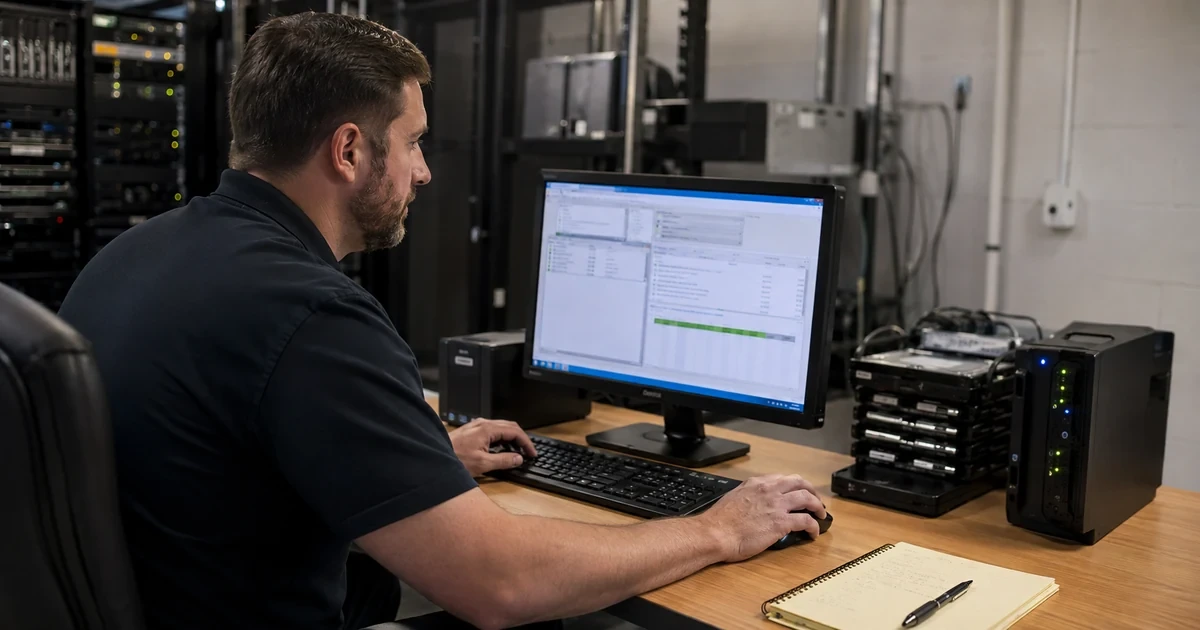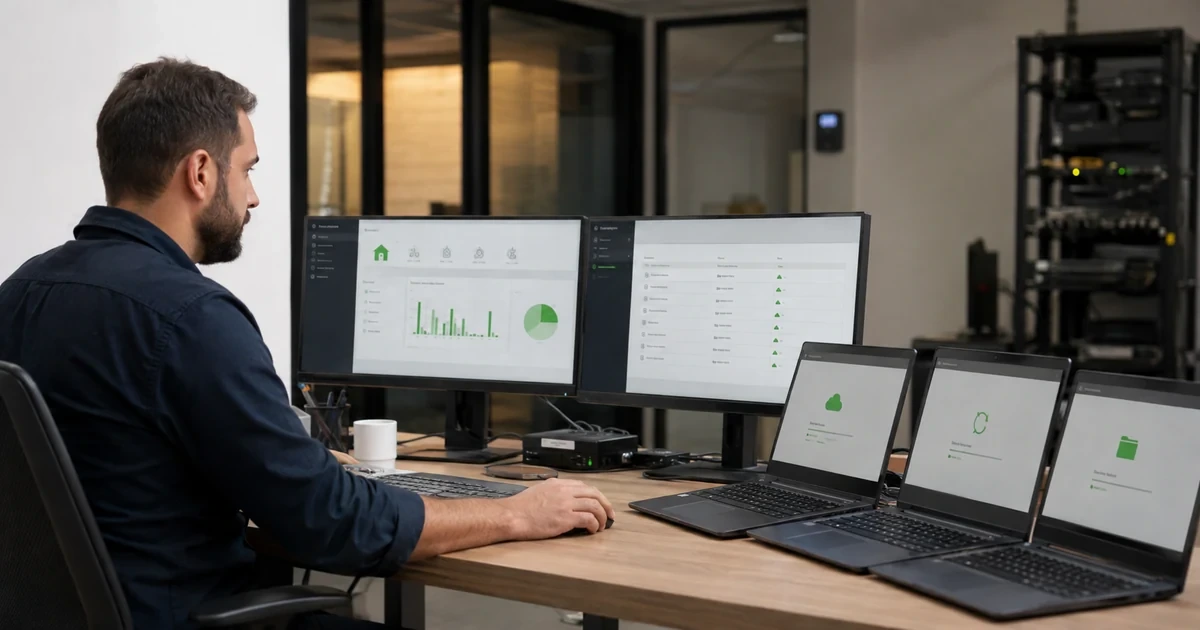
A software license audit should let an organization explain what it owns, what it has deployed, who can use it, how assignments are approved, what data depends on it, and which evidence supports the result. Audit risk is not limited to a vendor compliance request. Inaccurate records also create wasted spending, unexpected service loss, unsupported installations, insecure administrator access, and renewals that nobody is prepared to approve.
The core comparison is entitlement versus deployment and use. Entitlement evidence may include agreements, orders, invoices, subscription portals, product keys, maintenance rights, and reseller records. Deployment evidence may include tenants, user assignments, groups, devices, installations, virtual environments, service accounts, and application activation. The audit must apply the actual product terms and measurement rules rather than assuming a user seat, device license, processor metric, shared environment, or subscription behaves like another vendor’s product.
ALLMSP conducts software licensing and governance reviews for businesses in Lawrenceville, Suwanee, Gwinnett County, Metro Atlanta, and across Georgia. Our in-house team can collect evidence, secure administrative ownership, reconcile entitlements and use, remediate exceptions, prepare renewal records, improve lifecycle controls, and support technical validation without disrupting employee work.
Build an evidence trail from purchase through final removal
- Define audit scope: Name legal entities, locations, tenants, products, editions, versions, devices, users, virtual environments, cloud services, time period, and applicable agreements.
- Collect entitlement evidence: Gather signed terms, order forms, invoices, reseller statements, portal records, keys, maintenance, upgrades, support rights, quantity, metrics, and renewal history.
- Collect deployment evidence: Export users, groups, assignments, devices, installations, activations, servers, virtual machines, service accounts, applications, and usage evidence.
- Reconcile by product rule: Apply the specific user, device, organization, server, processor, core, concurrent, shared, subscription, consumption, or environment metric.
- Remediate exceptions: Correct overdeployment, missing records, inactive users, wrong editions, duplicate tenants, unknown owners, stale administrators, unsupported software, and renewal gaps.
- Operate durable controls: Standardize request, approval, procurement, assignment, installation, change, discovery, offboarding, retirement, evidence retention, and recurring reconciliation.
Define the audit boundary and preserve authoritative evidence
Write the scope before collecting data. Identify legal entities, business units, physical locations, cloud tenants, domains, vendors, products, editions, versions, subscription periods, devices, servers, virtual environments, contractors, affiliates, and acquisition or divestiture history. Determine who can interpret contracts, approve responses, access portals, export technical records, preserve evidence, and communicate with the vendor. Keep the review confidential to authorized personnel and avoid deleting or altering records once an external audit or legal hold may be relevant.
Create an evidence index with source, owner, date, period covered, format, location, and reliability. Signed agreements and amendments may define metrics differently from a current marketing page. Orders and invoices prove purchases but may not show current assignment. Vendor portals show current status but can omit historical entitlement or external purchases. Retain original exports and create working copies for analysis. Document assumptions and gaps so a calculated position is not presented as certainty when source evidence is incomplete.
- Organizational scope: List every legal entity, affiliate, acquired company, contractor arrangement, site, tenant, domain, and shared environment that may affect rights or deployment.
- Product scope: Record vendor, product family, edition, version, feature, add-on, maintenance, cloud service, support, and historical name changes.
- Entitlement sources: Index agreements, amendments, orders, invoices, reseller records, portal exports, product keys, upgrade rights, maintenance, and verified correspondence.
- Technical sources: Preserve identity, assignment, group, device, installation, activation, virtualization, cloud, server, application, and management-platform records.
- Evidence custody: Record who collected each file, when it was obtained, which system produced it, whether it is complete, and where the original is protected.
- Known limitations: Describe stale inventory, missing agreements, inaccessible portals, merged tenants, duplicate devices, unsupported agents, uncertain ownership, and unresolved metric interpretation.
A defensible audit begins with a clear boundary and evidence that can be traced back to an authoritative commercial or technical source.
Reconcile entitlement, deployment, assignment, and actual business use
Normalize product names, editions, versions, units, time periods, and organizational ownership before comparing records. Match purchased subscriptions with tenant quantities, then trace assignments through direct users, groups, organizational units, profiles, or devices. For installed software, deduplicate rebuilt computers, stale inventory, virtual machines, test systems, and discovery records that identify the same asset more than once. For usage-based services, reconcile measured consumption, credits, limits, and billing periods rather than counting seats.
Apply the correct license metric from the governing terms and verified vendor guidance. A named-user subscription may allow several installations for one assigned person but not shared use. Device licensing may cover shared equipment under specific conditions. Server products can be measured by cores, processors, instances, virtual machines, access devices, or users. Cloud and backup products may depend on protected workload, storage, retention, or consumption. Record the rule used, calculation, evidence, exceptions, and reviewer so another qualified person can reproduce the result.
- Data normalization: Create consistent vendor, product, edition, version, account, user, device, tenant, location, metric, and date fields without destroying original values.
- Identity reconciliation: Resolve aliases, duplicate accounts, former employees, contractors, shared users, service accounts, test identities, and group-derived assignments.
- Device reconciliation: Deduplicate serial numbers, hostnames, management identifiers, virtual machines, retired assets, reimaged systems, loaners, and equipment absent from the network.
- Metric calculation: State the governing user, device, core, processor, server, concurrent, instance, workload, storage, consumption, or other product-specific measurement.
- Variance record: Classify sufficient entitlement, overdeployment, unused entitlement, unknown status, wrong edition, unsupported version, missing evidence, or contractual ambiguity.
- Business-use context: Add role, owner, required feature, meaningful use, data, integration, security, support, and operational consequence before recommending change.
The reconciliation result must be reproducible. A spreadsheet total without its product rule, time period, source evidence, and deduplication logic is not an audit trail.
Correct findings and create controls that remain auditable
Prioritize exceptions by contractual exposure, security, business interruption, support status, renewal timing, and confidence in the evidence. Obtain missing purchase records, recover company control of vendor portals, remove departed administrators, purchase required entitlement, uninstall or reassign unsupported deployments, correct editions, consolidate duplicate subscriptions, and preserve data before removing accounts. When terms are ambiguous, route the question to the authorized contract owner or qualified legal adviser instead of inventing an interpretation.
Prevent the inventory from decaying again. Require an approved request before purchase or installation, use company-controlled accounts and payment, record assignment source, discover installations, reconcile identity and device lifecycles, review groups and automation, and capture removal evidence during offboarding and retirement. Schedule monthly portal and invoice checks, quarterly ownership and assignment reviews, and early pre-renewal reconciliation. Retain the audit workbook, source evidence, decisions, remediation, approvals, and final verified state according to the organization’s record policy.
- Finding owner: Assign each exception to a commercial, technical, security, application, finance, or business owner with risk, evidence, action, due date, and approval.
- Remediation proof: Retain purchase, assignment, unassignment, uninstall, account transfer, group correction, portal update, data preservation, cancellation, and invoice evidence.
- Procurement control: Require approved vendor, product, edition, quantity, metric, term, legal entity, company account, payment source, support, owner, and inventory update.
- Lifecycle control: Connect licenses with onboarding, role change, leave, contractor end, offboarding, device replacement, application retirement, merger, and divestiture.
- Discovery control: Compare identity, device management, software inventory, cloud tenants, portals, network, invoices, and expense data often enough to find unmanaged use.
- Governance report: Show entitlement position, material findings, spend, renewal risk, unsupported software, unknown ownership, completed remediation, overdue actions, and control health.
Audit readiness is an operating condition, not a folder assembled after a request arrives. Current ownership and traceable lifecycle evidence reduce both financial and technical risk.
Software license audit readiness and governance from ALLMSP
ALLMSP can define scope, gather agreements and portal records, export assignment and device evidence, normalize inventories, reconcile entitlement with deployment, document product metrics, identify exceptions, recover administrative ownership, coordinate remediation, and build repeatable procurement and lifecycle controls. We support the technical and operational review while preserving source evidence and clearly identifying contractual questions that require the customer’s authorized decision maker.
For businesses in Lawrenceville, Suwanee, Gwinnett County, Metro Atlanta, and throughout Georgia, ALLMSP can integrate software asset governance with managed IT, software support, procurement, identity, device management, cybersecurity, backup, employee onboarding, and retirement. The in-house team that maintains the environment can keep the evidence current after the audit closes.
- Establish evidence: Scope, legal entities, products, agreements, orders, invoices, portals, administrators, assignments, installations, devices, users, terms, and source custody.
- Reconcile position: Normalization, deduplication, product metrics, entitlement, deployment, use, variances, data effects, risk, assumptions, and reproducible calculations.
- Sustain readiness: Finding remediation, procurement standards, company ownership, discovery, employee and device lifecycles, renewals, recurring review, reporting, and evidence retention.
Primary references for license assignment and asset governance
Use governing agreements and current vendor documentation for each product, then retain the specific evidence and calculation applied to the organization.
- NIST Cybersecurity Framework 2.0. Current guidance that includes maintaining and managing inventories of software, systems, services, supplier services, hardware, and data.
- Microsoft 365 user licensing. Official Microsoft explanation of individual and group-based assignment for user accounts.
- Adobe product profiles. Official Adobe guidance for product profiles, quotas, user groups, and delegated product-profile administration.
- ALLMSP Software Support. Application licensing, configuration, deployment, troubleshooting, integration, updates, training, optimization, and support.
- ALLMSP IT Consultation. Technology inventory, ownership, risk, vendor selection, planning, budgeting, governance, and implementation support.
Software license audit FAQs
What is the difference between software entitlement and deployment?
Entitlement is the organization’s documented right to use a product under an agreement, order, subscription, key, or maintenance record. Deployment is where and how the software or service is installed, assigned, activated, accessed, or consumed. An audit reconciles both under the applicable metric.
Which records should be collected for a software license audit?
Collect agreements, amendments, orders, invoices, reseller statements, portal exports, keys, maintenance and upgrade rights, administrators, users, groups, assignments, devices, installations, activations, servers, virtual machines, cloud tenants, service accounts, usage, renewals, and evidence of removal.
How should duplicate computers be handled in an audit?
Use serial numbers, management identifiers, hardware identity, timestamps, rebuild history, retirement records, and owner confirmation to distinguish distinct devices from stale or duplicate discovery. Preserve the original records and document the deduplication rule applied to the working inventory.
Does every installed application require a separate license?
Not always. Rights depend on the governing product terms, edition, assignment, user or device metric, installation allowance, shared-use rules, virtualization, environment, and subscription status. Apply verified terms for the exact product rather than a general assumption.
What should happen when purchase records are missing?
Search procurement, finance, reseller, vendor portal, email, contract, and historical administrator records. Mark the entitlement as unverified until authoritative evidence is obtained. Do not count memory or an active installation as proof of a legal right to use the product.
How are former employees and dormant accounts treated?
Determine account status, data ownership, retention, shared resources, applications, automation, groups, licenses, and last meaningful use. Complete required transfer or preservation, revoke access, remove assignments, recover seats, and retain evidence that the commercial and technical state changed.
What makes a software license calculation reproducible?
Another qualified reviewer should be able to use the same source files, date range, normalization, deduplication, product metric, entitlement rules, deployment evidence, assumptions, exclusions, and formulas to reach the same result and identify the same uncertainties.
How often should license inventories be reconciled?
Review high-change user and subscription portals monthly, ownership and assignments quarterly, and every material product before its notice and renewal deadlines. Reconcile after mergers, divestitures, major hiring changes, platform migrations, vendor changes, and significant security incidents.
Can ALLMSP prepare technical records for a license audit?
Yes. ALLMSP can collect and preserve portal, identity, assignment, installation, device, server, virtual, and usage evidence, normalize and reconcile the data, remediate technical exceptions, and build ongoing controls through its in-house team. Contract interpretation remains with authorized business or legal decision makers.
Where does ALLMSP perform software asset reviews?
ALLMSP performs software asset reviews from Lawrenceville for organizations in Suwanee, across Gwinnett County and Metro Atlanta, and elsewhere in Georgia. Reviews can combine remote evidence collection with local device, server, application, ownership, procurement, and employee-lifecycle validation.