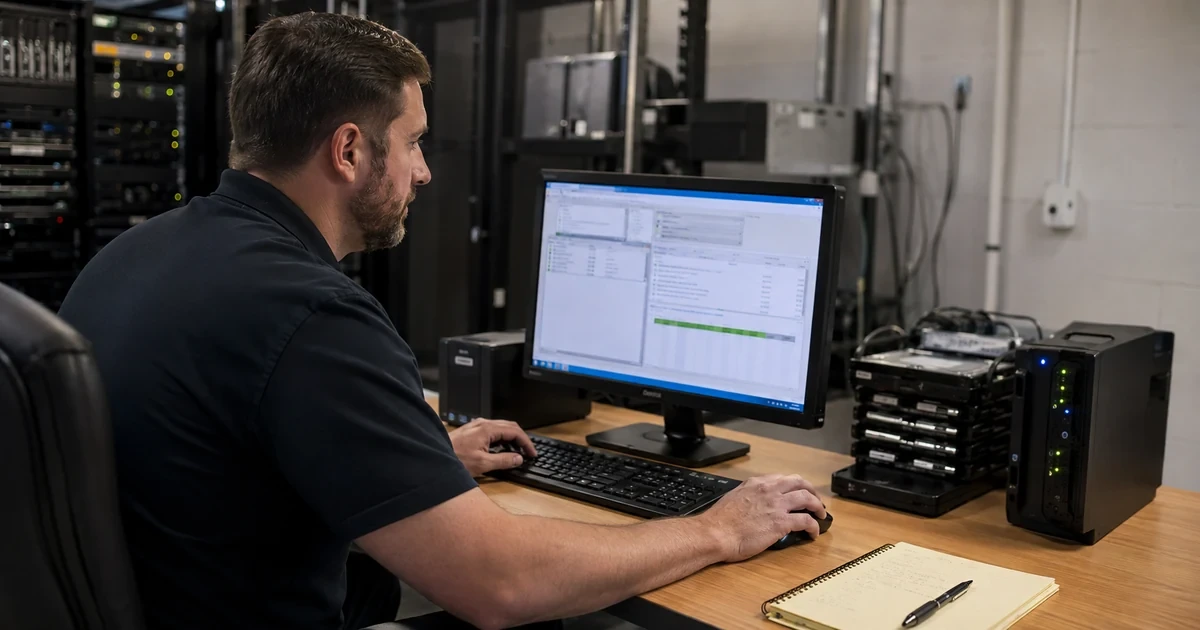
A dependable user-access process starts before anyone clicks an Add User button. The organization must know which workforce record authorizes the person, what the job requires, who owns each application, which manager approves access, when access should begin, and what evidence proves the employee can work without receiving unnecessary privilege. When those decisions live in email threads or technician memory, onboarding becomes inconsistent and role changes quietly accumulate risk.
The goal is a controlled path from an authoritative worker record to verified application access. That path should cover employees, contractors, temporary staff, service accounts, shared resources, administrators, external collaborators, and emergency access. It should define normal role profiles while preserving an exception process for unusual work. It also needs timing rules for joiners, movers, and leavers so access follows the current business relationship instead of the history of an account.
ALLMSP designs and operates user-access processes for organizations in Lawrenceville, Suwanee, Gwinnett County, Metro Atlanta, and throughout Georgia. Our in-house team can connect identity systems, business applications, Microsoft 365, Google Workspace, devices, approvals, documentation, and support into one practical workflow that employees and managers can actually use.
Build access from verified identity data and documented job requirements
- Choose the authority: Identify the workforce or identity record that establishes legal name, employment state, manager, department, location, start date, end date, and role changes.
- Define role profiles: Translate each job into required applications, groups, data, devices, licenses, shared resources, administrative functions, and approved external access.
- Assign accountable owners: Name a business owner and technical owner for every application, group, privileged role, shared account, integration, and approval path.
- Separate standard and exceptional access: Automate stable role requirements while routing unusual privilege, temporary access, and cross-department access through explicit review and expiration.
- Test real work: Validate sign-in, authentication, application launch, data access, collaboration, printing, mobile use, integrations, and one representative business task.
- Record the result: Retain the request, approval, assignment source, technician action, test result, exception, owner, expiration, and final employee acceptance.
Establish the identity source, ownership model, and access catalog
Start by mapping where worker status originates and how that information reaches the directory and applications. The authoritative source may be a human resources system, payroll platform, identity directory, approved contractor register, or tightly controlled service request. Record which fields can initiate access, who can change those fields, how corrections are handled, and how quickly changes should propagate. Do not let a display name or active mailbox serve as evidence that a person remains authorized. Each account should map to a current business relationship and a responsible manager.
Create an access catalog for the technology employees use. For every application and shared resource, document purpose, business owner, technical owner, sign-in method, user and administrator roles, supported assignment method, licensing dependency, sensitive data, approval requirement, review frequency, recovery procedure, and removal behavior. Include systems that are easy to overlook, such as reporting tools, browser extensions, remote-access products, finance portals, vendor dashboards, automation connections, shared mailboxes, file shares, and building or camera systems. A complete catalog prevents a polished primary directory from hiding unmanaged access elsewhere.
- Worker identity: Record legal and preferred name, worker type, unique identifier, manager, department, location, employment state, start, expected end, and verified contact method.
- Application ownership: Assign a business owner who approves need and a technical owner who maintains configuration, assignment, evidence, recovery, and support.
- Access inventory: List applications, groups, data repositories, shared resources, devices, licenses, integrations, service identities, privileged roles, and physical systems.
- Role vocabulary: Use clear role names tied to responsibility, such as accounts payable processor or field supervisor, instead of vague labels such as standard user or power user.
- Control points: Document request, manager approval, application-owner approval, security review, assignment, test, employee acceptance, exception, expiration, and removal.
- Recovery ownership: Protect company-controlled administrator accounts, emergency access, multifactor authentication, recovery records, vendor support identifiers, and escalation contacts.
The foundation is complete when every account can be traced to a current worker or approved technical purpose and every important permission has a named owner who can explain why it exists.
Convert job responsibilities into controlled role-based access
Interview managers and experienced employees about the work, not merely the tools they remember requesting. Identify the transactions, records, customers, projects, locations, reports, approval limits, and regulated information each role handles. Build the smallest practical access profile that supports those tasks. Separate baseline productivity access from department applications, sensitive data, privileged administration, temporary project access, and external collaboration. This creates a stable core that can be automated without granting every new employee the accumulated permissions of a convenient person used as a template.
Design the approval path according to risk. A manager can confirm business need, while an application or data owner should approve access to sensitive systems. Security or leadership may need to approve administrative roles, broad exports, payment authority, security controls, or access that crosses departments. Require a business purpose and end date for temporary access. Where the platform supports it, use governed groups or role assignments instead of direct permissions, but monitor assignment failures and inherited access. Group membership is only an instruction. Successful sign-in and completion of the intended work prove the outcome.
- Baseline profile: Define identity, email, collaboration, security, device, support, and policy access that nearly every worker in the approved population requires.
- Department profile: Add applications, data, groups, locations, workflows, reports, and licenses required by a finance, sales, operations, service, or leadership function.
- Sensitive permissions: Separate payroll, payment, legal, health, customer, security, export, deletion, configuration, and audit capability from routine application use.
- Privileged administration: Use named administrator accounts, limited roles, stronger authentication, protected workstations where appropriate, logging, review, and emergency access procedures.
- Temporary exceptions: Capture purpose, requested scope, approver, start, expiration, review date, data restrictions, owner, monitoring, and verified removal.
- Conflict checks: Identify combinations that create fraud, privacy, operational, or security risk, including request and approval, vendor creation and payment, or policy change and log deletion.
A role profile should make a new employee productive without becoming a permanent excuse for excess access. Owners must be able to add, change, and retire its components as the business evolves.
Implement joiner, mover, and leaver workflows with acceptance tests
For a joiner, require an approved worker record, manager, role, location, start time, device, applications, licenses, data, groups, and special restrictions. Schedule access so it is ready when work begins, then require the employee and manager to test representative tasks. For a mover, compare old and new responsibilities line by line. Add required access in a controlled order, transfer records and ownership, test the new role, and remove obsolete permissions on a defined date. A transfer should not simply layer a second department onto the first.
For a leaver, use the verified end event and the organization’s risk policy to revoke sessions, block sign-in, protect credentials, preserve or transfer business data, reassign automation and shared resources, recover licenses, handle devices, remove application access, and document completion. Emergency terminations may require immediate action, while planned departures may require a staged handoff. Test the complete workflow with ordinary employees, administrators, remote workers, contractors, and people who own important files or automation. Microsoft describes lifecycle workflows as automation for joiner, mover, and leaver events, but the underlying source attributes and business decisions still have to be reliable.
- Joiner test: Confirm identity, authentication enrollment, device sign-in, required applications, correct data scope, collaboration, license activation, printing, mobile use, and one normal transaction.
- Mover test: Compare old and new roles, transfer ownership, add new capability, remove obsolete access, verify separation of duties, and confirm that historical data remains appropriate.
- Leaver test: Verify session revocation, sign-in block, data disposition, delegated access, shared resources, service identities, application removal, device action, license recovery, and closure evidence.
- Failure handling: Route missing attributes, assignment errors, unavailable approvers, delayed synchronization, conflicting groups, absent licenses, and failed tests to named owners.
- Timing measures: Track request lead time, access ready by start, approval delay, assignment errors, failed tests, mover cleanup time, and complete removal by the required deadline.
- Change control: Pilot automation with representative edge cases, record expected results, retain rollback steps, review logs, correct exceptions, and expand only after evidence is clean.
The workflow is ready for routine use when it responds to a verified lifecycle event, reaches every material system, produces a testable outcome, records exceptions, and closes with evidence rather than assumption.
Role-based access setup and lifecycle administration from ALLMSP
ALLMSP can inventory identities, directories, applications, groups, licenses, data, devices, administrators, external users, shared resources, and approval paths. We build access catalogs and role profiles, secure administrator recovery, configure governed assignments, integrate requests with onboarding and offboarding, test real employee tasks, document exceptions, and train managers and support staff on the process.
ALLMSP delivers identity and user-access work from Lawrenceville to clients in Suwanee, throughout Gwinnett County and Metro Atlanta, and across Georgia. Our team handles the work in house and can coordinate managed IT, Microsoft 365, Google Workspace, cybersecurity, device management, software support, backup, and employee support from initial design through ongoing operation.
- Discover: Authoritative identity sources, worker states, application owners, roles, groups, data, devices, licenses, administrators, exceptions, recovery, and current gaps.
- Build: Access catalog, role profiles, approval rules, governed assignments, lifecycle triggers, tests, evidence, error handling, documentation, and training.
- Operate: Joiners, movers, leavers, temporary access, assignment failures, application changes, manager requests, emergency removal, reporting, and continuous improvement.
Official guidance for identity lifecycle and least-privilege access
Use current platform and security guidance when designing automation, then test the exact tenant, applications, and workforce data before relying on it.
- Microsoft Entra lifecycle workflows. Microsoft guidance for automating joiner, mover, and leaver identity tasks and understanding licensing requirements.
- NIST definition of least privilege. The security principle of limiting users and processes to the resources and authorizations needed for assigned work.
- NIST SP 800-53 access controls. Authoritative security and privacy controls covering account management, access enforcement, separation of duties, and least privilege.
- ALLMSP Managed IT Services. Identity, devices, applications, cloud services, onboarding, offboarding, support, documentation, monitoring, and technology planning.
- ALLMSP Software Support. Application selection, setup, licensing, configuration, integration, troubleshooting, updates, training, and ongoing support.
User access setup FAQs
What is the best source for starting and stopping employee access?
Use a company-controlled workforce record that reliably identifies the person, manager, role, employment state, start date, end date, and important changes. Define who may alter those fields and how corrections are approved. An active mailbox or an informal email should not be the sole authorization.
What belongs in an application access catalog?
Record each application’s purpose, owner, sign-in method, roles, groups, sensitive data, license, approval path, assignment method, administrator accounts, external users, integrations, review frequency, recovery, removal behavior, support procedure, and evidence location.
Why should access be based on job responsibility instead of copying another user?
The comparison employee may have old, exceptional, temporary, or excessive permissions. A documented role profile connects access to actual duties and gives owners a controlled baseline that can be reviewed, changed, automated, and tested.
Who should approve a user's application access?
The manager should confirm the business need. The application or data owner should approve sensitive capability. Security or leadership should review administrative, payment, export, configuration, cross-department, or other high-risk permissions. The approver should understand what the role allows.
Should all access be automated through groups?
Stable role requirements are good candidates for governed group or role assignment. High-risk, unusual, or temporary access may need separate approval and expiration. Monitor processing errors and test the application because group membership alone does not prove that access works correctly.
What should be tested during employee onboarding?
Test identity verification, multifactor authentication, device sign-in, required applications, correct data scope, collaboration, printing, mobile access, integrations, licensing, and a representative business transaction. Record the employee and manager acceptance along with any exception.
How should access change when an employee transfers roles?
Compare old and new responsibilities, add required capability in the correct order, transfer ownership, test the new work, remove obsolete permissions by a defined deadline, and verify separation of duties. A transfer should not keep every permission from both positions.
What must happen when a worker leaves?
Revoke sessions, block sign-in, secure credentials, preserve or transfer required data, reassign files and automation, remove application and administrative access, handle devices, recover licenses, notify owners, and retain evidence that every material system was completed.
Can ALLMSP set up and run user access processes in house?
Yes. ALLMSP can inventory systems, define roles and approvals, configure directories and applications, build lifecycle workflows, test employee tasks, document exceptions, train owners, support onboarding and offboarding, and maintain the process through its in-house team.
Where does ALLMSP provide identity and user access support?
ALLMSP sets up identity and user access for organizations in Lawrenceville, Suwanee, Gwinnett County, Metro Atlanta, and other Georgia locations. Remote identity administration can be coordinated with local device deployment, employee support, office technology, cybersecurity, and managed IT services.