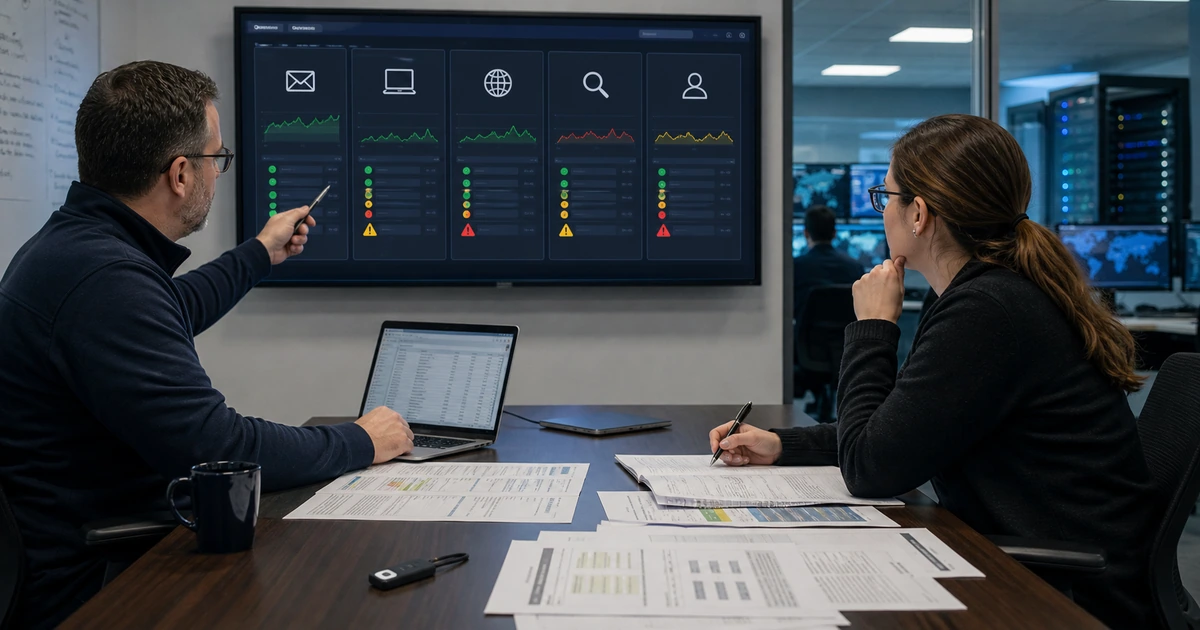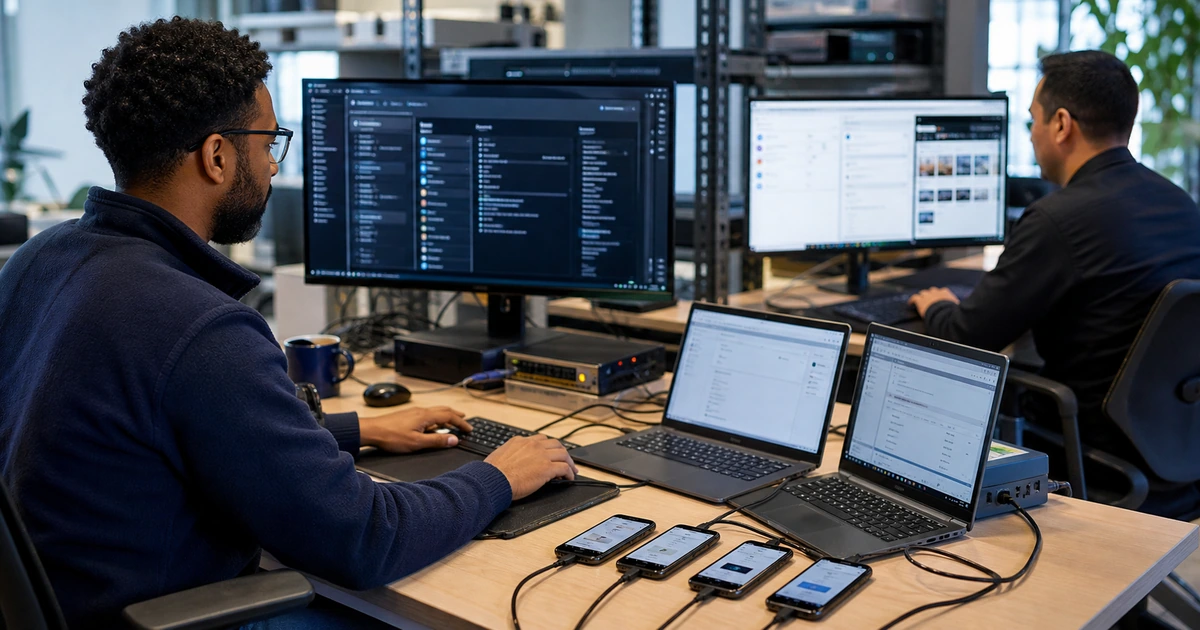
A business WordPress site is a production system, not simply a collection of pages placed on a server. It may collect leads, process purchases, schedule appointments, publish time-sensitive information, support customer accounts, send email, feed analytics, and connect with advertising, customer relationship management, payment, or operations platforms. Hosting should be designed around those duties before the site goes live.
A dependable environment begins with clear company ownership and a supported technical foundation. It also needs separate production and staging workflows, protected administrator access, reliable DNS and certificates, tested backups, controlled updates, useful monitoring, and acceptance tests that reflect what customers actually do. Fast hardware alone cannot compensate for unclear access, missing recovery steps, unsafe extensions, or a form that silently stops delivering messages.
ALLMSP designs, deploys, secures, monitors, and supports WordPress environments for organizations in Lawrenceville, Suwanee, Gwinnett County, Metro Atlanta, and throughout Georgia. Our in-house team can manage the hosting account, domain and DNS, WordPress platform, performance, security, backups, integrations, deployment process, documentation, and ongoing maintenance as one connected service.
Define the production standard before the website launches
- Assign ownership: Record who controls the domain, DNS, hosting, WordPress administrators, licenses, integrations, billing, recovery methods, and approvals.
- Match the workload: Document traffic, transactions, media, integrations, user roles, availability needs, recovery objectives, privacy duties, and expected growth.
- Build two environments: Keep production stable while staging provides a controlled place to test code, content, updates, integrations, and recovery.
- Protect every layer: Secure accounts, WordPress, hosting, database, file access, transport, backups, DNS, forms, email, and connected services.
- Measure customer journeys: Monitor availability and performance, then test discovery, navigation, forms, purchases, logins, email, analytics, and administration.
- Operate by routine: Use documented release, backup, restore, patching, monitoring, incident, renewal, review, and lifecycle procedures.
Translate business requirements into hosting architecture and ownership
Start with the work the website must perform. Identify public content, landing pages, forms, ecommerce, bookings, memberships, learning systems, customer portals, search, multilingual content, large downloads, video, and authenticated users. Estimate ordinary and campaign traffic, peak concurrency, storage growth, database activity, background jobs, integration volume, and administrative use. Define acceptable downtime and data loss in business terms. A site that receives occasional inquiries can use a different recovery design from a store that records orders throughout the day.
Map every owner and account before deployment. The business should control the domain registration, authoritative DNS, hosting subscription, billing, WordPress administrator access, repository, backup destination, certificates, content delivery network, firewall, analytics, search tools, email delivery, payment services, integration accounts, and software licenses. Use named accounts, multifactor authentication, least privilege, protected recovery methods, and a documented emergency route. Shared credentials and personal accounts make routine support slower and can turn staff changes into outages.
Select a technical stack that meets current WordPress requirements and the needs of the chosen theme and extensions. Confirm supported server software, PHP, database, HTTPS, memory, storage, process limits, scheduled tasks, outbound connections, file permissions, logging, backup access, staging support, and escalation. Review geographic delivery, service commitments, support boundaries, data location, retention, portability, and cancellation terms. Document which party owns each layer so an incident does not become a search for the right provider.
- Business role: List every customer and staff workflow, its owner, expected volume, peak period, sensitivity, dependency, and acceptable interruption.
- Recovery target: Define how much recent data may be lost, how quickly service must return, which journeys return first, and who authorizes recovery.
- Account control: Place domain, DNS, hosting, administration, billing, backups, licenses, analytics, and integrations under approved company ownership.
- Platform support: Confirm current WordPress, PHP, database, web server, HTTPS, extension, command line, logging, and scheduled task requirements.
- Capacity model: Estimate traffic, concurrency, storage, database work, media processing, background jobs, integration calls, and seasonal growth.
- Responsibility map: Name who handles platform incidents, application errors, security events, DNS, certificates, email, backups, vendors, and communication.
A written architecture and ownership map gives the website a supportable foundation before content, plugins, and business dependencies begin to accumulate.
Build staging, security, recovery, performance, and monitoring into the environment
Create production and staging as separate environments with deliberate data movement between them. Staging should represent the live stack closely enough to reveal compatibility problems while remaining blocked from search indexing, real customer email, live payment actions, production webhooks, and unauthorized public access. Define how recent content enters staging, how sensitive data is protected, how code and configuration move forward, and how temporary files are removed. Avoid treating a stale clone as proof that a current production change is safe.
Apply security in layers. Protect hosting and WordPress accounts with named identities and multifactor authentication. Limit administrator roles, remove unused accounts, keep core, themes, and plugins supported, restrict file and database access, use HTTPS, protect secrets, review logs, and reduce unnecessary software. Configure a web application firewall and appropriate login protection without assuming either replaces secure maintenance. WordPress hardening guidance emphasizes trusted sources, current software, strong access practices, appropriate permissions, and defense across the host, network, and application.
Design backups for restoration. Capture the database and required files as a matched recovery point, protect a copy outside production, encrypt and restrict access, monitor failures, set retention, and run controlled restore tests. Build performance from measurement rather than random optimization. Establish an uncached and cached baseline, review server response, database work, object and page caching, media delivery, scripts, styles, fonts, third-party tags, and Core Web Vitals. Monitor availability, certificate and domain expiration, backups, errors, disk use, resource pressure, form delivery, security events, and critical transactions.
- Staging isolation: Block indexing and live actions, protect access, control sensitive data, mirror key dependencies, and document refresh and promotion procedures.
- Identity protection: Use named administrators, MFA, least privilege, emergency access, recovery controls, access reviews, and prompt account removal.
- Software hygiene: Install supported components from trusted sources, remove unused code, review release notes, test changes, and retain rollback evidence.
- Recoverable backups: Capture files and database, store an independent protected copy, monitor completion, document retention, and prove restoration.
- Performance baseline: Measure server response, page rendering, database load, cache behavior, media, code, third parties, and real customer journeys.
- Operational monitoring: Watch uptime, errors, resources, security, backups, certificates, domains, forms, email, transactions, and integration failures.
These controls turn hosting into an observable and recoverable service instead of a server account that receives attention only after a visitor reports a failure.
Launch with controlled deployment, acceptance tests, and an operating record
Prepare a launch plan that identifies the final content freeze, database movement, file promotion, DNS change, certificate validation, cache behavior, redirects, analytics, consent controls, email routing, integration activation, test owners, communication, rollback threshold, and observation period. Lower DNS time to live in advance when a change requires it, but preserve the intended long-term value afterward. Capture the original records and keep access to the previous environment until the new service is accepted and the recovery window has passed.
Test complete journeys rather than checking only the homepage. Verify navigation, internal search, service discovery, calls and email links, every important form, confirmation pages, staff notifications, ecommerce, payment, tax and shipping behavior, account creation, password recovery, login, downloads, booking, accessibility, responsive layouts, structured data, canonical tags, robots directives, sitemaps, redirects, analytics events, advertising conversions, and administrative publishing. Repeat tests from outside the administrator session and on representative devices and networks.
After launch, record the final architecture, providers, accounts, DNS, certificates, versions, extensions, integrations, backup schedule, recovery steps, monitoring, alert recipients, known exceptions, renewal dates, deployment procedure, support contacts, and next review. Remove temporary access and old copies when retention expires. Schedule updates, vulnerability review, restore testing, performance review, access review, content checks, license renewal, and capacity planning. Use incident findings and support trends to improve the standard rather than repeatedly fixing the same condition.
- Launch sequence: Order content freeze, backup, deployment, DNS, certificates, caches, integrations, validation, communication, observation, and acceptance.
- Rollback decision: Set measurable triggers for failed journeys, data uncertainty, severe errors, security exposure, performance loss, or missed timing.
- Journey testing: Verify discovery, forms, email, accounts, payments, bookings, downloads, mobile use, accessibility, analytics, search, and administration.
- Search readiness: Check index controls, canonical URLs, structured data, sitemap entries, redirects, metadata, crawl access, and analytics ownership.
- Handoff record: Document architecture, accounts, settings, software, integrations, backups, monitoring, contacts, exceptions, renewals, and procedures.
- Operating calendar: Schedule patching, access review, recovery tests, performance review, content checks, renewals, capacity planning, and lifecycle decisions.
A disciplined launch leaves the business with a tested customer experience, a clear recovery route, and the operating information needed to keep WordPress dependable.
Managed WordPress hosting setup and support from ALLMSP
ALLMSP can gather requirements, design the hosting environment, secure company ownership, configure staging, migrate the site, manage DNS and certificates, protect accounts, establish backups, improve performance, configure monitoring, test customer journeys, document operations, and provide ongoing WordPress support through our in-house team.
We support WordPress websites for businesses in Lawrenceville, Suwanee, Gwinnett County, Metro Atlanta, and throughout Georgia, including professional services, ecommerce, nonprofits, healthcare, construction, manufacturing, education, and multi-location organizations.
- Design: Translate business workflows, availability, recovery, privacy, traffic, integrations, ownership, and growth into a supportable environment.
- Deploy: Build staging and production, secure access, migrate data, configure services, tune performance, test recovery, and control launch.
- Operate: Monitor health, maintain software, verify backups, test journeys, manage changes, document findings, and plan capacity and lifecycle.
Primary guidance for a managed WordPress production environment
Use current platform documentation and measurable web performance guidance to define the hosting standard, then validate the result against the website’s actual customer and business workflows.
- WordPress Hosting Requirements. Lists the current platform requirements and explains why HTTPS and a supported server environment matter.
- WordPress Hardening Guide. Covers layered protection across trusted software, access, permissions, hosting, networks, monitoring, and recovery.
- WordPress Optimization Guide. Explains performance factors such as hosting, caching, files, database work, and content delivery.
- ALLMSP Web Hosting and Security. Managed hosting, WordPress maintenance, security, monitoring, backups, recovery, and support for Georgia organizations.
Managed WordPress hosting setup FAQs
What makes WordPress hosting suitable for a business website?
It should meet current platform requirements, support the site’s workload, provide protected ownership, staging, backups, monitoring, security, performance controls, recovery, and responsive support.
Should a WordPress business site have a staging environment?
Yes. Staging provides a controlled place to test updates, code, content, integrations, migrations, and restoration without exposing customers to unfinished work.
Who should own the domain and hosting accounts?
The business should retain approved control of the domain, DNS, hosting, billing, administrators, recovery methods, licenses, analytics, and connected services.
What should be monitored beyond website uptime?
Monitor errors, resources, backups, security events, certificates, domain renewal, forms, email, transactions, scheduled jobs, integrations, and important customer journeys.
How should WordPress updates be deployed?
Review scope and compatibility, back up the current state, test representative changes in staging, define acceptance and rollback, schedule production work, validate, and document.
What belongs in a complete WordPress backup?
Include the database, uploads, themes, plugins, configuration, custom code, required server files, and recovery information for external services and credentials.
How is WordPress performance verified?
Measure server response, database and cache behavior, page rendering, media, scripts, third-party services, Core Web Vitals, and complete customer tasks on representative devices.
What should be tested at WordPress launch?
Test navigation, forms, email, accounts, payments, bookings, mobile layouts, accessibility, analytics, search settings, redirects, structured data, integrations, and administration.
Can ALLMSP build and manage the complete WordPress environment?
Yes. ALLMSP handles architecture, hosting, migration, DNS, certificates, security, backups, performance, monitoring, launch, maintenance, and support with its in-house team.
Where does ALLMSP provide managed WordPress hosting support?
ALLMSP supports organizations in Lawrenceville, Suwanee, Gwinnett County, Metro Atlanta, and across Georgia with local and remote service.