




















































































































































A bad cable link does not always fail completely. It may negotiate at a lower speed, accumulate errors, drop when furniture moves, restart a PoE device under load, break only one phone feature, or work until temperature and traffic change. At the same time, symptoms blamed on wiring can originate in a patch cord, switch port, VLAN, DHCP service, wireless hop, phone platform, internet circuit, or application. Replacing equipment before isolating the layer wastes time and can erase useful evidence.
A disciplined repair begins with the exact endpoint, outlet, time, symptom, and business impact. It traces the physical and logical path, preserves switch and service data, and changes one variable at a time. The goal is to identify whether the permanent link, patching, power delivery, network configuration, upstream service, or endpoint caused the failure and then retest the original workflow.
ALLMSP troubleshoots data and voice wiring for Lawrenceville, Suwanee, Gwinnett County, Metro Atlanta, and organizations across Georgia. Our in-house technicians can test the cable plant and also inspect switching, PoE, Wi-Fi, VoIP, internet, endpoints, and monitoring, which keeps a cross-layer problem from bouncing between contractors.
Trace the symptom from the user device to the serving system
- Capture the failure: Record user, device, jack, location, time, application, call direction, speed, error, movement, weather, and recurrence pattern.
- Preserve evidence: Save switch-port state, negotiation, counters, power data, phone logs, call details, monitoring history, and recent changes.
- Map the path: Identify patch cords, outlet, permanent link, panel, cross-connect, switch port, uplink, VLAN, provider, and destination.
- Test by layer: Separate physical continuity and performance from PoE, switching, addressing, routing, QoS, provider, application, and endpoint behavior.
- Repair the cause: Reterminate, replace, clean, reroute, relabel, reconfigure, or redesign only after measurements support the decision.
- Verify the workflow: Repeat the original task under representative movement, load, power, voice, and network conditions, then monitor stability.
Diagnose dead jacks, slow links, intermittent drops, and physical damage
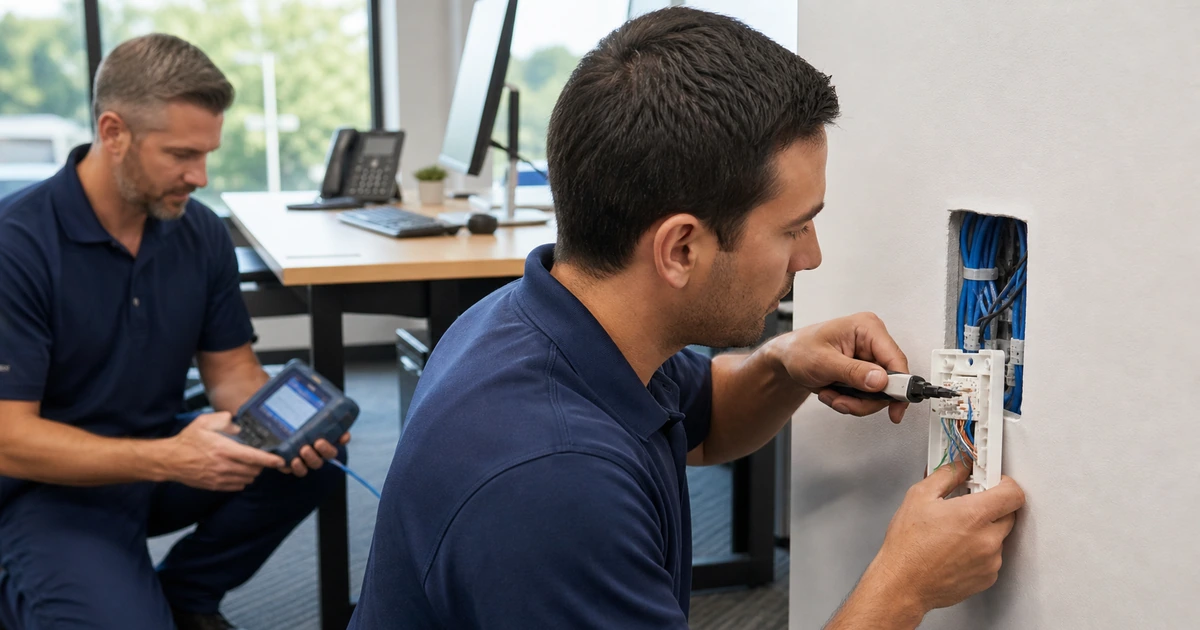
Confirm the correct outlet and trace it to the patch panel and switch. Check the label against the drawing instead of trusting either one in isolation. Inspect the work-area cord, jack, faceplate, furniture path, cable support, ceiling route, patch-panel termination, equipment cord, and switch port. Look for crushed or sharply bent cable, damaged latch tabs, contamination, moisture, loose terminations, excessive untwist, poorly seated modules, improvised couplers, tension, rodent or construction damage, and patching that no longer matches the records.
Read the switch evidence before bouncing the port. Record link speed, duplex, errors, discards, flaps, power allocation, device identity, VLAN, authentication, and event times. A one-gigabit design negotiating at a lower rate can indicate pair or termination trouble, but it can also reflect endpoint capability or configuration. Intermittent physical movement is especially useful evidence. If touching a cord, moving a desk, opening a door, or changing temperature reproduces the fault, stop disturbing the path and inspect it methodically.
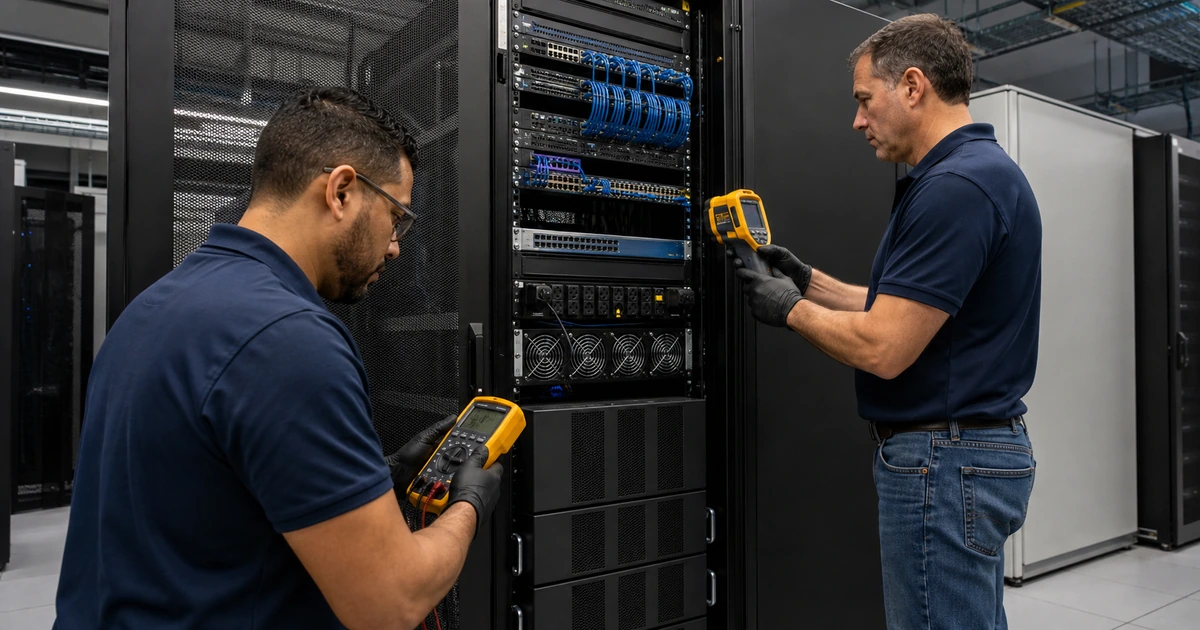
Use the right test for the decision. A wiremap and length verifier can locate basic opens, shorts, crossed pairs, and distance to fault. A qualifier can test supported application performance. A certifier compares the fixed link or channel against the selected standard limit. Fluke Networks distinguishes these purposes and test models. Save results before and after repair under the final identifier. When a link fails, interpret the failed measurements to isolate connectors, workmanship, length, noise, cable damage, or component mismatch rather than reterminating both ends blindly.
- Identity check: Trace the exact outlet to panel and port and reconcile labels, drawings, switch data, and the connected endpoint.
- Physical inspection: Review cords, faceplate, jack, cable route, supports, transitions, panel termination, patching, and environmental damage.
- Switch evidence: Capture negotiation, errors, flaps, PoE, VLAN, security state, device discovery, temperature, and event history.
- Appropriate test: Select verification, qualification, or certification according to the question and installed link model.
- Measured repair: Correct the indicated component or workmanship issue, retest, and retain the superseding result.
A physical repair is complete when the identified path passes the required test, negotiates as designed, remains stable under movement and load, and matches the final records.
Separate PoE and VoIP symptoms from ordinary cable performance
For a phone, access point, camera, or other powered device, determine whether the problem is power, Ethernet link, network service, or application behavior. Record device startup, power class or negotiated demand, switch allocation, total available budget, feature state, and any port power events. A device may start at low demand and fail when radios, infrared, speakers, heaters, or other functions activate. Inspect the full powered path, including patch cords and connectors, and use PoE-capable test equipment where appropriate to evaluate the switch offering and cabling behavior.
Cisco documents that a switch can deny a request or remove power when available or configured PoE capacity is insufficient. Fluke Networks explains that cabling resistance and resistance unbalance can affect delivery even when ordinary data works. Compare the endpoint’s maximum supported requirement with the port standard, switch budget, power supplies, UPS, and installed link. Test a known-good supported device, port, cord, or temporary link as one controlled substitution at a time and restore the production configuration and labels afterward.
For voice complaints, describe the call precisely. One-way audio, registration failure, no power, clipping, delay, jitter, dropped calls, transfer failure, and poor external quality do not share one cause. Verify the phone’s switch port, voice and data VLAN behavior, PoE, addressing, DNS, time, call-server reachability, QoS markings, uplink congestion, firewall handling, internet quality, and provider records. Cisco’s voice VLAN guidance shows that port configuration affects how phone and attached-data traffic are carried and prioritized. Test local and external calls in both directions and during representative traffic before attributing quality to the cable.
- Power or data: Identify whether the endpoint loses power, physical link, addressing, network reachability, registration, media, or only one feature.
- PoE demand: Compare startup and peak feature load with port capability, switch budget, power supplies, UPS, and link condition.
- Voice path: Trace phone, port, VLAN, addressing, call control, firewall, uplink, internet, provider, and far endpoint.
- Call evidence: Record direction, numbers, time, duration, symptoms, network state, call detail, logs, and packet data when justified.
- Controlled comparison: Substitute one known-good component or path and document what changed before drawing a conclusion.
The repair is trustworthy when it resolves the exact power, registration, or call symptom and the data path remains correct for any device connected through the phone.
Clean up labels, abandoned patching, failed links, and recurring trouble spots
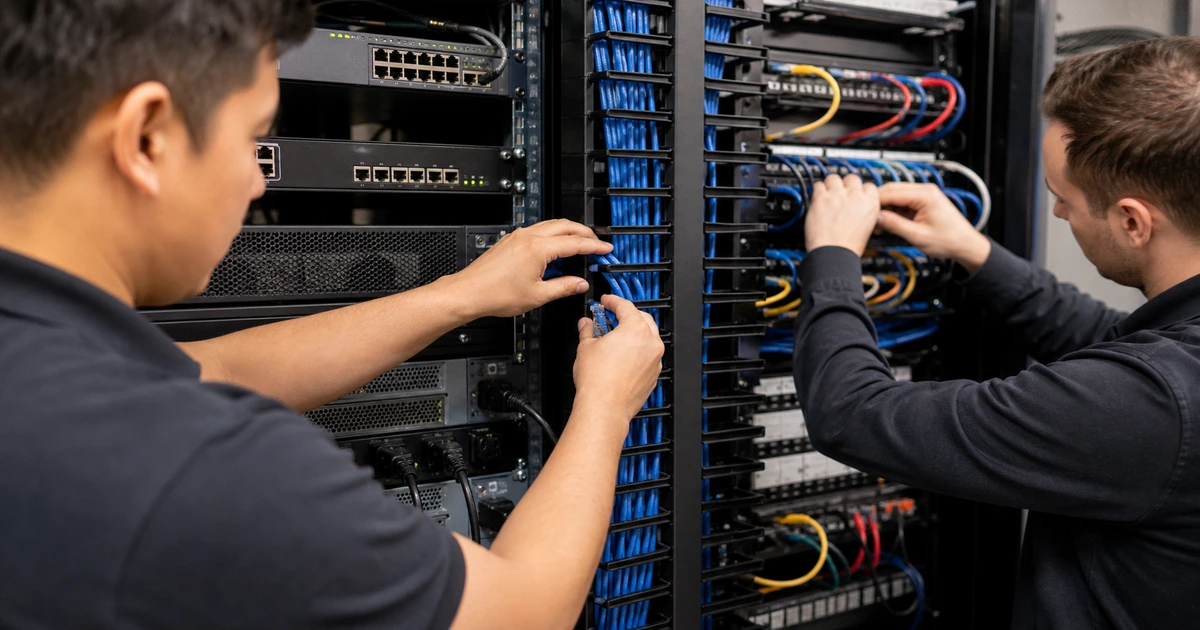
After the urgent fault is stable, reconcile the surrounding infrastructure. Trace unidentified cables, confirm active services, remove or clearly isolate abandoned patching according to the property plan, correct duplicate or misleading labels, and update panel schedules and floor drawings. Do not unplug unknown links merely to make a rack look cleaner. Observe switch activity, identify device and business owner, and schedule changes with a rollback plan where service is uncertain.
Review repeated incidents by room, pathway, panel, installer era, cable type, switch, power load, and environmental exposure. Several one-off tickets can reveal a damaged bundle, water path, crowded connector field, overloaded switch, failing UPS, poor patch cords, undocumented intermediate device, or recurring office move. Test a representative population and expand the scope when evidence indicates a systemic problem. Rank corrections by business impact, safety, service failure, standards gap, supportability, and upcoming renovation rather than replacing everything solely because it is old.
Close the work with updated as-built drawings, cable identifiers, test records, switch and patch maps, device inventory, voice extensions, exceptions, photographs, and service history. Add monitoring for link flaps, errors, PoE faults, uplink utilization, switch temperature, and power events where the platform supports it. Give the local contact a simple rule for patching and reporting new symptoms. Reliable cabling remains reliable when changes are administered with the same care as the original installation.
- Trace first: Identify device, service, owner, activity, path, and change window before disconnecting an unknown cable.
- Correct records: Reconcile outlet, cable, panel, port, drawing, test result, endpoint, extension, and service history.
- Find patterns: Group incidents by location, bundle, component, pathway, power source, environment, and change history.
- Prioritize remediation: Address active failures and high-impact systemic risks before cosmetic cleanup or unsupported wholesale replacement.
- Monitor recurrence: Watch physical errors, flaps, PoE events, speed changes, uplink capacity, switch health, and user reports.
A cleanup project succeeds when the rack and records tell the same story, recurring faults have an explained cause, and future technicians can change service without rediscovering the building.
End-to-end network and voice wiring repair from ALLMSP
ALLMSP can trace and test the complete path, repair jacks and terminations, replace damaged links, clean and document patching, analyze switch and PoE behavior, troubleshoot VoIP, validate Wi-Fi uplinks, and correct the records with our in-house technicians.
We can also address the network configuration, power, internet, phone platform, and endpoint issues that imitate cable faults. That broader view helps the business repair the actual cause while retaining clear evidence of link performance and the final production path.
- Isolate: Capture the symptom, map the path, inspect the physical link, read network evidence, and select the appropriate test.
- Repair: Correct the failed component, workmanship, power, configuration, or capacity issue without disrupting unrelated service.
- Document: Retest, update identifiers and maps, record the cause, monitor stability, and prevent repeated troubleshooting.
Network and voice cabling troubleshooting references
Use measurements and platform evidence to distinguish a cabling defect from endpoint, power, switching, voice, internet, and application causes before replacing equipment.
- Fluke Networks cabling certification. Explains test models and the measurements used to demonstrate installed cabling performance.
- Fluke Networks cable verifier overview. Describes wiremap, pair length, distance to fault, cable identification, connected services, port speed, and PoE checks.
- Fluke Networks PoE installation guide. Covers powered-device compatibility, cable resistance, unbalance, certification, and field troubleshooting.
- Cisco PoE guidelines. Documents insufficient budget, power requests, port shutdown, faults, allocation, and monitoring behavior.
- Cisco voice VLAN guide. Explains phone access-port behavior, voice tagging, priority, connected data devices, and verification.
Network and voice cabling repair FAQs
Can a damaged network cable still connect?
Yes. A marginal link may negotiate slowly, accumulate errors, fail only during movement or heat, or stop delivering reliable PoE under load. A link light does not prove standards-based performance.
Why did a gigabit connection drop to a slower speed?
Possible causes include pair or termination faults, damaged cords, component mismatch, endpoint limitations, switch configuration, or negotiation behavior. Inspect and test the defined path before assuming one cause.
What causes an IP phone to have one-way audio?
One-way audio can involve VLANs, routing, firewall or NAT handling, provider media paths, endpoint settings, call control, or network loss. Cabling is only one layer of the investigation.
Why does a PoE device restart when features turn on?
Peak demand may exceed the port or switch budget, or cabling and connections may deliver power poorly. Check device requirements, active features, allocation, supplies, UPS, resistance, and event logs.
Should a failed jack be reterminated at both ends?
Not automatically. Test results and inspection should identify whether the fault is at one connector, in the cable, in a cord, or elsewhere. Repair the supported cause and retest the final link.
How can an unlabeled cable be traced safely?
Use records, switch discovery and activity, endpoint identification, tone or remote identifiers, and an approved change window. Avoid disconnecting active unknown links merely to see what stops working.
Can a basic wiremap prove a cable supports the required speed?
No. Wiremap finds important connection faults, but application qualification or standards certification is needed when the decision requires evidence of performance beyond continuity.
What should be updated after a cable repair?
Update the outlet and panel label, drawing, test result, switch and patch map, endpoint or extension record, cause, repaired components, date, technician, and any monitoring or follow-up action.
Can ALLMSP troubleshoot both the cable and the phone system?
Yes. ALLMSP can test cabling, PoE, switching, VLANs, QoS, internet service, phone registration, call paths, endpoints, and monitoring through one in-house workflow.
Does ALLMSP provide emergency cabling repair around Atlanta?
ALLMSP supports businesses in Lawrenceville, Suwanee, Gwinnett County, and Metro Atlanta. Response options depend on impact, access, location, parts, and the current service arrangement.