
























































































































































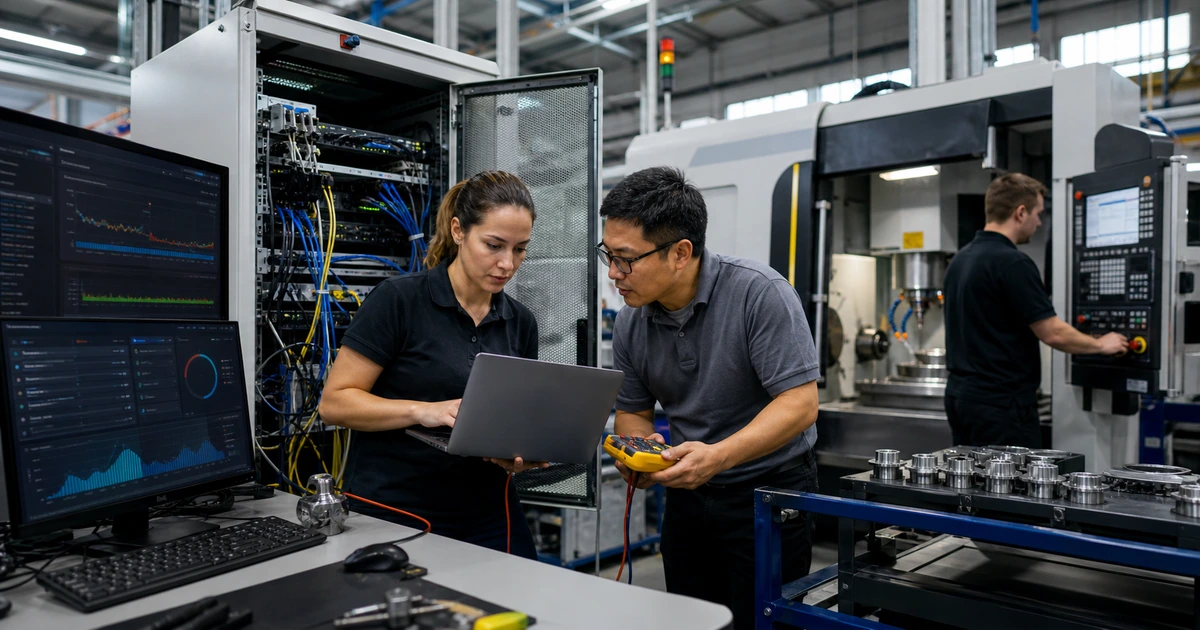
Manufacturing technology cleanup should remove ambiguity without disrupting a plant. A retired workstation may still support a machine, a former engineer may own a scheduled export, an obsolete firewall rule may carry vendor traffic, and an old drawing may remain on a production terminal. Diagnose dependencies before removal and preserve evidence before change.
Use authorized maintenance windows and operational review for production-linked changes. Preserve engineering, quality, traceability, financial, safety, and customer records. Do not force office patching, scanning, or endpoint rules onto fixed industrial dependencies without equipment-owner and engineering approval.
Businesses in Lawrenceville, Suwanee, Gwinnett County, Metro Atlanta, and across Georgia can use ALLMSP to remove plant and engineering IT bottlenecks that delay production. Our in-house team handles planning, technical work, testing, and documentation.
How to choose the right manufacturing IT and production technology improvements
A successful cleanup ties every asset, identity, record, interface, network path, external connection, backup, and exception to an owner and operational purpose. Unsupported and stale exposure declines, current production information becomes easier to find, and recovery can be demonstrated.
- Asset lists disagree across purchasing, endpoint, network, engineering, maintenance, security, backup, and plant records.
- Former employees, vendors, service accounts, local accounts, keys, or sessions retain access without a current owner and date.
- Production teams rely on emailed drawings, local spreadsheets, unmanaged USB media, or duplicate masters to decide current work.
- Office, guest, engineering, vendor, and production networks have broad or undocumented communication paths.
- Backups complete but compatible applications, licenses, configurations, sequence, operational validation, or manual procedures are untested.
- Support tickets repeat interface failures, shared-account confusion, remote-access workarounds, missing ownership, or stale data corrections.
Find unsupported assets, stale access, record conflicts, and hidden dependencies
Build one owned IT and production asset register
Diagnosis: purchasing, endpoint, network, engineering, maintenance, backup, security, and provider records identify the same assets, owners, functions, locations, support status, communication, dependencies, and recovery tier
Manufacturing and Engineering Companies IT improvement: Reconcile records, investigate unknown assets with operational owners, label critical dependencies, assign owners and review dates, and create an approved disposition for unsupported systems instead of silently deleting them
Measurement: percentage of discovered assets with an accountable owner, operational function, support state, network path, backup decision, exception, and next review
Remove stale identities, privilege, and service-account ambiguity
Diagnosis: current employees, contractors, vendors, systems, local accounts, service identities, tokens, keys, recovery methods, and privileged roles all have valid owners, purposes, dependencies, last-use evidence, and expiration
Manufacturing and Engineering Companies IT improvement: Transfer dependencies, disable unexplained identities in a controlled sequence, separate privilege, remove interactive service access, rotate exposed secrets, close sessions and alternate paths, and test required workflows
Measurement: unowned identities, former-user access, dormant privileged roles, interactive service accounts, stale recovery methods, and failed denied-access tests
Reconcile engineering and production masters
Diagnosis: part records, drawings, bills of material, routings, work instructions, recipes where used, local copies, spreadsheets, ERP, MES, QMS, and production views agree on the approved revision and authority
Manufacturing and Engineering Companies IT improvement: Choose authoritative locations, correct approval and effectivity, preserve superseded history, remove uncontrolled copies from normal use, link downstream changes, and make current status visible at the point of work
Measurement: revision conflicts, local-copy discoveries, production questions, rework tied to documentation, unauthorized releases, and successful current-version spot checks
Correct engineering, system, network, device, provider, and backup weaknesses
Repair ERP, MES, QMS, warehouse, and scheduled interfaces
Diagnosis: interfaces have owners, least-access identities, current mappings, useful validation, alerting, retry, reconciliation, documentation, and manual fallback, with no silent errors or abandoned jobs
Manufacturing and Engineering Companies IT improvement: Retire unused jobs after dependency review, correct mappings and credentials, narrow access, route alerts to accountable owners, reconcile affected records, document fallback, and test both normal and failure cases
Measurement: unresolved interface errors, duplicate entry, data-reconciliation exceptions, stale service identities, mean time to acknowledge, and successful failure recovery
Reduce broad office, guest, vendor, and production network paths
Diagnosis: observed communication matches an approved source, destination, service, owner, purpose, schedule, and monitoring requirement, including wireless, cellular, remote, and emergency routes
Manufacturing and Engineering Companies IT improvement: Coordinate rule changes with operations, close unused exposure, segment office and guest use, use controlled vendor entry, secure administration, document exceptions, and verify required and denied traffic after change
Measurement: broad rules, undocumented routes, direct internet exposure, uncontrolled remote paths, expired exceptions, and successful boundary tests
Standardize workstations and shared plant stations by function
Diagnosis: each device class has a documented owner, supported software, update approach, protection, privilege, media policy, shared-use design, remote support method, loss process, and operational exception
Manufacturing and Engineering Companies IT improvement: Create profiles for office, engineering, quality, warehouse, maintenance, and plant use, enroll supported devices, remove unknown tools and privilege, secure shared sessions, restrict media, and schedule production-linked updates
Measurement: unknown devices, unsupported software, local administrators, unapproved remote tools, mixed sessions, media exceptions, and device health by functional class
Close dormant supplier and machine-builder access
Diagnosis: every external account, portal, API, key, certificate, VPN, remote tool, appliance, modem, cellular route, and support path has a sponsor, current need, limited scope, approved schedule, monitoring, and expiration
Manufacturing and Engineering Companies IT improvement: Transfer records, disable dormant paths, rotate credentials, replace shared access, use company-controlled entry, set windows and expiration, observe high-impact sessions where appropriate, and independently test closure
Measurement: always-on vendor paths, shared external credentials, dormant accounts, sessions outside windows, missing sponsors, and failed post-expiration access attempts
Transfer ownership and close every obsolete path safely
Make backup recovery production aware
Diagnosis: copies cover required engineering, business, quality, configuration, and supported production records and include compatible applications, licenses, sequence, credentials, operational validation, and alternate work
Manufacturing and Engineering Companies IT improvement: Correct coverage and priorities, protect copies from routine compromise, preserve dependencies, write step-by-step recovery and manual procedures, restore in isolation, obtain authorized validation, and record gaps
Measurement: restore success by recovery tier, actual recovery time, missing dependencies, failed jobs, unresolved test findings, manual-process readiness, and age of operational validation
Turn recurring support issues into controlled fixes
Diagnosis: tickets for shared access, engineering revisions, interfaces, printers, plant stations, vendor sessions, remote tools, slow systems, failed jobs, and data corrections are categorized by root cause and operational impact
Manufacturing and Engineering Companies IT improvement: Correct ownership, documentation, role templates, monitoring, equipment standards, integrations, training, and escalation. Preserve exceptional procedures only when the dependency is real and approved
Measurement: repeat incidents, production minutes affected, first-response and resolution time, reopened tickets, workaround use, affected orders, and recurrence after corrective action
Create a governed technology and exception lifecycle
Diagnosis: new equipment, cloud systems, automation, AI tools, acquisitions, customer requirements, unsupported dependencies, risk exceptions, and provider changes receive security, operational, quality, data, support, recovery, and retirement review
Manufacturing and Engineering Companies IT improvement: Add a lightweight intake and change record, assign qualified reviewers, document scope and decisions, pilot representative use, set exception expiration, preserve evidence, and verify after implementation and before retirement
Measurement: changes reviewed before connection, exceptions past due, unowned systems, post-change incidents, undocumented data flows, and successful retirement and recovery tests
Measure reliability, access accuracy, and recovery
Use a controlled baseline before changes, document maintenance windows and operational approval, and compare thirty-day and ninety-day results. Close an item only when the intended workflow succeeds, denied access fails, records reconcile, production owners accept the result, and evidence is retained.
- Owned asset coverage: Percentage of discovered business and production assets with owner, function, location, support state, communication, recovery tier, and next review.
- Access accuracy: Percentage of sampled people, providers, and service identities whose actual access matches approved duties, systems, source, and time window.
- Current-record accuracy: Percentage of sampled parts and jobs where engineering, planning, production, and quality users identify the same approved revision and status.
- Interface reliability: Failed or unreconciled transactions by interface, affected records, acknowledgement time, recovery time, and repeat cause.
- Remote-path control: External paths with named ownership, limited scope, approved window, monitoring, expiration, and successful closure test.
- Recovery readiness: Critical workflows restored within the approved objective with dependencies, validation, and alternate procedures recorded.
- Support recurrence: Repeated incidents and production minutes affected after the related corrective action was declared complete.
Official product documentation and ALLMSP resources
- NIST Cybersecurity Resources for Manufacturers.
- NIST Guide to Operational Technology Security.
- CISA industrial control system recommended practices.
- NIST Manufacturing Extension Partnership Industry 4.0 services.
- OSHA control of hazardous energy standard.
- Managed IT Services
- Cybersecurity
- Software Support
Frequently Asked Questions
How can manufacturers clean up conflicting IT and plant asset inventories?
Begin by checking whether purchasing, endpoint, network, engineering, maintenance, backup, security, and provider records identify the same assets, owners, functions, locations, support status, communication, dependencies, and recovery tier. Reconcile records, investigate unknown assets with operational owners, label critical dependencies, assign owners and review dates, and create an approved disposition for unsupported systems instead of silently deleting them. Measure progress with percentage of discovered assets with an accountable owner, operational function, support state, network path, backup decision, exception, and next review.
What is the safest way to remove stale manufacturing accounts?
Begin by checking whether current employees, contractors, vendors, systems, local accounts, service identities, tokens, keys, recovery methods, and privileged roles all have valid owners, purposes, dependencies, last-use evidence, and expiration. Transfer dependencies, disable unexplained identities in a controlled sequence, separate privilege, remove interactive service access, rotate exposed secrets, close sessions and alternate paths, and test required workflows. Measure progress with unowned identities, former-user access, dormant privileged roles, interactive service accounts, stale recovery methods, and failed denied-access tests.
How should manufacturers clean up duplicate drawings and production records?
Begin by checking whether part records, drawings, bills of material, routings, work instructions, recipes where used, local copies, spreadsheets, ERP, MES, QMS, and production views agree on the approved revision and authority. Choose authoritative locations, correct approval and effectivity, preserve superseded history, remove uncontrolled copies from normal use, link downstream changes, and make current status visible at the point of work. Measure progress with revision conflicts, local-copy discoveries, production questions, rework tied to documentation, unauthorized releases, and successful current-version spot checks.
How can manufacturers improve unreliable system integrations?
Begin by checking whether interfaces have owners, least-access identities, current mappings, useful validation, alerting, retry, reconciliation, documentation, and manual fallback, with no silent errors or abandoned jobs. Retire unused jobs after dependency review, correct mappings and credentials, narrow access, route alerts to accountable owners, reconcile affected records, document fallback, and test both normal and failure cases. Measure progress with unresolved interface errors, duplicate entry, data-reconciliation exceptions, stale service identities, mean time to acknowledge, and successful failure recovery.
How can manufacturers improve IT and OT segmentation without disrupting production?
Begin by checking whether observed communication matches an approved source, destination, service, owner, purpose, schedule, and monitoring requirement, including wireless, cellular, remote, and emergency routes. Coordinate rule changes with operations, close unused exposure, segment office and guest use, use controlled vendor entry, secure administration, document exceptions, and verify required and denied traffic after change. Measure progress with broad rules, undocumented routes, direct internet exposure, uncontrolled remote paths, expired exceptions, and successful boundary tests.
How can manufacturers standardize plant computers without treating every device like an office laptop?
Begin by checking whether each device class has a documented owner, supported software, update approach, protection, privilege, media policy, shared-use design, remote support method, loss process, and operational exception. Create profiles for office, engineering, quality, warehouse, maintenance, and plant use, enroll supported devices, remove unknown tools and privilege, secure shared sessions, restrict media, and schedule production-linked updates. Measure progress with unknown devices, unsupported software, local administrators, unapproved remote tools, mixed sessions, media exceptions, and device health by functional class.
How should manufacturers clean up old vendor and machine-support connections?
Begin by checking whether every external account, portal, API, key, certificate, VPN, remote tool, appliance, modem, cellular route, and support path has a sponsor, current need, limited scope, approved schedule, monitoring, and expiration. Transfer records, disable dormant paths, rotate credentials, replace shared access, use company-controlled entry, set windows and expiration, observe high-impact sessions where appropriate, and independently test closure. Measure progress with always-on vendor paths, shared external credentials, dormant accounts, sessions outside windows, missing sponsors, and failed post-expiration access attempts.
How can a manufacturer improve backups that have never been tested against production needs?
Begin by checking whether copies cover required engineering, business, quality, configuration, and supported production records and include compatible applications, licenses, sequence, credentials, operational validation, and alternate work. Correct coverage and priorities, protect copies from routine compromise, preserve dependencies, write step-by-step recovery and manual procedures, restore in isolation, obtain authorized validation, and record gaps. Measure progress with restore success by recovery tier, actual recovery time, missing dependencies, failed jobs, unresolved test findings, manual-process readiness, and age of operational validation.
How can manufacturing support data guide practical technology improvements?
Begin by checking whether tickets for shared access, engineering revisions, interfaces, printers, plant stations, vendor sessions, remote tools, slow systems, failed jobs, and data corrections are categorized by root cause and operational impact. Correct ownership, documentation, role templates, monitoring, equipment standards, integrations, training, and escalation. Preserve exceptional procedures only when the dependency is real and approved. Measure progress with repeat incidents, production minutes affected, first-response and resolution time, reopened tickets, workaround use, affected orders, and recurrence after corrective action.
What should a manufacturing technology governance process include?
Begin by checking whether new equipment, cloud systems, automation, AI tools, acquisitions, customer requirements, unsupported dependencies, risk exceptions, and provider changes receive security, operational, quality, data, support, recovery, and retirement review. Add a lightweight intake and change record, assign qualified reviewers, document scope and decisions, pilot representative use, set exception expiration, preserve evidence, and verify after implementation and before retirement. Measure progress with changes reviewed before connection, exceptions past due, unowned systems, post-change incidents, undocumented data flows, and successful retirement and recovery tests.