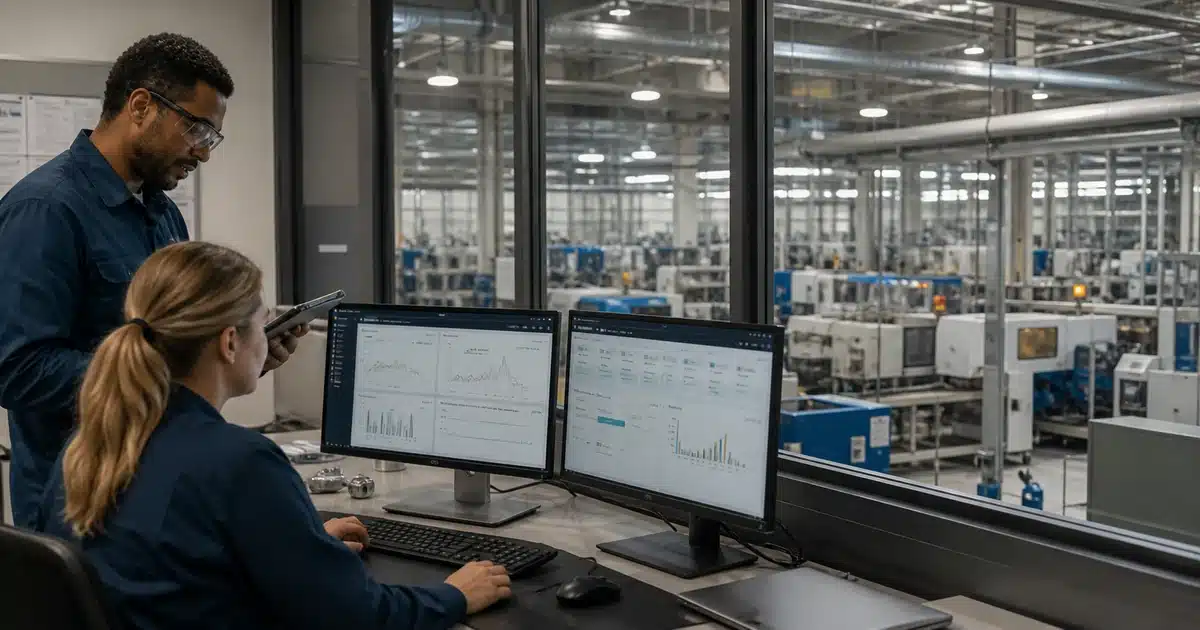
A manufacturing security review should reconcile people, devices, business applications, engineering systems, production assets, network paths, external providers, data flows, and recovery dependencies. The goal is not a noisy vulnerability list. It is evidence of which weakness could alter product information, expose customer data, interrupt production, weaken quality records, enable fraud, or prevent recovery.
Coordinate plant and operational testing with authorized engineering, operations, maintenance, safety, quality, and equipment owners. Use passive evidence or a controlled maintenance window when active testing could affect equipment. Do not scan, patch, isolate, restart, or change a production asset only because an office-IT tool recommends it.
ALLMSP supports Lawrenceville, Suwanee, Gwinnett County, Metro Atlanta, and Georgia businesses that need to audit engineering access, production dependencies, and recovery, with local assistance available when the work requires an on-site component.
Evidence to collect before changing manufacturing IT and production technology
The review produces an owned inventory of IT and operational technology, identities, data, connections, vulnerabilities, exceptions, operational consequences, compensating controls, recovery requirements, and retest evidence. Findings are ranked by safety, product, shipment, financial, customer, and recovery impact.
- Current business, engineering, production, quality, network, endpoint, remote-access, backup, monitoring, and provider inventories with accountable owners.
- Identity, group, privilege, service-account, token, key, certificate, session, recovery, and external-access exports from systems that support them.
- Engineering release, ERP, MES, QMS, warehouse, maintenance, interface, error, audit, and change records for representative products and orders.
- Plant and office diagrams, allowed communication, firewall and remote-access rules, wireless and cellular paths, vendor appliances, and unsupported assets.
- Restore results, manual-operation procedures, incident exercises, support tickets, alert handling, risk acceptance, customer requirements, and corrective actions.
Reconcile assets, identities, systems, data, ownership, and operational impact
Asset, owner, function, and consequence inventory
What to check: Match discovered assets to accountable business and operational owners. Capture function, product or process dependency, communication, version, support status, backup, safety or quality consequence, and approved disposition for every exception.
What to do next: Assign owners, investigate unknown assets safely, correct records, document dependencies, restrict unmanaged paths, and create an approved plan for unsupported or high-consequence systems.
Identity, privilege, service account, and recovery control
What to check: List people and nonhuman identities with owner, purpose, role, privilege, MFA, source, last use, secret age, recovery, interactive access, dependencies, expiration, monitoring, and backup coverage.
What to do next: Disable unexplained identities after preserving dependencies, remove interactive or broad access, separate privileged use, rotate exposed secrets, protect recovery, assign owners and dates, and test normal and denied paths.
Engineering and production-record integrity
What to check: Sample active and historical work for revision, approval, release authority, local and emailed copies, superseded status, downstream synchronization, audit history, backup, and unauthorized-change detection.
What to do next: Correct releases and permissions, quarantine uncontrolled copies, reconcile affected systems, preserve history, limit release authority, improve alerts and distribution, and retest at the point of use.
Test engineering, business, production, quality, device, and network controls
ERP, MES, QMS, warehouse, and interface control
What to check: Trace representative orders and changes across systems. Capture ownership, field mapping, timing, validation, failure alerts, unresolved errors, privileged access, duplicate entry, and reconciliation evidence.
What to do next: Correct data and ownership, reduce unnecessary interface privilege, repair alerting and retry logic, reconcile affected records, document manual fallback, and test both successful and failed transactions.
IT and operational-technology network boundaries
What to check: Compare documented and observed communication with approved operational need. Capture internet exposure, broad rules, unmanaged pathways, unused services, alternate routes, weak administration, change history, and monitoring coverage.
What to do next: Coordinate approved segmentation and rule changes, close unnecessary exposure, secure administration, separate guest and office use, preserve required operations, document exceptions, and verify allowed and denied traffic.
Endpoint, shared station, removable media, and remote support
What to check: Match devices to function and owner and collect health, encryption where appropriate, protection, patch, local administrator, software, remote tool, media history where available, shared-user design, last seen, support status, and exception.
What to do next: Recover or isolate unknown systems safely, enroll and protect supported endpoints, remove unnecessary privilege and tools, restrict media, improve shared use, schedule operational changes, and document compensating controls for fixed dependencies.
Supplier, customer, provider, and machine-builder access
What to check: Find unnamed, always-on, broad, dormant, alternate, and expired paths. Capture business need, system scope, source, approval, session behavior, monitoring, credential ownership, data exchanged, end date, and closure test.
What to do next: Create named controlled access, narrow scope and time, use company-controlled entry, rotate credentials, close alternate paths, monitor high-impact sessions, document emergency use, and independently verify revocation.
Review external paths, backup, monitoring, incidents, requirements, and change
Backup, restoration, and alternate operations
What to check: Review successful jobs and failures, access separation, coverage, copy protection, compatibility, sequence, recovery objectives, vendor responsibility, recent isolated restores, operational validation, and manual-operation records.
What to do next: Close coverage gaps, protect copies and credentials, preserve versions and licenses, correct procedures and priorities, create alternate workflows, run isolated restores, obtain operational validation, and record results.
Monitoring, incidents, response authority, and return to service
What to check: Trace selected alerts and incidents from detection through ownership, operational assessment, containment, communication, evidence, recovery, validation, and corrective action. Record missing logs, stale contacts, unsafe assumptions, and untested decisions.
What to do next: Restore useful visibility, correct alert ownership and escalation, define operational authority, update contacts and scenarios, preserve evidence, conduct a tabletop, and verify corrective actions without unsafe production testing.
Customer obligations, risk acceptance, and technology change
What to check: Sample obligations and changes and capture scope, qualified interpretation, accountable approval, implemented control, evidence, expiration, customer representation, operational review, and post-change verification.
What to do next: Correct unsupported claims, clarify scope with qualified owners, assign missing controls, expire stale exceptions, assess new technology before connection, preserve evidence, and schedule review.
Prioritize risk by production and recovery consequence
Give leaders an action register with the affected product, process, site, system, data, operational consequence, immediate containment, safety or production coordination, permanent correction, owner, maintenance window, due date, evidence, and retest. Keep observations separate from verified facts and do not present an untested compliance conclusion.
Priority 1: Active production, safety, integrity, or financial threat
Act immediately on active malicious access, unsafe remote control, suspected engineering or recipe tampering, exposed privileged or payment authority, uncontrolled customer data, or a condition that could affect people, product, or current production.
Priority 2: Recovery and shipment continuity risk
Urgently address untested restoration, unsupported critical dependencies, failed interfaces, missing alternate procedures, single-person administration, or an outage path that threatens committed production or shipment.
Priority 3: Excessive access and unmanaged exposure
Correct stale identities, broad network routes, dormant vendor paths, unknown assets, local privilege, uncontrolled copies, weak monitoring, and overdue exceptions through approved operational change.
Priority 4: Efficiency and maturity
Improve automation, reporting, asset data, role templates, alert quality, support procedures, and lifecycle governance after active exposure and continuity risk are controlled.
Official product documentation and ALLMSP resources
- NIST Cybersecurity Resources for Manufacturers.
- NIST Guide to Operational Technology Security.
- CISA industrial control system recommended practices.
- NIST Manufacturing Extension Partnership Industry 4.0 services.
- OSHA control of hazardous energy standard.
- Managed IT Services
- Cybersecurity
- Software Support
Frequently Asked Questions
What belongs in a manufacturing IT and OT asset inventory?
Review the following systems and records: Office and plant hardware, virtual and cloud systems, engineering workstations, servers, network devices, wireless, industrial assets, applications, databases, interfaces, data, locations, vendors, support status, and recovery tiers. Match discovered assets to accountable business and operational owners. Capture function, product or process dependency, communication, version, support status, backup, safety or quality consequence, and approved disposition for every exception. If evidence is incomplete or a control fails, assign owners, investigate unknown assets safely, correct records, document dependencies, restrict unmanaged paths, and create an approved plan for unsupported or high-consequence systems. Retest and document closure.
How should manufacturers review user and service-account access?
Review the following systems and records: Directory, cloud, email, engineering, ERP, MES, QMS, warehouse, maintenance, endpoint, network, backup, security, remote support, local accounts, embedded accounts, service identities, tokens, and recovery methods. List people and nonhuman identities with owner, purpose, role, privilege, MFA, source, last use, secret age, recovery, interactive access, dependencies, expiration, monitoring, and backup coverage. If evidence is incomplete or a control fails, disable unexplained identities after preserving dependencies, remove interactive or broad access, separate privileged use, rotate exposed secrets, protect recovery, assign owners and dates, and test normal and denied paths. Retest and document closure.
What evidence shows that manufacturing teams are using controlled engineering information?
Review the following systems and records: CAD, CAM, PLM, PDM, document control, part masters, drawings, bills of material, routings, work instructions, recipes where used, change control, effectivity, approvals, local copies, removable media, and production views. Sample active and historical work for revision, approval, release authority, local and emailed copies, superseded status, downstream synchronization, audit history, backup, and unauthorized-change detection. If evidence is incomplete or a control fails, correct releases and permissions, quarantine uncontrolled copies, reconcile affected systems, preserve history, limit release authority, improve alerts and distribution, and retest at the point of use. Retest and document closure.
How can a manufacturer audit critical system integrations?
Review the following systems and records: Masters, work orders, inventory, labor, quality, maintenance, shipping, integrations, middleware, scheduled jobs, service identities, error queues, retry logic, reconciliations, and manual fallback. Trace representative orders and changes across systems. Capture ownership, field mapping, timing, validation, failure alerts, unresolved errors, privileged access, duplicate entry, and reconciliation evidence. If evidence is incomplete or a control fails, correct data and ownership, reduce unnecessary interface privilege, repair alerting and retry logic, reconcile affected records, document manual fallback, and test both successful and failed transactions. Retest and document closure.
What should an IT and OT network-security review verify?
Review the following systems and records: Diagrams, zones, conduits, firewalls, switches, wireless, cellular, remote sites, internet exposure, office and guest access, engineering stations, historians, HMIs, controllers, gateways, physical systems, and monitoring. Compare documented and observed communication with approved operational need. Capture internet exposure, broad rules, unmanaged pathways, unused services, alternate routes, weak administration, change history, and monitoring coverage. If evidence is incomplete or a control fails, coordinate approved segmentation and rule changes, close unnecessary exposure, secure administration, separate guest and office use, preserve required operations, document exceptions, and verify allowed and denied traffic. Retest and document closure.
How should manufacturing endpoint reviews handle shared and production-linked systems?
Review the following systems and records: Office, engineering, quality, warehouse, maintenance, plant terminals, laptops, mobile devices, shared stations, endpoint and mobile management, protection, patching, local privilege, USB, application control, browser profiles, remote tools, loss, and disposal. Match devices to function and owner and collect health, encryption where appropriate, protection, patch, local administrator, software, remote tool, media history where available, shared-user design, last seen, support status, and exception. If evidence is incomplete or a control fails, recover or isolate unknown systems safely, enroll and protect supported endpoints, remove unnecessary privilege and tools, restrict media, improve shared use, schedule operational changes, and document compensating controls for fixed dependencies. Retest and document closure.
What should a manufacturer verify about supplier and vendor remote access?
Review the following systems and records: Portals, EDI, file transfer, collaboration, APIs, keys, certificates, VPN, jump systems, remote desktops, vendor appliances, modems, cellular links, support contracts, sponsors, approvals, schedules, sessions, and expiration. Find unnamed, always-on, broad, dormant, alternate, and expired paths. Capture business need, system scope, source, approval, session behavior, monitoring, credential ownership, data exchanged, end date, and closure test. If evidence is incomplete or a control fails, create named controlled access, narrow scope and time, use company-controlled entry, rotate credentials, close alternate paths, monitor high-impact sessions, document emergency use, and independently verify revocation. Retest and document closure.
How can manufacturers prove that backups will support production recovery?
Review the following systems and records: Identity, email, engineering vaults, business systems, databases, production and quality records, configurations, controller or HMI programs where supported, network devices, licenses, contacts, copies, immutability, retention, dependencies, restore procedures, and manual work. Review successful jobs and failures, access separation, coverage, copy protection, compatibility, sequence, recovery objectives, vendor responsibility, recent isolated restores, operational validation, and manual-operation records. If evidence is incomplete or a control fails, close coverage gaps, protect copies and credentials, preserve versions and licenses, correct procedures and priorities, create alternate workflows, run isolated restores, obtain operational validation, and record results. Retest and document closure.
What should a manufacturing incident-response review examine?
Review the following systems and records: Identity, endpoint, network, application, OT monitoring, log sources, alerts, triage, escalation, employee reporting, incident plans, safety and operational authority, evidence, communications, recovery, validation, and exercises. Trace selected alerts and incidents from detection through ownership, operational assessment, containment, communication, evidence, recovery, validation, and corrective action. Record missing logs, stale contacts, unsafe assumptions, and untested decisions. If evidence is incomplete or a control fails, restore useful visibility, correct alert ownership and escalation, define operational authority, update contacts and scenarios, preserve evidence, conduct a tabletop, and verify corrective actions without unsafe production testing. Retest and document closure.
How should manufacturers review technology against customer and regulatory requirements?
Review the following systems and records: Contracts, security questionnaires, quality terms, export or defense requirements where applicable, privacy, intellectual property, retention, provider commitments, risk register, exceptions, new equipment, automation, cloud, AI, acquisitions, and integration change. Sample obligations and changes and capture scope, qualified interpretation, accountable approval, implemented control, evidence, expiration, customer representation, operational review, and post-change verification. If evidence is incomplete or a control fails, correct unsupported claims, clarify scope with qualified owners, assign missing controls, expire stale exceptions, assess new technology before connection, preserve evidence, and schedule review. Retest and document closure.