Network cabling is a long-lived building asset that must support technology changing much faster than walls and ceilings. A pathway sized only for today’s desks may be unable to support tomorrow’s wireless access points, cameras, phones, displays, sensors, production equipment, or higher-power devices. An oversized specification without business reasoning can also waste money. Planning should connect applications, people, spaces, active equipment, power, bandwidth, resiliency, and lifecycle.
The plan should address more than cable quantity. Telecommunications rooms, racks, pathways, copper distances, fiber backbones, switch ports, PoE budgets, internet circuits, uninterruptible power, cooling, grounding, labeling, test requirements, spares, documentation, and change control work as one system. Facility and construction decisions can either protect this system or make every later expansion disruptive.
ALLMSP develops and implements cabling plans in house for organizations in Lawrenceville, Suwanee, Gwinnett County, Metro Atlanta, and across Georgia. We can assess current infrastructure, create device and outlet schedules, design copper and fiber paths, coordinate construction, plan active network capacity, install and certify links, document the result, and support ongoing moves and upgrades.
Plan cabling as a building system that supports business change
- Forecast demand: Model people, rooms, devices, bandwidth, PoE, wireless, phones, cameras, displays, systems, growth, and refresh cycles.
- Design topology: Locate telecommunications rooms, backbone fiber, horizontal copper, racks, panels, pathways, uplinks, and carrier entrances.
- Coordinate capacity: Align cable counts with switch ports, uplink speed, PoE budget, power, cooling, rack space, internet, and redundancy.
- Protect continuity: Identify critical services, diverse paths, spare links, backup power, alternate connectivity, monitoring, and recovery priorities.
- Set acceptance: Define materials, labels, field tests, active validation, deliverables, punch lists, warranties, and owner training.
- Manage lifecycle: Track moves, additions, changes, capacity, failures, standards, warranties, spares, technology shifts, and replacement triggers.
Forecast endpoint, bandwidth, power, and room requirements from business plans
Interview facilities, IT, security, audiovisual, operations, and department leaders about the next five to ten years where the building lifecycle warrants it. Record headcount, hybrid work, room use, workstation density, warehouses, production lines, public spaces, expansion areas, tenant changes, wireless design, voice, cameras, access control, point of sale, signage, conferencing, printers, building systems, edge computing, internet, and carrier needs. Mark which services are critical and which changes are uncertain.
Create an endpoint and outlet schedule by area. Include current count, growth, mounting, network speed, PoE requirement, environment, redundancy, user or system owner, and replacement horizon. Coordinate with the wireless predictive design and camera views rather than placing data outlets after devices are selected. Reserve suitable paths and ports for future equipment without installing arbitrary quantities everywhere. Treat spare capacity as a documented decision tied to expected change and access cost.
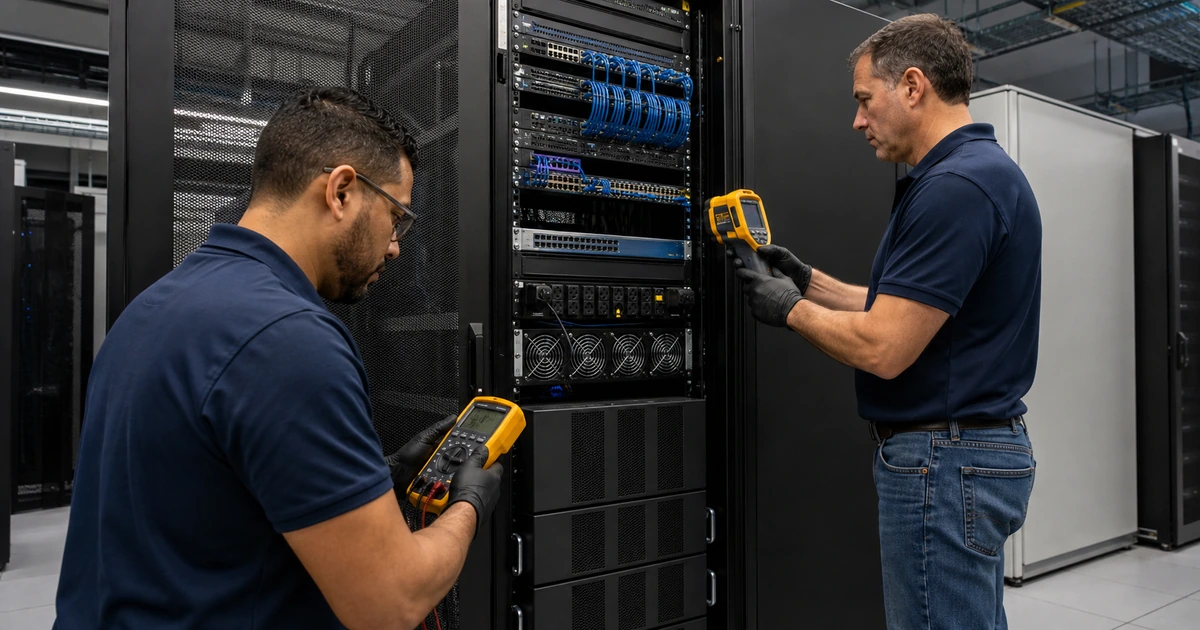
Estimate active infrastructure with the cabling. Count switch access ports, uplinks, stacking or aggregation, optics, PoE demand, growth headroom, rack units, patch panels, cable managers, power circuits, UPS runtime, heat, and management interfaces. Evaluate internet capacity, failover, firewall throughput, addressing, VLANs, and monitoring. A cable cannot deliver a promised application if the switch, uplink, power, or network design is undersized.
- Business forecast: Capture people, spaces, operations, devices, applications, locations, expansion, technology plans, and critical services.
- Endpoint schedule: List location, quantity, mounting, ports, bandwidth, PoE, environment, redundancy, owner, and lifecycle.
- Growth basis: State forecast, confidence, access cost, spare percentage or quantity, trigger, and area-specific reasoning.
- Active capacity: Calculate switch ports, PoE, uplinks, optics, racks, panels, management, power, UPS, cooling, and internet.
- Criticality: Identify safety, customer, revenue, production, communication, security, and recovery consequences of loss.
Capacity planning is credible when every spare link, port, watt, pathway, and rack position has a business or lifecycle reason.
Design copper, fiber, pathways, rooms, and resilience as one topology
Place telecommunications rooms to support approved copper distances, accessible pathways, secure operation, growth, and maintenance. Plan backbone fiber among floors, buildings, rooms, data centers, and carrier entrances according to distance, bandwidth, redundancy, environment, connector strategy, optics, and future upgrades. Protect fiber bend radius, polarity, cleaning, slack, and physical route. Consider diverse paths for services whose interruption would create a material business or safety impact.
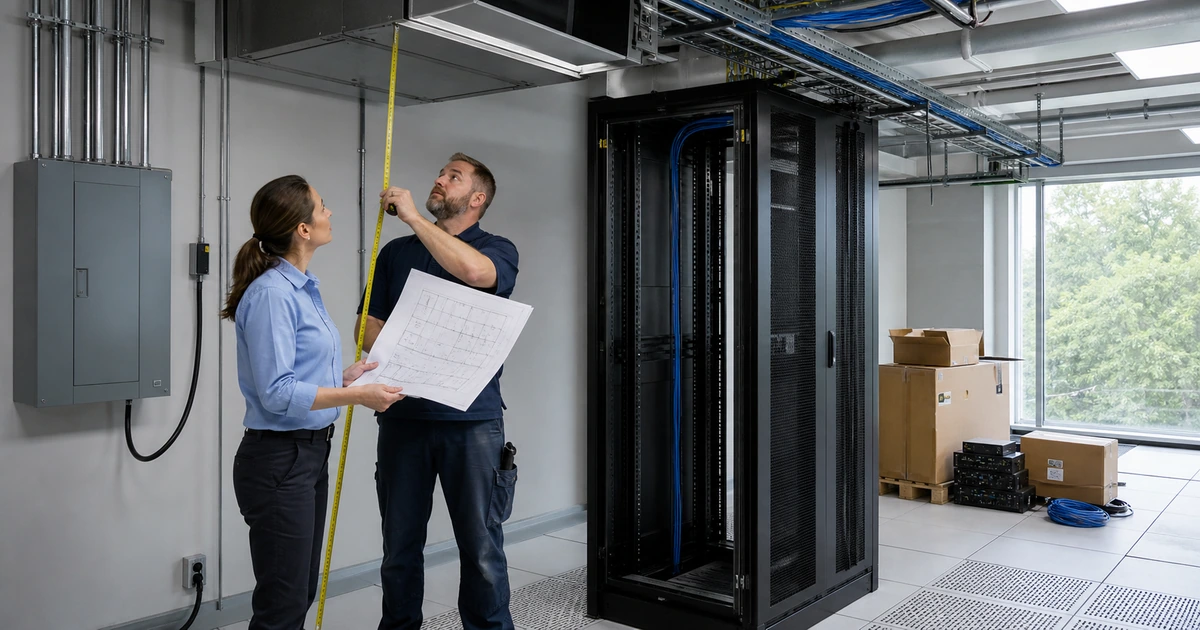
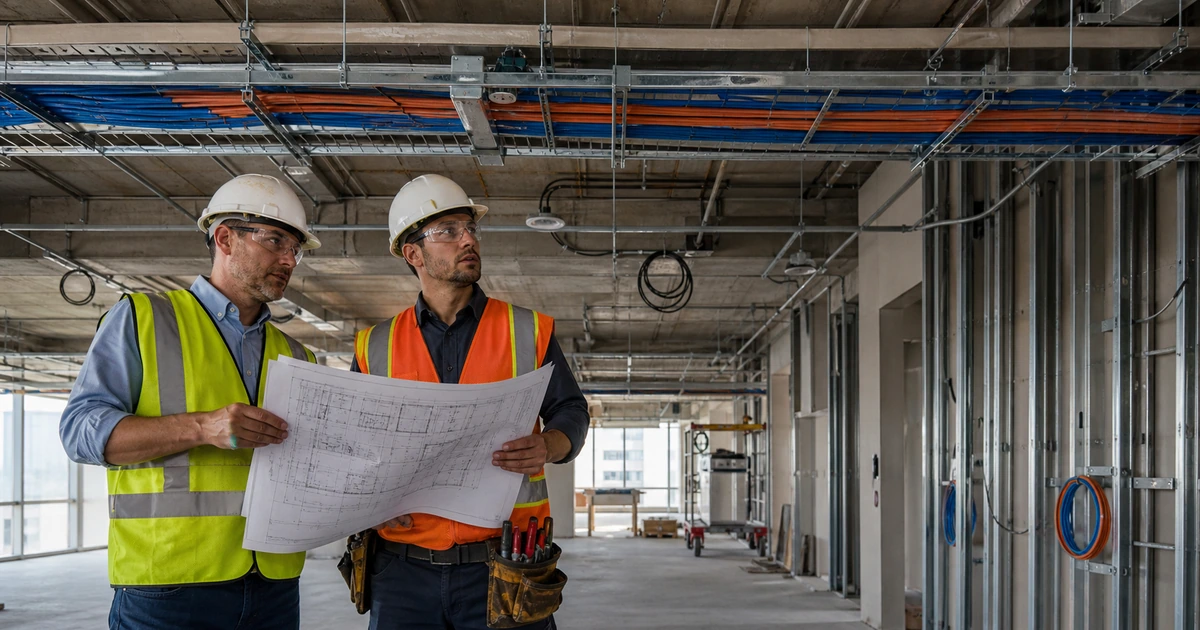
Coordinate horizontal pathways with architecture and building systems. Size trays, conduits, sleeves, supports, penetrations, and furniture feeds for installed cable and planned growth while maintaining access and required separation. Identify fire-rated walls and floors, wet or harsh areas, outdoor runs, lightning or grounding concerns, electromagnetic environments, and spaces that require special cable construction or protection. Engage the qualified professionals responsible for electrical, fire, structural, code, and safety decisions.
Evaluate Power over Ethernet end to end. Confirm device standards, maximum demand, switch capability, power supply, redundancy, UPS runtime, cable and connector suitability, bundle and ambient conditions, pathway design, and monitoring. IEEE 802.3 develops Ethernet and PoE standards, including four-pair power work. Do not assume the marketing wattage of a switch equals the available budget for every port under all conditions. Preserve headroom and document priority when backup power or switch capacity is limited.
- Room topology: Locate carrier, main, intermediate, floor, building, and edge spaces around distance, access, growth, and criticality.
- Backbone design: Define fiber type, strands, routes, diversity, connectors, panels, optics, bandwidth, testing, spares, and upgrade path.
- Horizontal path: Coordinate trays, conduit, supports, sleeves, furniture, ceilings, separation, penetrations, fill, and future access.
- PoE model: Calculate device demand, switch budget, power supplies, redundancy, UPS, cabling, bundles, temperature, priority, and monitoring.
- Continuity path: Plan alternate circuits, uplinks, routes, switches, power, internet, equipment, and operating procedures where justified.
The physical topology should support the intended applications and give the organization practical options when equipment, occupancy, or service requirements change.
Build the budget, acceptance package, and lifecycle operating plan
Estimate complete project cost. Include survey, design, permits or coordination, pathways, cable, fiber, connectors, racks, panels, management, grounding work, firestopping, equipment, optics, UPS, labor, lifts, after-hours work, testing, documentation, demolition, patching, temporary service, contingency, and future phases. Distinguish construction scope from IT scope and assign each interface. Compare alternatives by lifecycle, disruption, capacity, support, and upgrade cost rather than cable price alone.
Define stage gates for design, rough-in, above-ceiling inspection, cable installation, termination, labeling, testing, active equipment, business validation, punch list, and turnover. Require approved changes to update drawings, schedules, materials, counts, costs, and dates. Sample workmanship early so a repeated installation problem is found before hundreds of links are complete. Protect test and label identifiers from field improvisation that makes the final data difficult to reconcile.
Operate the cabling system after handoff. Assign ownership for records, telecommunications-room access, moves and changes, patching, spare materials, monitoring, cleaning, environmental review, warranty claims, damage response, and periodic capacity planning. Update switch ports and documentation with each move. Track failures by location, cable, component, installer, cause, and correction. Review building changes before they block pathways or remove access. Reforecast capacity when staffing, wireless, cameras, phones, production, or facility plans change.
- Lifecycle budget: Include design, pathway, materials, labor, testing, equipment, power, documentation, disruption, contingency, and future change.
- Stage gate: Approve design, coordination, rough-in, workmanship, labels, tests, active services, punch items, and turnover evidence.
- Change control: Update reason, drawing, outlet schedule, material, cost, timing, dependency, acceptance, and final record.
- Operations owner: Assign access, patching, records, moves, spares, inspections, warranty, failure response, and capacity review.
- Refresh trigger: Revisit design after growth, new applications, higher PoE, bandwidth limits, failures, remodels, or support changes.
A cabling plan delivers long-term value when the budget includes the whole system and the turnover package becomes the starting point for disciplined operations.
Network cabling planning and implementation from ALLMSP
ALLMSP can assess existing infrastructure, forecast endpoints, create outlet schedules, design copper and fiber topology, coordinate pathways, model switch and PoE capacity, plan continuity, budget phases, install and test cabling, configure active equipment, and maintain documentation through one in-house team.
We support offices, retail, healthcare, legal, education, industrial, nonprofit, hospitality, and other environments in Lawrenceville, Suwanee, Gwinnett County, Metro Atlanta, and across Georgia. Each plan reflects the facility, applications, operating hours, risk, growth, and service priorities involved.
- Forecast: Connect business growth, spaces, devices, bandwidth, power, resilience, and lifecycle to capacity.
- Engineer: Design rooms, pathways, copper, fiber, racks, switches, uplinks, PoE, power, testing, and documentation.
- Deliver: Coordinate construction, install and certify links, configure services, validate workflows, and operate the result.
Official cabling, administration, Ethernet, and PoE references
Use current standards and qualified design judgment. Confirm exact editions, applicable codes, manufacturer requirements, testing limits, and facility conditions before selecting materials or approving construction.
- TIA-568 commercial cabling standards. Provides the commercial-building cabling standards family for structured telecommunications infrastructure.
- TIA standards announcements. Tracks current publication, ballot, revision, and reaffirmation activity for telecommunications standards.
- TIA infrastructure administration activity. Covers current development activity for the standard governing telecommunications infrastructure administration.
- IEEE 802.3 Ethernet Working Group. Maintains Ethernet standards work spanning network speeds, media, and power delivery.
- IEEE four-pair Power over Ethernet task force. Documents completion of the standards project that produced IEEE Std 802.3bt-2018.
Network cabling planning FAQs
How far ahead should a business plan network cabling?
Plan around the building and renovation horizon, likely device and staffing growth, wireless and security projects, application changes, and the cost of reopening finished spaces.
What should be included in a cabling capacity forecast?
Include endpoints, rooms, growth, wireless, phones, cameras, displays, building systems, bandwidth, PoE, switch ports, uplinks, fiber, racks, power, cooling, internet, and spares.
Does every workspace still need wired network connections?
Requirements vary. Consider computers, phones, docks, printers, specialized devices, reliability, security, wireless density, power, room use, and future flexibility.
Why are telecommunications room locations important?
They affect copper distances, pathway access, fiber topology, maintenance, security, power, cooling, rack capacity, resilience, and future expansion.
How much spare cabling capacity should be installed?
Use a documented forecast based on area growth, access cost, likely devices, pathway limits, and change frequency. One percentage does not fit every facility.
What must be planned for Power over Ethernet?
Evaluate device demand, switch and power-supply budget, redundancy, UPS runtime, cable and connectors, bundles, temperature, pathways, priorities, monitoring, and growth.
When does a network need redundant cabling paths?
Consider diversity when one pathway or room failure could create unacceptable safety, customer, revenue, production, communication, security, or recovery impact.
What belongs in a cabling project budget?
Include design, coordination, pathways, materials, racks, equipment, power, labor, lifts, testing, documentation, demolition, temporary service, disruption, contingency, and lifecycle support.
Can ALLMSP plan both passive cabling and active networking?
Yes. ALLMSP can coordinate cabling, fiber, racks, switches, uplinks, VLANs, PoE, wireless, internet, UPS, monitoring, testing, and documentation in house.
Where does ALLMSP provide cabling planning?
ALLMSP plans and delivers network cabling in Lawrenceville, Suwanee, Gwinnett County, Metro Atlanta, and facilities throughout Georgia.