An older cable plant is not automatically obsolete, and a newer one is not automatically ready for the next project. Businesses often have a mixture of documented permanent links, abandoned cable, unknown patching, several component categories, crowded racks, unsupported switches, limited PoE, inconsistent fiber, and office changes that never reached the drawings. A useful audit determines what the infrastructure can support, where it is failing, and which improvements deliver the greatest operational value.
The assessment should connect physical evidence with upcoming demand. New wireless access points may require faster uplinks and more PoE. Cameras can add continuous traffic and storage dependencies. VoIP may expose power, VLAN, QoS, and internet weaknesses. A renovation can change pathways, room access, environmental conditions, and user density. The upgrade plan should address those real services instead of recommending replacement based only on cable age or color.
ALLMSP audits and modernizes structured cabling for businesses in Lawrenceville, Suwanee, Gwinnett County, Metro Atlanta, and across Georgia. Our in-house team evaluates pathways, rooms, copper, fiber, labels, test evidence, racks, switching, PoE, Wi-Fi, voice, monitoring, and future projects in one prioritized roadmap.
Measure the installed plant against current use and planned demand
- Build the inventory: Map rooms, racks, panels, pathways, copper, fiber, outlets, switches, powered devices, labels, drawings, tests, and support state.
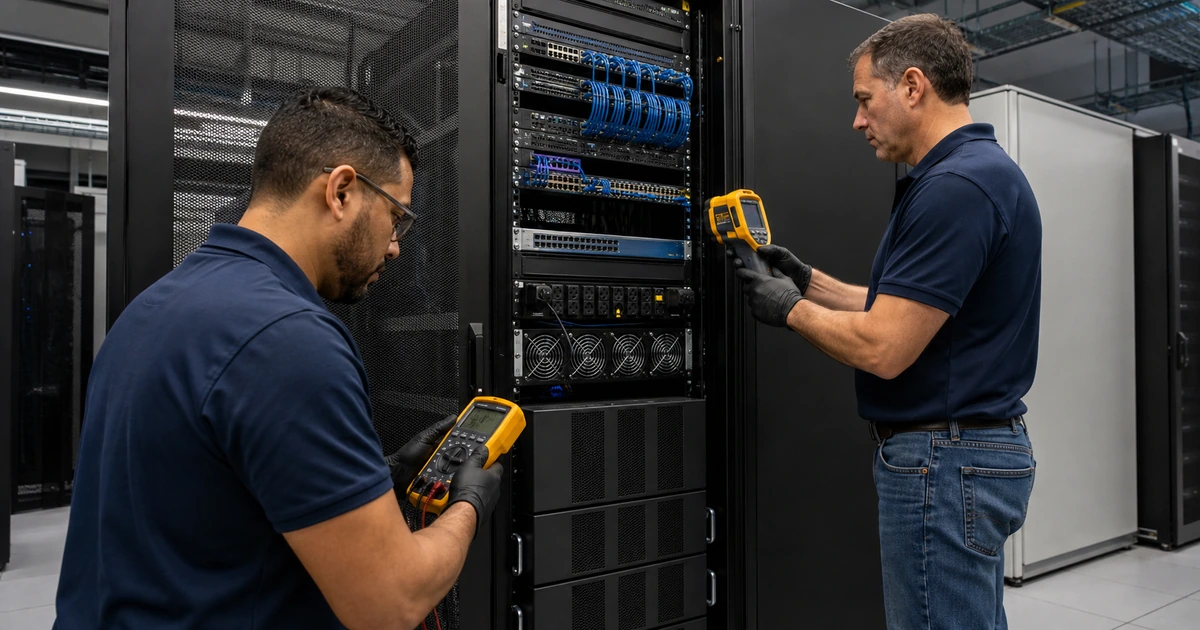
- Inspect condition: Review workmanship, damage, environment, pathway fill, rack access, patching, power, cooling, grounding, firestopping, and abandoned materials.
- Test risk areas: Use existing reports, targeted certification, fiber inspection and testing, switch evidence, and application checks to establish capability.
- Model demand: Forecast users, Wi-Fi, VoIP, cameras, displays, building systems, faster uplinks, PoE, fiber, remote operations, and site growth.
- Prioritize work: Separate urgent failures, capacity constraints, security and support gaps, renovation dependencies, and optional improvements.
- Govern changes: Create naming, testing, documentation, spare-capacity, patching, acceptance, and lifecycle procedures for future work.
Inventory telecommunications rooms, pathways, links, labels, and evidence
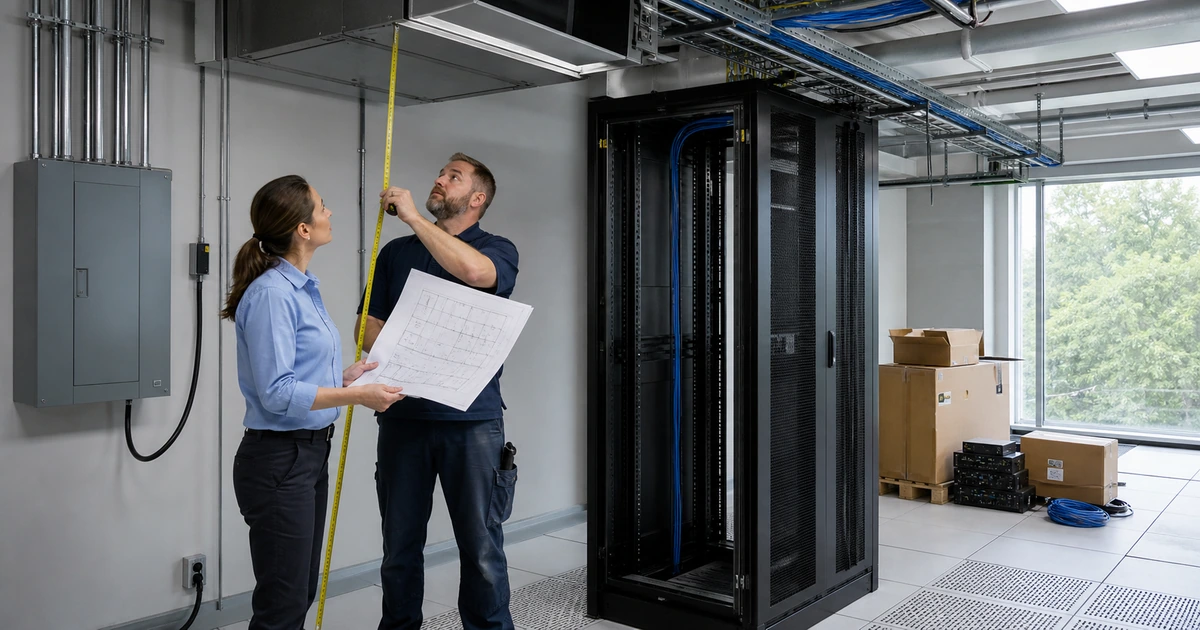
Start with service entrances, equipment rooms, telecommunications rooms, cabinets, racks, patch panels, fiber shelves, switches, UPS units, grounding, cooling, and physical access. Record the serving areas, backbone paths, internet and carrier handoffs, panel capacity, switch-port use, PoE availability, uplink type, environmental condition, support dates, and obvious single points of failure. Photograph identifiers and condition without exposing credentials or sensitive network details in the general report.
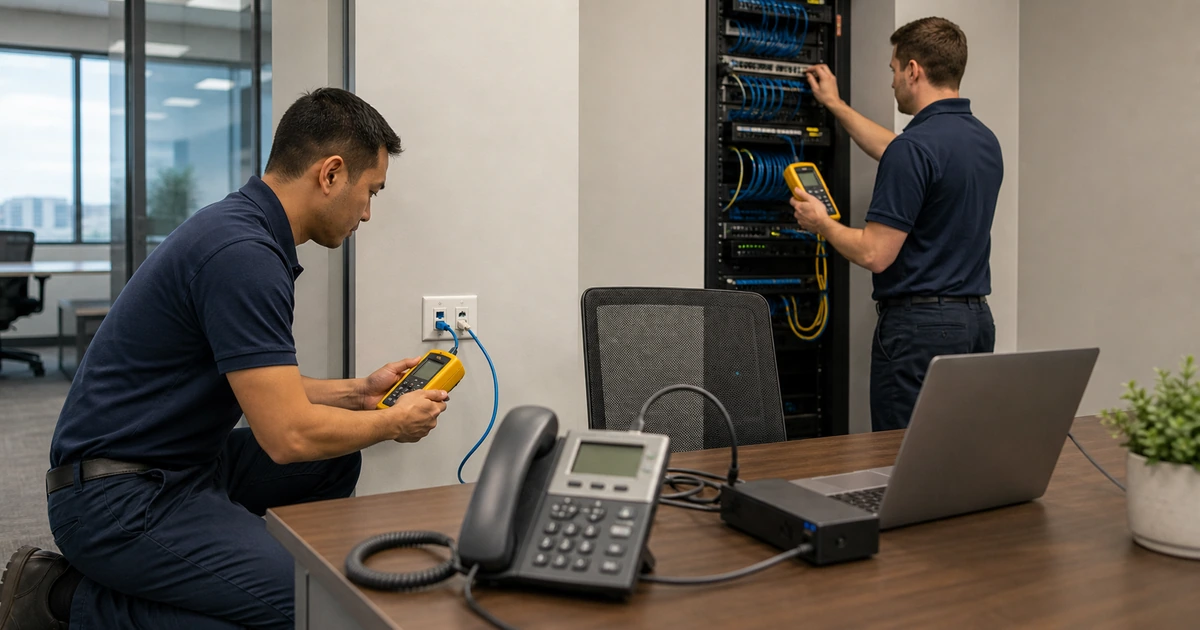
Reconcile floor plans and outlet labels with the panels and active switch ports. Sample work areas across floors, installation eras, media types, high-incident locations, and critical services. Trace undocumented links and distinguish active, spare, disconnected, and abandoned infrastructure carefully. Review available certification results, warranties, installer records, move tickets, outage history, network monitoring, and device inventory. Missing evidence should be recorded as an unknown, not assumed to be a failure or a pass.
Inspect pathways and workmanship for support, congestion, fill, sharp bends, crushing, moisture, outdoor transition, interference, damaged firestopping, blocked service access, and repeated additions outside the intended route. In racks, look for obscured labels, excessive cord length, strained ports, unsupported devices, daisy-chained power, failed fans, expired UPS batteries, and patching that prevents safe service. TIA’s standards work treats pathways, spaces, administration, testing, performance, bonding, and grounding as parts of the infrastructure system, which is why a cable-only inventory is incomplete.
- Space register: Record room purpose, access, environment, rack, panels, switches, power, UPS, cooling, grounding, carriers, and capacity.
- Link register: Map outlets, copper, fiber, panels, ports, devices, status, labels, tests, warranties, and service ownership.
- Condition evidence: Photograph and classify damage, workmanship, pathway, patching, power, environment, access, and documentation gaps.
- Incident history: Join cable and port evidence with help-desk tickets, outages, moves, speed changes, PoE faults, and recurring locations.
- Known unknowns: List unverified links, missing records, inaccessible routes, unsupported components, and assumptions that require testing.
The baseline is credible when a reviewer can trace each critical service through known spaces and links and can distinguish measured facts from undocumented assumptions.
Assess readiness for PoE, faster Wi-Fi, voice, cameras, and fiber growth
Translate upcoming projects into physical requirements. Record the planned access-point model, uplink capability, radios, maximum PoE demand, mounting location, switch and controller support, and expected client density. Do the same for phones, cameras, access control, displays, sensors, and other powered systems. Compare every device with the serving switch port, total PoE budget, power supplies, UPS, uplink, cooling, and cable evidence. A switch with enough port count may still lack the power or interface capability required by the new endpoint.
For installed copper that will support higher speed or power, select representative and risk-based links for appropriate testing. Consider installation category, component match, length, connectors, pathway condition, bundle environment, prior failures, and required application. Fluke Networks highlights resistance and resistance unbalance for four-pair PoE, while TIA publishes cabling and field-test requirements for premises networks. Use qualified test results and the specific equipment requirements to decide whether links can remain, need retermination, require targeted replacement, or should be rebuilt as part of a larger pathway project.
Review fiber backbones for type, strand count, connector, polarity, loss evidence, cleanliness, length, patching, transceivers, route diversity, spare strands, and growth. A switch upgrade can expose an undocumented or contaminated fiber path just as easily as an old copper link. Model peak traffic and failure behavior between rooms and buildings, including business internet, cloud applications, voice, cameras, wireless, backup, and management. Plan capacity and redundancy where operational impact justifies it rather than treating the backbone as an invisible assumption.
- Endpoint demand: List interface speed, PoE standard and watts, port type, mounting, VLAN, bandwidth, security, and support needs.
- Copper readiness: Evaluate category, components, workmanship, distance, results, resistance, errors, environment, and intended application.
- Fiber readiness: Document media, strands, connectors, polarity, cleanliness, loss, transceivers, routes, spares, and diversity.
- Switch readiness: Compare ports, multigigabit support, PoE budget, uplinks, power, UPS, cooling, licensing, monitoring, and support life.
- Failure capacity: Model the effect of a lost switch, power source, uplink, carrier, room, or backbone path on critical services.
Readiness is established when the specific endpoint, link, switch, power, and backbone path have enough measured capability and reserve for the intended service.
Build a phased upgrade plan and keep future moves supportable
Classify findings by active failure, safety or property concern, critical capacity, unsupported equipment, security exposure, documentation gap, renovation dependency, business growth, and convenience. Correct dead or unstable links, hazardous conditions, failed protection, inaccessible critical equipment, and capacity limits affecting active service first. Coordinate pathway, ceiling, electrical, firestopping, construction, and furniture work so the business does not pay twice to reach the same location.
Choose targeted remediation when most of the plant is sound. Reterminate failed connectors, replace damaged runs, clean and correct fiber, add panels or pathway capacity, reorganize patching, upgrade selected switches, or install a new backbone where evidence supports it. Use a broader replacement when materials, topology, environment, supportability, test performance, or renovation scope make piecemeal work unreliable. Define acceptance criteria, outage windows, temporary service, rollback, and business-owner signoff for each phase.
Prevent the rebuilt environment from drifting back into uncertainty. Establish naming, labeling, test limits, record formats, approved components, patch-cord standards, rack layouts, spare use, port assignments, change tickets, contractor handoff, and as-built update responsibility. Audit important rooms and capacity on a schedule tied to growth and technology projects. A well-governed cable plant turns future moves and additions into known changes rather than emergency tracing exercises.
- Immediate correction: Address active outages, unstable links, damaged pathways, unsafe conditions, and exhausted power or capacity.
- Project alignment: Combine cabling work with Wi-Fi, phone, camera, switch, office move, construction, and carrier schedules.
- Phased scope: Define links, rooms, backbones, switches, outages, temporary service, tests, documents, cost, and owner acceptance.
- Change standard: Require approved materials, identifiers, testing, records, photos, patching, rollback, and final as-built updates.
- Recurring review: Track utilization, PoE, incidents, support dates, room condition, spare capacity, documentation, and upcoming demand.
The roadmap is useful when leaders can see what must change now, what can remain with evidence, what belongs to a future project, and how each phase will be accepted without losing supportability.
Structured cabling audits and modernization from ALLMSP
ALLMSP can inventory rooms, pathways, copper, fiber, racks, panels, switches, PoE, endpoints, labels, tests, and documentation. We combine physical inspection, targeted measurement, network evidence, incident history, and upcoming projects into a prioritized upgrade plan.
Our in-house team can then repair or replace links, build backbones, reorganize racks, upgrade switches, expand PoE, prepare Wi-Fi and VoIP, test the completed work, update as-builts, and support continuing changes. The business receives one roadmap connecting infrastructure spending to operational outcomes.
- Audit: Inventory spaces and links, inspect condition, review tests and incidents, and identify missing evidence.
- Plan: Model application, speed, PoE, fiber, switch, power, growth, outage, and renovation requirements.
- Modernize: Complete prioritized repairs and upgrades, certify the result, document the plant, and govern future changes.
Structured cabling audit and planning references
Assess the installed infrastructure against the business’s actual applications, current standards, supported equipment, and measured link condition before deciding what to retain or replace.
- TIA TR-42 standards overview. Maps the standards areas covering commercial premises cabling, pathways, spaces, administration, copper, fiber, bonding, and grounding.
- TIA premises infrastructure committee. Describes generic topology, architecture, design, installation, testing, and performance for voice, data, video, and other applications.
- TIA telecommunications administration update. Shows the continued standards work around identifiers and administration for telecommunications infrastructure.
- TIA field-terminatable plug overview. Explains updated component and test considerations for devices such as access points, cameras, displays, and building systems.
- Fluke Networks four-pair PoE cabling guide. Covers device compatibility, cable certification, resistance, power delivery, and troubleshooting for powered endpoints.
Structured cabling audit and upgrade FAQs
Does old network cabling always need replacement?
No. Condition, components, topology, test performance, application requirements, environment, documentation, and supportability matter more than age alone. Retain links when evidence shows they meet the intended need.
What should a structured cabling audit include?
Review rooms, pathways, copper, fiber, racks, panels, patching, labels, tests, switches, PoE, power, cooling, grounding, firestopping, endpoints, incidents, documentation, support dates, and future demand.
Can existing cabling support new Wi-Fi access points?
It depends on the access point’s interface and PoE needs, the switch, uplinks, installed link performance, component category, distance, environment, and power budget. Test and model the exact design.
How is PoE readiness audited?
Inventory powered devices, peak watts, port standards, total switch budgets, power supplies, UPS, link condition, connectors, resistance considerations, bundle environment, logs, and planned growth.
When should a business add fiber?
Fiber commonly fits backbones, longer distances, higher bandwidth, electrical isolation, building-to-building links, and growth needs. Select media, strands, transceivers, routes, protection, and tests for the actual application.
Should abandoned cable be removed during an audit?
Identify ownership and status first, then follow the property plan and applicable requirements. Removal can improve supportability and pathway capacity, but uncontrolled disconnection can interrupt unknown service.
What is a risk-based cable testing sample?
It selects links across critical services, installation eras, media types, rooms, pathways, incident locations, lengths, PoE loads, and workmanship conditions to determine whether findings are isolated or systemic.
How should cabling upgrades be prioritized?
Start with active failures, safety and property concerns, high-impact capacity, unsupported critical components, security exposure, and scheduled construction. Then address documentation, growth, and convenience improvements.
Can ALLMSP audit and complete the upgrades in house?
Yes. ALLMSP can inspect, test, design, install, terminate, certify, label, document, configure switches and PoE, prepare Wi-Fi and VoIP, and support the finished environment with its in-house team.
Where does ALLMSP perform cabling audits in Georgia?
ALLMSP performs structured cabling assessments in Lawrenceville, Suwanee, Gwinnett County, Metro Atlanta, and other Georgia communities depending on property access and scope.