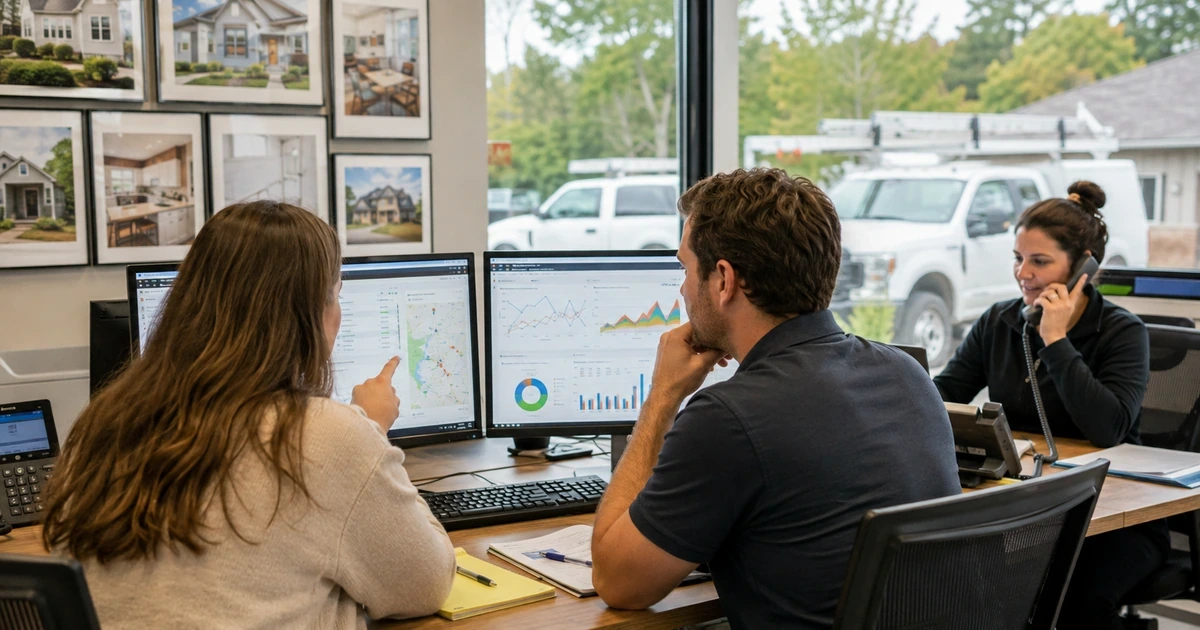
Construction marketing should help the right owner, property manager, developer, general contractor, architect, facility leader, or homeowner understand a real service, project fit, coverage area, proof, qualification process, and next step. Measurement should continue from search or referral through response, site visit, estimate, proposal, and awarded work.
Confirm current licensing, trade, business, insurance, bonding, owner-permission, contract, platform, and advertising requirements that apply to the contractor and each service. Do not imply licenses, specialties, warranties, locations, project rights, government approval, or performance that the firm cannot support. Use responsible leadership review for material public claims.
What a dependable construction and contractor marketing setup should accomplish
A dependable system keeps accounts company owned, presents accurate services and locations, uses approved project photos and case facts, protects customer information, measures calls and forms correctly, standardizes qualification and estimates, and reports awarded work by service, location, and source.
- Every service, trade, license, credential, coverage area, project type, team statement, warranty, financing, bonding, and claim has current support.
- Project photos, videos, names, locations, logos, values, testimonials, and results have documented rights and accurate context.
- Domain, website, Business Profile, directories, reviews, social, Ads, analytics, calls, forms, CRM, content, billing, and recovery remain company controlled.
- Calls and forms collect safe qualification data, route by service and geography, and move plans or sensitive records into an approved process.
- Reporting connects visibility, valid inquiry, site visit, estimate, proposal, award, project value band, and capacity.
Define services, project fit, credentials, coverage, claims, and ownership
1. Define real services, ideal projects, geography, and qualification
Separate new construction, renovation, service, maintenance, emergency, specialty trade, residential, commercial, and public work that the firm actually performs. Record ideal and unsupported project scope, location, timing, budget information that can be requested, prerequisites, and who decides fit.
Where to work: Service and trade list, license and business structure, project types, minimum and maximum scope, owner and customer types, service radius, schedule, capacity, estimate process, exclusions, and responsible reviewer
Verification: Marketing, dispatch or intake, estimating, and operations describe the same service, project fit, geography, qualification, and next step without unsupported promises.
2. Keep marketing accounts and assets company owned
Use company-controlled owners, named users, MFA, separate administration, backup recovery, documented billing, and provider access that can be removed. Preserve source photos, permissions, content versions, contacts, tracking history, and exports after employee or agency changes.
Where to work: Domain, DNS, website, hosting, Business Profile, Search Console, GA4, Tag Manager, Ads, call tracking, forms, CRM, directories, reviews, social, photo library, content, billing, and recovery
Verification: A backup owner can recover, export, review history, change billing, and remove a provider from every material marketing platform and asset library.
3. Create useful service and location pages
Give each page a distinct customer task. Explain what the service includes, project fit, preparation, process, site requirements, common constraints, decision factors, responsible credentials, realistic geography, proof, and next step. Use Lawrenceville, Suwanee, Gwinnett, Atlanta, and Georgia only when accurate and useful.
Where to work: Website architecture, service, project-type, industry, location, emergency, maintenance, about, team, process, FAQs, licensing, contact, privacy, and internal links
Verification: A customer can identify the correct service and contact path without reading duplicate city pages, vague claims, or an unsupported office location.
Build useful pages, local profiles, project proof, campaigns, and inquiry paths
1. Build an approved project photo and case-study workflow
Confirm who owns the image and whether the firm may publish the property, customer, location, people, plans, signage, safety details, subcontractor work, values, and results. Use accurate captions and avoid exposing security, access, or confidential project information.
Where to work: Contract and owner permission, property and privacy review, site and person release where needed, project facts, dates, scope, team, before and after images, captions, results, logo use, file naming, approval, and archive
Verification: Every sampled gallery and case study has traceable source files, permission, factual review, responsible approval, useful alt text, and a correction or removal path.
2. Configure Google Business Profile and directories accurately
Represent the contractor as it operates in the real world. Use eligible locations and accurate service areas, precise categories, a monitored phone route, a relevant site link, current hours, and an approved review-response process. Do not stuff city or service keywords into the business name.
Where to work: Profile ownership, eligibility, name, primary and additional categories, address or service area, hours, phone, website, services, photos, questions, reviews, edits, duplicates, and major directories
Verification: The profile matches the website and intake, company owners control it, calls reach the intended team, and sample review responses reveal no private project or customer details.
3. Structure paid search around service fit and response capacity
Separate material services and geographies, align every ad with an accurate page, exclude jobs, DIY research, unsupported work, suppliers, existing-customer support, and distant demand, and run when someone can respond. Use call and form outcomes rather than treating every click as a lead.
Where to work: Google Ads campaigns, service themes, locations, schedules, devices, ads, assets, landing pages, negative keywords, call settings, conversion goals, intake coverage, estimate capacity, and budget
Verification: Each campaign has a real service, supported geography, reviewed claim, useful page, tested call or form, negative strategy, response owner, estimate capacity, and budget decision.
4. Design calls and forms for useful qualification
Collect only what is needed to route and qualify, such as service need, property or project location, general scope, timing, contact preference, and safe project context. Direct plans, contracts, insurance documents, access codes, and sensitive property details into an approved secure process.
Where to work: Phone routing, call tracking, forms, chat, scheduling, notifications, CRM, spam controls, after-hours coverage, privacy language, file upload, plan and photo transfer, retention, and analytics
Verification: Valid, unsupported, emergency, after-hours, spam, and sensitive-file test inquiries follow the documented route and no private details enter analytics or unrelated vendors.
Connect analytics, qualification, estimating, awards, and capacity
1. Configure GA4 and Tag Manager around completed actions
Measure completed contact, connected call, estimate request, scheduled site visit, and approved next steps. Trigger on confirmed success rather than button clicks. Keep names, phone numbers, email addresses, property addresses, access information, plans, and free text out of analytics.
Where to work: GA4, Tag Manager, call tracking, form success, chat, scheduler, estimate request, approved downloads, internal traffic, cross-domain paths, event names, parameters, key events, consent decisions, and debugging
Verification: A debug test creates one documented event with approved service and general location context, no duplicate, and no customer or property information in URLs or parameters.
2. Connect source to qualification, estimate, proposal, and award
Define consistent stages and decline reasons. Use non-sensitive identifiers to reconcile marketing and operations. Return only approved outcome categories to advertising platforms and keep detailed property, financial, contract, and customer information in the operational system.
Where to work: CRM or lead system, calls, forms, source, service, location, scope, timing, fit, response, site visit, estimate, proposal, award, decline, value band, existing customer, duplicate, and spam
Verification: A labeled test inquiry can be followed from source through award or decline without duplicate counting or exposure of customer and project details to advertising tools.
3. Build a review cadence tied to operations and capacity
Assign weekly lead and campaign review, monthly local and content review, quarterly account and claim review, and immediate correction after license, service, team, location, project, phone, schedule, or capacity changes. Report lead quality and operational follow-through together.
Where to work: Search Console, Business Profile, Ads, GA4, calls, forms, CRM, response time, site visits, estimates, proposals, awards, project value bands, margin categories where approved, schedule, capacity, content review, and account access
Verification: A monthly meeting produces decisions with evidence, owner, due date, and later result rather than a list of impressions and total form fills.
Test public accuracy and every prospective-customer journey
Test paid, organic, local, referral, social, and direct journeys on mobile and desktop. Include a qualified project, unsupported service, out-of-area request, emergency, existing customer, job applicant, spam attempt, plan upload, after-hours call, site visit, estimate, proposal, award, and provider departure.
- Service and claim review: Trace service, license, project, warranty, financing, bonding, team, and location statements to current support. Pass: Evidence, responsible reviewer, approval date, and correction path are available.
- Project photo rights: Sample gallery, case-study, before-and-after, team, property, and customer images. Pass: Source, permission, accurate context, alt text, approval, and removal path are documented.
- Local profile journey: Find the contractor through Business Profile on mobile, call, visit the page, and inspect ownership. Pass: The profile accurately states services and service areas, calls reach qualified intake, and company owners retain control of every update.
- Valid and unsupported lead: Submit target, out-of-area, unsupported, emergency, existing-customer, and spam scenarios. Pass: Each follows the correct route and status without leaking private information.
- Attribution to award: Follow a tagged source through call or form, qualification, site visit, estimate, proposal, and award. Pass: Source and outcome reconcile without duplicate conversions or private project data.
- Content correction: Change a license, service, location, team member, project permission, phone, or schedule. Pass: Affected assets are found, reviewed, corrected, linked, and archived.
Official guidance and ALLMSP resources
- Georgia State Licensing Board for Residential and General Contractors.
- Georgia general contractor licensing rules.
- Google Business Profile representation guidelines.
- FTC endorsement and testimonial guidance.
- Google Analytics event documentation.
- Managed Marketing Services
- Managed IT Services
- Cybersecurity
Frequently Asked Questions
What should contractors define before creating marketing pages and campaigns?
Relevant systems and records include Service and trade list, license and business structure, project types, minimum and maximum scope, owner and customer types, service radius, schedule, capacity, estimate process, exclusions, and responsible reviewer. Separate new construction, renovation, service, maintenance, emergency, specialty trade, residential, commercial, and public work that the firm actually performs. Record ideal and unsupported project scope, location, timing, budget information that can be requested, prerequisites, and who decides fit. Verify completion by confirming that marketing, dispatch or intake, estimating, and operations describe the same service, project fit, geography, qualification, and next step without unsupported promises.
Who should own a contractor's website, Google accounts, photos, and lead data?
Relevant systems and records include Domain, DNS, website, hosting, Business Profile, Search Console, GA4, Tag Manager, Ads, call tracking, forms, CRM, directories, reviews, social, photo library, content, billing, and recovery. Use company-controlled owners, named users, MFA, separate administration, backup recovery, documented billing, and provider access that can be removed. Preserve source photos, permissions, content versions, contacts, tracking history, and exports after employee or agency changes. Verify completion by confirming that a backup owner can recover, export, review history, change billing, and remove a provider from every material marketing platform and asset library.
What makes a construction service page useful for local SEO?
Relevant systems and records include Website architecture, service, project-type, industry, location, emergency, maintenance, about, team, process, FAQs, licensing, contact, privacy, and internal links. Give each page a distinct customer task. Explain what the service includes, project fit, preparation, process, site requirements, common constraints, decision factors, responsible credentials, realistic geography, proof, and next step. Use Lawrenceville, Suwanee, Gwinnett, Atlanta, and Georgia only when accurate and useful. Verify completion by confirming that a customer can identify the correct service and contact path without reading duplicate city pages, vague claims, or an unsupported office location.
What should contractors verify before publishing project photos and case studies?
Relevant systems and records include Contract and owner permission, property and privacy review, site and person release where needed, project facts, dates, scope, team, before and after images, captions, results, logo use, file naming, approval, and archive. Confirm who owns the image and whether the firm may publish the property, customer, location, people, plans, signage, safety details, subcontractor work, values, and results. Use accurate captions and avoid exposing security, access, or confidential project information. Verify completion by confirming that every sampled gallery and case study has traceable source files, permission, factual review, responsible approval, useful alt text, and a correction or removal path.
How should contractors manage Google Business Profile and reviews?
Relevant systems and records include Profile ownership, eligibility, name, primary and additional categories, address or service area, hours, phone, website, services, photos, questions, reviews, edits, duplicates, and major directories. Represent the contractor as it operates in the real world. Use eligible locations and accurate service areas, precise categories, a monitored phone route, a relevant site link, current hours, and an approved review-response process. Do not stuff city or service keywords into the business name. Verify completion by confirming that the profile matches the website and intake, company owners control it, calls reach the intended team, and sample review responses reveal no private project or customer details.
How should construction companies structure Google Ads campaigns?
Relevant systems and records include Google Ads campaigns, service themes, locations, schedules, devices, ads, assets, landing pages, negative keywords, call settings, conversion goals, intake coverage, estimate capacity, and budget. Separate material services and geographies, align every ad with an accurate page, exclude jobs, DIY research, unsupported work, suppliers, existing-customer support, and distant demand, and run when someone can respond. Use call and form outcomes rather than treating every click as a lead. Verify completion by confirming that each campaign has a real service, supported geography, reviewed claim, useful page, tested call or form, negative strategy, response owner, estimate capacity, and budget decision.
What should a contractor website form ask before an estimate?
Relevant systems and records include Phone routing, call tracking, forms, chat, scheduling, notifications, CRM, spam controls, after-hours coverage, privacy language, file upload, plan and photo transfer, retention, and analytics. Collect only what is needed to route and qualify, such as service need, property or project location, general scope, timing, contact preference, and safe project context. Direct plans, contracts, insurance documents, access codes, and sensitive property details into an approved secure process. Verify completion by confirming that valid, unsupported, emergency, after-hours, spam, and sensitive-file test inquiries follow the documented route and no private details enter analytics or unrelated vendors.
Which GA4 events should contractors track?
Relevant systems and records include GA4, Tag Manager, call tracking, form success, chat, scheduler, estimate request, approved downloads, internal traffic, cross-domain paths, event names, parameters, key events, consent decisions, and debugging. Measure completed contact, connected call, estimate request, scheduled site visit, and approved next steps. Trigger on confirmed success rather than button clicks. Keep names, phone numbers, email addresses, property addresses, access information, plans, and free text out of analytics. Verify completion by confirming that a debug test creates one documented event with approved service and general location context, no duplicate, and no customer or property information in URLs or parameters.
How can contractors measure marketing through awarded projects?
Relevant systems and records include CRM or lead system, calls, forms, source, service, location, scope, timing, fit, response, site visit, estimate, proposal, award, decline, value band, existing customer, duplicate, and spam. Define consistent stages and decline reasons. Use non-sensitive identifiers to reconcile marketing and operations. Return only approved outcome categories to advertising platforms and keep detailed property, financial, contract, and customer information in the operational system. Verify completion by confirming that a labeled test inquiry can be followed from source through award or decline without duplicate counting or exposure of customer and project details to advertising tools.
What should construction marketing reports include?
Relevant systems and records include Search Console, Business Profile, Ads, GA4, calls, forms, CRM, response time, site visits, estimates, proposals, awards, project value bands, margin categories where approved, schedule, capacity, content review, and account access. Assign weekly lead and campaign review, monthly local and content review, quarterly account and claim review, and immediate correction after license, service, team, location, project, phone, schedule, or capacity changes. Report lead quality and operational follow-through together. Verify completion by confirming that a monthly meeting produces decisions with evidence, owner, due date, and later result rather than a list of impressions and total form fills.